Most Law Firm Websites Say the Wrong Things First
There is a version of the law firm website that almost every Ottawa lawyer has seen — because almost every Ottawa lawyer has one.
It opens with a logo, a stock photo of a courtroom or a gavel, and a headline that reads something like: “Trusted Legal Counsel Serving Ottawa Since 2003.”
Below that: a paragraph about the firm’s commitment to excellence, dedication to clients, and depth of experience. Then a list of practice areas. Then a contact page.
And almost no consultations.
The problem isn’t the design. It isn’t even the credentials — those are real and relevant. The problem is the order of information. The firm is answering questions the prospective client hasn’t asked yet, while leaving the questions they actually have — Can you help me with my specific situation? Do you work with people like me? What happens when I contact you? — completely unanswered.
Law firm website copy fails most often not because lawyers can’t write, but because they write from the firm’s perspective instead of the client’s. This guide shows what to say instead, and in what order.
The One Shift That Changes Everything
Before getting into frameworks and page structures, there’s one principle that underpins all effective law firm website copy:
Lead with the client’s situation. Follow with your credentials.
A prospective client who lands on your website is not thinking about your firm. They’re thinking about their problem. They’re going through a divorce and terrified about what happens to their house. They’ve been wrongfully dismissed and don’t know their rights. They’ve been charged with something and need help fast.
Your website copy should meet them in that moment — first. Show them that you understand their situation. Then demonstrate that you’re the right person to help them through it. Credentials, history, and awards come after that, not before.
This one shift — from firm-first to client-first — is the single most impactful change most law firm websites can make.
A converting law firm website leads with the client’s situation before showcasing the firm’s credentials — meeting prospective clients where they are rather than where the firm wants to start.
What Your Law Firm Homepage Copy Should Say
Your homepage is where most prospective clients form their first impression — and where most law firm websites lose them. Here’s what it should communicate and in what order.
1. A Headline That Answers the Most Important Question First
The most important question a visitor asks when they land on your homepage is: Are you the right lawyer for my situation?
Your headline should answer that question immediately and specifically.
Weak headlines:
- “Ottawa Law Firm — Committed to Excellence”
- “Experienced Legal Counsel You Can Trust”
- “Your Trusted Partner in Law”
Strong headlines:
- “Ottawa Family Lawyer — Helping You Navigate Divorce, Custody, and Separation”
- “Criminal Defence for Ottawa Residents — Free Consultations, Available 24/7”
- “Employment Law in Ottawa — Know Your Rights Before You Sign Anything”
Notice that every strong example names the client’s situation before making any claim about the firm. That’s client-first copy. It filters in the right visitor immediately and gives them a reason to keep reading.
2. A Supporting Line That Adds Specificity
One sentence below the headline that adds a key detail — your location, a differentiator, or a reassurance that reduces the risk of reaching out.
- “Serving Ottawa, Kanata, and surrounding areas. Consultations available in person, by phone, or video.”
- “Over 15 years helping Ottawa families through some of life’s most difficult transitions.”
- “We offer straightforward legal advice without the jargon — and a free 30-minute consultation to start.”
3. A Primary Call to Action
Before the visitor scrolls, they should see a clear invitation to take the next step. “Book a Free Consultation,” “Call Us Today,” or “Speak with a Lawyer” are all strong options for law firms. The specific language depends on your intake process — but the CTA should appear immediately, in a prominent button, before any other content.
4. A Brief Practice Area Overview
A section naming your core practice areas with links to dedicated pages. Keep it to five to seven areas maximum — and link each one to a full practice area page rather than trying to explain everything on the homepage. This section should be scannable, not descriptive.
5. Trust Signals
A short section featuring three to five concrete trust signals: years in practice, number of clients served, Google review rating and count, Law Society of Ontario membership, and relevant certifications or associations. One line each. No paragraphs.
6. Client Testimonials
Two or three short, specific testimonials from real clients — subject to Law Society of Ontario advertising guidelines. The most effective legal testimonials describe a specific situation that was resolved, not just generic praise.
“I was facing a separation with no idea where to start. [Lawyer name] walked me through everything clearly and made a terrifying process much more manageable.” — that is more persuasive than “Excellent service, highly recommend.”
7. A Repeated Call to Action
At the bottom of the homepage, repeat the primary CTA. Many visitors read all the way through before deciding. Don’t leave them without a clear next step.
What Your Practice Area Pages Should Say
Practice area pages are the most important pages on a law firm website for both SEO and conversion. They’re where most organic search traffic lands — and where most decisions about whether to contact you are made.
Yet most law firm practice area pages read like a legal textbook: definitions, procedures, legislation references, and general overviews that could apply to any firm anywhere.
Effective practice area copy does something different. It describes the client’s actual situation, explains what working with your firm looks like, and makes reaching out feel like the logical and safe next step.
The Practice Area Page Copy Structure
Headline — Name the Situation, Not Just the Service
“Going Through a Divorce in Ottawa? Here’s What You Need to Know” is more compelling than “Family Law — Divorce.” The first version speaks to the person in the situation. The second is a category label.
Opening Paragraph — Acknowledge the Client’s Reality
Start by describing what the prospective client is likely experiencing. This demonstrates empathy and signals immediately that you understand their situation — before you’ve said anything about your qualifications.
“Deciding to end a marriage is one of the most difficult decisions a person can make — and the legal process that follows can feel overwhelming without the right guidance. Whether you and your spouse are separating amicably or facing a contested divorce, understanding your rights and options early makes a significant difference in the outcome.”
This opening works because it meets the client where they are. It’s not selling yet. It’s showing understanding. That’s what builds the trust required to make them want to keep reading.
What This Service Covers
A plain-English explanation of what you handle within this practice area. Be specific. If you handle contested divorces, uncontested divorces, property division, and spousal support under your family law practice, say that — don’t make visitors click through to find out.
What Working With Your Firm Looks Like
Walk through the general process of engaging your firm for this service. What happens after they contact you? What does the intake process look like? This demystifies the experience of hiring a lawyer and reduces the fear of reaching out. Be general enough to avoid creating specific client expectations, but concrete enough to be useful.
Why Choose Your Firm for This Specific Matter
What makes your approach to this practice area different or better? This is where credentials, relevant experience, specific outcomes (within LSO guidelines), and your firm’s philosophy belong. Not on the homepage — here, in context.
A Testimonial Specific to This Practice Area
If possible, include a testimonial from a client you helped with this specific type of matter. A divorce testimonial on the divorce page is more persuasive than a general firm testimonial because it directly validates the specific service the visitor is considering.
A Clear, Practice-Area-Specific Call to Action
“Speak with an Ottawa Divorce Lawyer — Book a Free Consultation” is more effective than “Contact Us.” The specificity confirms they’re reaching out to someone with relevant expertise, not just a general inquiry inbox.
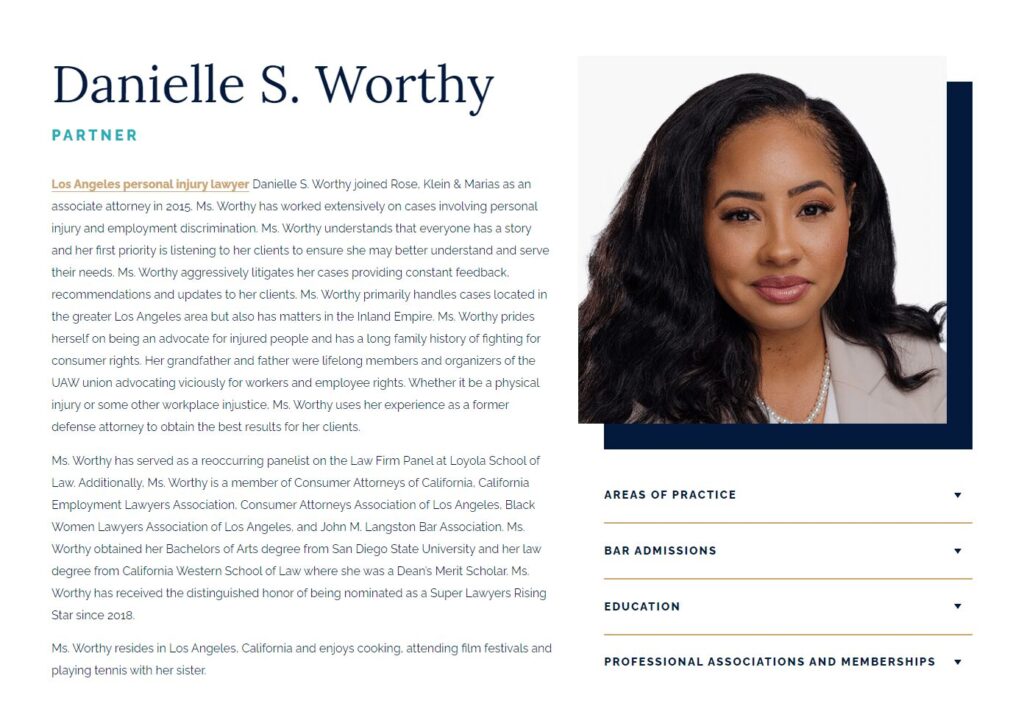
Attorney bio pages are among the most visited pages on law firm websites — and among the most underinvested. A genuine photo, real background, and honest voice convert far better than a formal bio that reads like a CV.
What Your About Page Should Say
The About page is consistently one of the most visited pages on law firm websites — because prospective clients want to know who they’ll actually be working with before they commit to a consultation.
Most law firm About pages miss this by turning into a firm history timeline or a list of achievements written in the third person. Neither of those things answers what visitors actually want to know.
What an Effective Law Firm About Page Covers
A real photo of the lead lawyer or team. Not a stock photo. Not a logo. The actual human being — or people — they’ll be working with. This single element has more impact on trust than almost anything else on the page.
Why you do this work. Two or three sentences written the way you’d explain it to someone at a networking event — not a mission statement. What drew you to this area of law? What kind of clients do you most want to help? What do you believe about how legal services should be delivered?
“I started practising family law because I saw how much the outcome of a separation affected not just the couple but their children and extended family. My goal is always to reach the best possible resolution with the least possible conflict — but I also fight hard when fighting is necessary.”
That paragraph tells a prospective client far more about what it would be like to work with you than a list of bar admissions.
Credentials in context. Years of call, law school, Law Society of Ontario membership, relevant certifications, and areas of focus — but presented as supporting evidence of capability, not the main event.
A team section if relevant. If you have associates, paralegals, or staff, a brief introduction humanises the firm and helps clients understand who they might interact with.
A call to action. Your About page should end with an invitation, not just trail off. “Ready to discuss your situation? Book a free consultation and we’ll walk you through your options.”
How to Write Calls to Action for a Law Firm
Legal services carry higher stakes — emotionally and financially — than most other services. The language around your calls to action needs to reflect that.
Every major section of a law firm website — homepage hero, practice area pages, attorney bios, after testimonials — should include a clear, low-pressure invitation to book a consultation.
Reduce the perceived risk. “Free consultation” removes one barrier immediately — the fear of an unexpected bill for just asking a question. If you offer this, feature it prominently in every CTA.
Be specific about what happens next. “Book a free 30-minute phone consultation” is less intimidating than “Contact Us” because it tells the prospective client exactly what they’re committing to. No surprises. No pressure.
Use reassuring language around confidentiality. Many people hesitate to contact a lawyer because they fear the information going somewhere they don’t control. A simple line — “All consultations are completely confidential” — addresses this directly and removes a real barrier.
Place CTAs at every decision point. After the homepage hero section. After each practice area page. After the attorney bio. After testimonials. At the end of every page. Prospective clients decide to reach out at different points in their reading — make sure there’s always a clear next step wherever that moment arrives.
What Law Firm Website Copy Should Not Say
Superlatives you can’t substantiate. “Ottawa’s best family lawyer” or “top-rated criminal defence firm” violate Law Society of Ontario advertising guidelines if not supported by objective criteria. Avoid comparative claims.
Jargon without explanation. Your website is written for prospective clients, not other lawyers. If a term requires legal training to understand, either define it immediately or replace it with plain language.
Generic mission statements. “We are committed to providing exceptional legal services with integrity and professionalism” could describe any firm anywhere. It communicates nothing specific and builds no trust. Replace it with something that describes your actual approach or the specific clients you help.
Long paragraphs. Online readers scan rather than read. Walls of text — even well-written ones — lose most readers before they reach the information that would have convinced them to call. Keep paragraphs to three sentences or fewer.
Copy that hasn’t been updated. Outdated information — old team members, discontinued services, references to legislation that has changed — signals that the firm’s digital presence isn’t actively maintained. This erodes trust quietly but consistently.
Balancing LSO Advertising Guidelines with Effective Copy
The Law Society of Ontario’s advertising guidelines govern what Ottawa lawyers can say publicly — including on their websites. Understanding these guidelines is essential when developing law firm website copy.
Key points relevant to website copy:
- Testimonials are permitted when genuine, not misleading, and don’t imply a guaranteed outcome
- Specialization claims require the appropriate LSO certification
- Comparative statements (“better than,” “best in”) require objective criteria and are generally best avoided
- Results and outcomes can be referenced in general terms but should not imply specific results for future clients
Effective law firm website copy works well within these guidelines — because the most persuasive copy focuses on client understanding and empathy rather than promotional claims anyway. Clear, honest, client-first writing is both LSO-compliant and more effective than the alternative.
The Law Firm Website Copy Checklist
Homepage:
- [ ] Headline names the specific practice area and client situation — not just the firm name
- [ ] Supporting line adds location or key differentiator
- [ ] Primary CTA visible before scrolling
- [ ] Practice areas listed with links to individual pages
- [ ] Three to five concrete trust signals visible
- [ ] At least two client testimonials within LSO guidelines
- [ ] CTA repeated at the bottom of the page
Practice area pages:
- [ ] Headline addresses the client’s situation, not just the service category
- [ ] Opening paragraph acknowledges the client’s reality with empathy
- [ ] Plain-English explanation of what the service covers
- [ ] Description of what working with your firm looks like
- [ ] Firm-specific credentials relevant to this practice area
- [ ] Testimonial specific to this practice area where possible
- [ ] Practice-area-specific CTA at the bottom
About page:
- [ ] Real photo of lead lawyer or team — not stock imagery
- [ ] Genuine explanation of why you do this work
- [ ] Credentials presented as supporting context, not the headline
- [ ] Team section if relevant
- [ ] CTA at the end
Calls to action:
- [ ] “Free consultation” featured prominently if offered
- [ ] Language specifies what happens next (length, format, commitment level)
- [ ] Confidentiality reassurance present on contact page
- [ ] CTA appears after every major section on key pages
Frequently Asked Questions
How long should a law firm website’s practice area pages be?
For most Ottawa law firms, practice area pages perform best at 600–1,000 words. This is enough to address the client’s situation thoroughly, explain the service clearly, include relevant trust signals, and satisfy Google’s preference for substantive, expert-level content — without overwhelming the reader. Pages shorter than 400 words often lack the depth to rank well for competitive legal keywords. Pages much longer than 1,200 words risk losing the reader before they reach the CTA. Our post on SEO for law firms in Ottawa explains how page length and content depth connect to local search rankings.
Should a law firm write its own website copy?
Many lawyers are capable writers — but writing for yourself is genuinely difficult, and writing from the client’s perspective rather than the firm’s is a specific skill that takes practice. The most common outcome when lawyers write their own copy is a website that reads like a legal brief: technically accurate, professionally presented, and almost entirely firm-focused. If you choose to write your own copy, use the frameworks in this guide to check that every page leads with the client’s situation before the firm’s credentials. If the copy still feels like it’s about you rather than your clients, it probably needs revision.
How do LSO advertising guidelines affect what a law firm website can say?
The Law Society of Ontario’s guidelines permit genuine client testimonials, practice area descriptions, and factual statements about experience and credentials. They restrict comparative claims (“Ottawa’s best”), guarantees of outcome, and misleading representations. In practice, the most effective law firm copy — client-focused, empathetic, honest about process — is already well within LSO guidelines. The guidelines become relevant primarily when firms try to make competitive claims that aren’t substantiated by objective criteria. Our post on web design for law firms covers compliance considerations in the design context as well.
Should law firm website copy be formal or conversational?
The right register depends on your practice area and your clients. A corporate law firm advising businesses can use more formal language and legal terminology — their clients are often legally sophisticated. A family law firm helping individuals through emotionally difficult personal situations typically converts better with warmer, plainer language that feels accessible rather than intimidating. The test is simple: read your copy aloud and ask whether it sounds like how you’d actually talk to a prospective client sitting across from you. If it doesn’t, rewrite it until it does.
What is the most important page on a law firm website for generating consultations?
The practice area pages collectively drive more consultation requests than any other part of the site — because they’re where most organic search traffic lands and where most conversion decisions are made. If someone searches “divorce lawyer Ottawa” and lands on your divorce practice area page, that page has to do the entire job of converting them from visitor to consultation booking. The homepage matters for overall credibility, and the About page matters for trust — but practice area pages are where the lead generation happens. Our guide on what a business website should include covers page structure principles that apply across all service businesses, including law firms.
How often should a law firm update its website copy?
At minimum, review your homepage and core practice area pages annually. Update any references to legislation that has changed, services you no longer offer, or team members who have joined or left. Beyond accuracy, consider refreshing copy that isn’t generating consultations — sometimes a headline rewrite or a restructured opening paragraph makes a measurable difference. For pages that rank on Google, significant rewrites should be done carefully to preserve existing SEO value. Google Search Console shows you which pages are generating search visibility so you know which ones to handle with the most care during any update.
Conclusion: The Right Words Turn Visitors Into Clients
A law firm website that says the right things — in the right order, for the right reader — is one of the most effective client acquisition tools available to an Ottawa lawyer. Not because it’s clever or impressive, but because it answers the questions prospective clients actually have, builds the trust required to reach out, and makes the next step obvious.
The framework isn’t complicated: lead with the client’s situation, demonstrate your understanding of their problem, show your credentials as evidence — not as the opening argument — and make it easy and low-risk to get in touch.
Most law firm websites do this in reverse. Which means the ones that do it right stand out significantly.
At Ottawa Web Genius, we build and write law firm websites that are designed to convert — not just look credible. Every project includes copy guidance as a standard part of the process, and for firms that prefer it, we write the content directly as part of the build.
Explore our web design and SEO services for law firms or view our pricing to understand what’s involved — and what your website could be doing for your practice that it isn’t doing right now.