Your Website Is Often the First Appointment Decision
Someone in Barrhaven chips a tooth on a Saturday afternoon. Someone in Kanata is researching Invisalign for the first time. A parent in Orléans needs a family dentist who is accepting new patients. Someone downtown types “emergency dentist near me” into their phone while sitting in their car.
In every one of these situations, a decision is made before a single phone call happens. That decision is made on a website.
Before calling your clinic, a prospective patient is already evaluating whether you offer the service they need, whether you’re accepting new patients, what the dentists’ credentials and experience look like, what other patients have said, where you’re located, when you’re open, and how easy it will be to book.
If your website makes any of those answers difficult to find — or fails to communicate the professionalism and trustworthiness that healthcare decisions require — another Ottawa dental practice is one search result away.
A successful dental practice website needs four things working together: patient trust, service clarity, local visibility, and a friction-less path to booking. This guide explains exactly what web design for dental offices in Ottawa needs to accomplish — and how to get each element right.
Why Web Design for Dental Offices in Ottawa Requires a Different Approach
Dental websites cannot be generic small business websites with the word “dentist” inserted throughout. The requirements are fundamentally different.
Higher trust requirements. Patients are choosing someone responsible for their healthcare. This isn’t a restaurant decision — it’s a healthcare relationship. The website must establish professional credibility before a patient will pick up the phone.
Multiple patient journeys. Someone searching “emergency dentist Ottawa” is in pain and needs to act now. Someone researching dental implants may spend weeks reading before booking a consultation. A parent looking for a family dentist accepting new patients has different priorities than someone interested in cosmetic procedures. A single homepage cannot serve all of these equally — the site needs to branch into appropriate pathways.
Regulatory considerations. Dental practices in Ontario operate within a regulated profession overseen by the Royal College of Dental Surgeons of Ontario (RCDSO). The website is a form of professional communication and advertising, and the claims, credentials, testimonials, promotional offers, and service representations made on it should be consistent with applicable professional rules. If you are uncertain whether a particular claim or representation on your website is appropriate, confirm with the RCDSO or your professional advisor rather than assuming it is permitted.
Patient privacy. Websites that collect patient information through contact forms, appointment requests, or booking integrations need to do so with appropriate attention to privacy obligations under Ontario’s Personal Health Information Protection Act (PHIPA). A privacy policy is not optional.
Long-term patient relationships. Unlike many service businesses, dental practices are building multi-year patient relationships. The website sets the tone for what that relationship will feel like.
A dental practice website must work equally well across all devices — most patients evaluating a dentist will do so on a phone, often quickly and under some urgency.
What Patients Actually Want From a Dental Website
When I look at a dental website, one of the first things I check isn’t the design — it’s how quickly a prospective patient can find the answers they actually came looking for.
A visitor should be able to determine, quickly and clearly:
- What dental services do you provide?
- Are you accepting new patients?
- Where are you located and is there parking?
- When are you open, including evenings or weekends if relevant?
- Who are the dentists and what are their qualifications?
- Do you handle dental emergencies?
- Can I request or book an appointment online?
- Do you direct bill insurance, and which providers?
- What languages does the team speak?
- Is the clinic accessible?
- What should I expect at my first appointment?
A website built around these questions will outperform one built around what the practice wants to say about itself.
Must-Have Pages for an Ottawa Dental Office Website
One of the most consistent patterns in web design for dental offices in Ottawa is that practices underestimate how many dedicated pages their site actually needs. Each page below serves a distinct patient need — combining too much onto too few pages is one of the most common reasons dental websites fail to generate appointments.
Home
First impression and navigation hub. Should confirm the clinic’s location, core services, whether new patients are welcome, and how to book — all visible before scrolling. A strong homepage photo of the actual clinic and team (not stock photography) significantly improves trust signals.
About the Practice
The story of the clinic — when it was established, the values and approach that distinguish it, the community it serves. This is where prospective patients form a sense of whether this clinic feels like the right fit.
Meet the Dentists
Individual profiles for each dentist, including their full name, qualifications, areas of practice, and professional registrations as appropriate. Professional head-shots — not stock photos. The profile should reflect the dentist as a person, not just a list of credentials.
A note on credentials and specialty claims: In Ontario, the term “specialist” has a specific regulated meaning. Dental practices should verify with the RCDSO what credential and specialty claims are appropriate to make on their website before publishing them.
Meet the Team
Profiles for dental hygienists, assistants, and reception staff where the practice chooses to include them. Humanizing the team beyond the dentists builds trust for patients who may be anxious.
Dental Services Overview
A clear, organized overview of the full range of services offered, with links to individual service pages for major treatments.
Individual Service Pages
This is one of the highest-impact structural decisions for a dental website. Each major service should have its own dedicated page — not a single page that lists every treatment in bullet points.
Examples:
- /general-dentistry/
- /dental-implants/
- /invisalign/
- /emergency-dentistry/
- /teeth-whitening/
- /root-canal-treatment/
- /children-dentistry/
- /dental-hygiene/
Individual pages help patients understand their specific treatment, help Google understand what the practice offers, and provide appropriate landing pages for any advertising investment. They also allow the content on each page to speak specifically to the patient considering that treatment.
New Patients
A dedicated section explaining what new patients can expect — the registration process, what to bring, what a first appointment looks like, and any new patient policies. This reduces anxiety and friction for patients who are evaluating the clinic.
Emergency Dentistry
If the practice offers emergency appointments, this page needs to make the phone number, hours, and how to access emergency care immediately obvious. More on this below.
Insurance and Payment Information
Clearly describe what insurance is accepted, whether direct billing is offered, and what payment options are available. Burying this information or omitting it entirely creates frustration and drives prospective patients to call with basic questions that the website should be answering.
Appointment Request / Book an Appointment
The most important conversion page on the site. Should be accessible from every page, require minimal fields, and clearly communicate the next step after submission.
Contact and Location
Full address, phone number, a Google Maps embed, parking information, transit access where relevant, and hours. Do not make patients search multiple pages to find this information.
Privacy Policy
Required for any website that collects personal information through forms, booking integrations, or other means. This is not optional.
FAQ
Frequently asked questions reduce calls for basic information and help patients who are researching make more confident decisions. Common questions include: “Do you accept new patients?” “Do you accept my insurance?” “What should I do if I have a dental emergency?” “How often should I see a dentist?”
Designing for Appointment Conversions
For most dental practices, the primary conversion goal is a new patient requesting or booking an appointment. Everything on the website should support that goal — and nothing should unnecessarily create friction between a prospective patient and taking that step.
Primary CTA: Request an Appointment / Book Online
Secondary CTA: Call the Clinic
Emergency CTA: Call for Emergency Dental Care (prominently displayed, ideally in the header)
A common mistake is competing CTAs that dilute the conversion path. If a patient can’t quickly identify what the primary next step is, they are more likely to leave without taking any action at all.
The appointment request form itself should ask for the minimum necessary information to make the booking work. A long form asking for detailed medical history before a patient has even spoken to the clinic is a conversion barrier. Contact details, preferred appointment type, and preferred time are usually sufficient for an initial request.
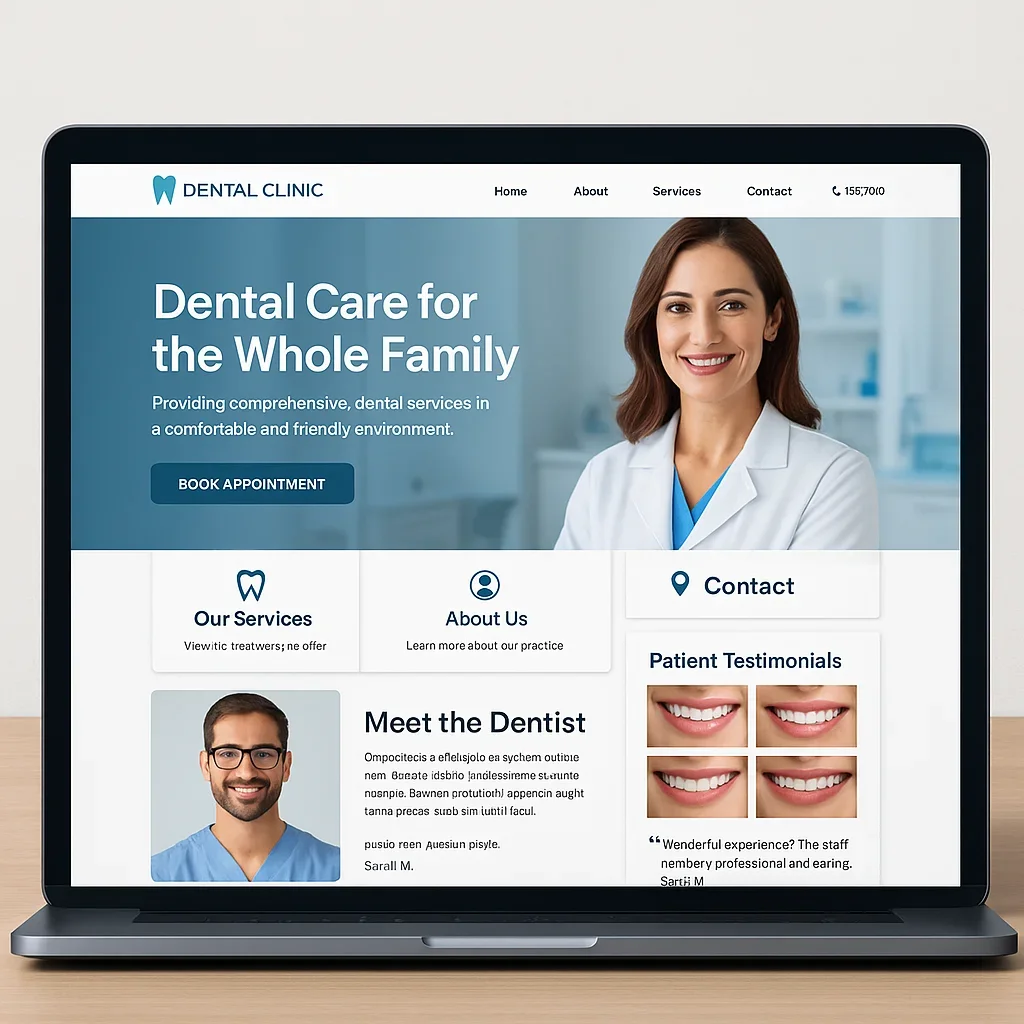
The patient journey from search to appointment request passes through multiple pages — each one needs to maintain trust, provide the right information, and make the next step clear.
Emergency Dental UX Is Entirely Different
A patient with severe tooth pain or a broken tooth is not browsing your website at leisure. They’re on their phone, they’re likely stressed, and they want to know one thing immediately: can you help me right now, and how do I reach you?
Your emergency dentistry page should make the following immediately visible, before any scrolling:
- Phone number (click-to-call on mobile)
- Whether you offer same-day emergency appointments
- Hours of availability
- What qualifies as a dental emergency and what to do
Beyond that, the page can explain what to expect during an emergency appointment. But the contact path comes first.
Trust Signals Specific to Dental Practices
Dental patients are making a healthcare choice. The trust signals that matter here are different from those that matter for a trades website or a restaurant.
Real dentist profiles with meaningful credentials. Name, graduation date, dental school, provincial registration number where practice standards permit, areas of clinical interest, years of practice. A brief personal note that reflects the dentist as a person significantly outperforms a purely credential-based profile.
Real clinical photography. Stock photos of perfect smiles and gleaming equipment tell patients nothing about your actual clinic. Real photos of your operatories, your team, your waiting room, and your technology communicate more authentically. Patient-facing photography requires appropriate consent processes — your privacy advisor can guide on this.
Patient reviews, where appropriate. Reviews are among the most powerful trust signals for dental practices. Whether and how testimonials can be displayed on a dental website may be subject to RCDSO guidance — review current rules before publishing patient testimonials. Google reviews are separately visible through your Google Business Profile.
Languages spoken. In a bilingual city like Ottawa, noting that the team provides care in both English and French — or additional languages — is a meaningful differentiator for patients who prefer to discuss their health care in their first language.
New patient status clearly stated. “Accepting new patients” or “currently at capacity for new patients” should be stated plainly. Patients who can’t find this information will often call to ask — or simply move on.
Local SEO for Ottawa Dental Practices
Effective web design for dental offices in Ottawa is inseparable from local SEO. A dental website that isn’t visible in local Google searches is underperforming as a patient acquisition tool, regardless of how well it’s designed.
Google Business Profile. Your GBP is what powers your appearance in the local map pack — the three practices shown at the top of Google Maps searches. For dental practices, a complete and active profile should include your primary and secondary categories, a full services list, updated hours including holiday closures, current photos of the clinic, and a process for collecting consistent reviews.
Note: Google’s guidance regarding healthcare provider listings, including individual practitioner profiles, has evolved over time. Verify current Google Business Profile guidance for healthcare providers before setting up multiple listings.
Service pages and local keyword alignment. A patient searching “dental implants Ottawa” should be able to land on a page specifically about dental implants at your Ottawa practice — not a general services page. Service pages support both organic rankings and advertising landing pages.
Ottawa neighbourhood context. Dental searches frequently carry strong geographic intent — “dentist Barrhaven,” “family dentist Orleans,” “emergency dentist Kanata.” Practices located in specific Ottawa communities can build natural geographic relevance through genuine service area content. This should reflect where the practice actually serves patients, not artificially manufactured location pages.
NAP consistency. Your practice’s Name, Address, and Phone number should be identical across your website, GBP, dental directories, and any other platforms where it appears. Inconsistency in even minor details creates conflicting signals that can suppress local rankings. For a complete walkthrough of how GBP optimization works, our Google Business Profile guide covers every element.
For the full local search visibility picture, our guide on how to rank higher on Google Maps in Ottawa covers the ranking factors that apply to dental practices alongside all other local businesses.
Ontario Dental Advertising and Website Claims
A dental practice website functions as professional advertising and communication. Dental practices in Ontario should ensure that the content on their website — including claims about services, qualifications, specialties, technology, patient outcomes, testimonials, and promotional offers — is consistent with applicable guidance from the Royal College of Dental Surgeons of Ontario.
This is not legal advice, and we are not qualified to provide it. We raise this because dental website projects should involve a review of what the website states, not just how it looks. What can and cannot be claimed, how specialist designations can be represented, how reviews and testimonials are handled, and how promotional language is used are all questions worth verifying with the RCDSO or a qualified advisor before publishing.
The Dental Website Checklist
Patient trust:
Real dentist profiles with full names, qualifications, and a personal element
Real photography of the clinic, team, and operatories
Clear statement of whether new patients are being accepted
Languages spoken listed where relevant
Professional credentials displayed accurately and in compliance with RCDSO guidance
Privacy policy present and current
Services:
Dedicated page for each major service offered
Emergency dentistry page with phone number and hours prominent
Insurance and payment information clearly stated
New patient information and process explained
Appointment conversion:
Primary CTA (book/request appointment) visible on every page
Phone number click-to-call on mobile
Appointment form asks only for necessary information
Emergency contact path immediately visible
Local SEO:
Google Business Profile claimed, verified, and complete
NAP consistent across website and all directories
Ottawa and neighbourhood references natural throughout content
Structured data/schema markup for dental practice implemented
Mobile experience:
Phone number tappable and visible without scrolling on mobile
Navigation clean and usable on small screens
Forms completable on mobile without pinching or zooming
PageSpeed score above 70 on mobile
Privacy and security:
HTTPS active
Appointment and contact forms transmit data securely
Privacy policy addresses what information is collected and how
Third-party booking or patient management integrations reviewed for PHIPA compliance
Technical performance:
PageSpeed score tested (Google PageSpeed Insights)
Images optimised and compressed
No broken links or forms
Google Search Console set up and sitemap submitted
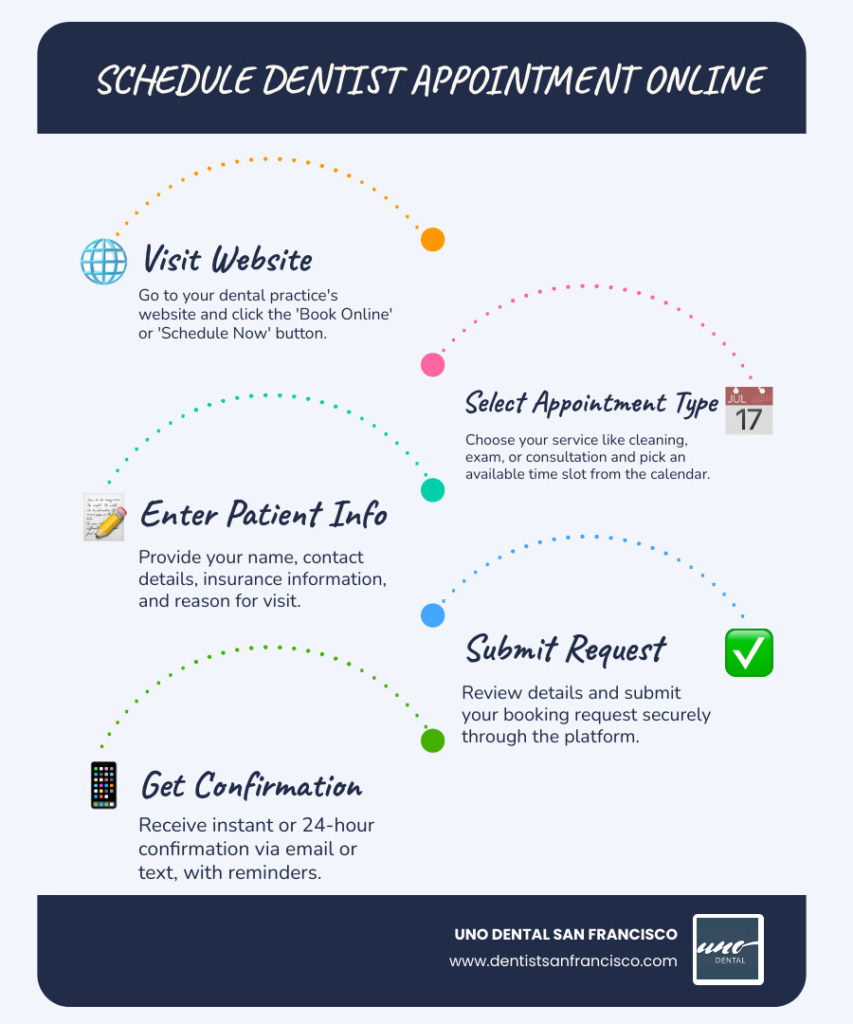
A successful dental practice website addresses multiple dimensions simultaneously — patient trust, service clarity, appointment conversion, local search visibility, mobile experience, and privacy foundations.
Frequently Asked Questions
How much does a dental website cost in Ottawa?
A professionally designed dental practice website in Ottawa typically ranges from $3,500 to $8,000 or more, depending on the number of dentists, the number of individual service pages, whether copywriting is included, the complexity of booking integration, whether bilingual content is needed, photography, and the level of local SEO work built into the build. Simple brochure-style dental websites with limited service depth sit at the lower end. Multi-dentist clinics with comprehensive service pages, appointment integration, accessibility work, and local SEO foundations sit higher. Our web design pricing guide gives a broader framework for how scope affects pricing.
What pages should a dental practice website have?
At minimum: homepage, about the practice, individual dentist profiles, services overview, dedicated pages for major treatments, new patient information, emergency dentistry, insurance and payment information, appointment request, contact and location, and a privacy policy. For practices offering cosmetic or specialty services, dedicated pages for those services — implants, Invisalign, whitening — are important for both patient experience and search visibility. A FAQ page reduces repetitive calls and helps prospective patients make more confident decisions.
Can a dental website help attract new patients?
Yes — but how much depends on how well the website is built and how strong the surrounding local SEO and Google Business Profile foundations are. A dental website that clearly communicates services, establishes trust through real profiles and photography, makes booking easy on mobile, and is supported by an active GBP and consistent reviews will consistently attract more new patients than one that lacks any of those elements. A well-designed website without local search visibility won’t generate significant organic patient traffic. Both the website and the local presence need to be working together.
Should dentists allow online appointment booking?
Online booking reduces friction for patients who prefer not to call and can capture appointment requests outside of office hours. The right implementation depends on the practice’s workflow — some practices use online booking software (Jane App, Dentrix, etc.) that syncs with their schedule directly; others prefer a request form that a front desk team confirms. Either can work well. The important thing is that the process from “I want to book” to “my appointment is confirmed” is clear and feels reassuring.
Does a dental practice need SEO?
If patient acquisition from Google search is a goal — and for most practices it is — then yes, the website needs to be built with local SEO foundations in place and supported by an active Google Business Profile. The dental market in Ottawa varies by neighbourhood: some areas have limited competition for certain searches, while others have multiple established practices competing for the same patients. Practices in competitive areas (downtown Ottawa, Kanata, Nepean) typically need more active SEO investment than those in less saturated areas. Our local SEO guide explains how the full local SEO picture fits together.
How often should a dental website be updated?
At minimum: whenever services, hours, fees, insurance policies, staff, or new patient status changes. Beyond that, a dental website benefits from periodic content additions — educational articles about common procedures, answers to frequently asked questions, updates when new technology or services are added. Google treats regularly updated websites more favourably than completely static ones. An annual review of all key page content is a reasonable baseline, with more frequent updates when the practice undergoes changes.
Trust, Clarity, Visibility, and Booking
A dental practice website has to do more than look professional. It has to help prospective patients trust the practice before they’ve met anyone, understand clearly what services are available and whether the clinic is right for their needs, find the practice in local Google searches, and take the next step toward an appointment with as little friction as possible.
The website, the Google Business Profile, local search visibility, and the patient experience of evaluating your practice online all work together as a system. Weaknesses in any one of them limit what the others can accomplish.
At Ottawa Web Genius, our approach to web design for dental offices in Ottawa is built around all four of those outcomes — with specific attention to the trust, regulatory, privacy, and local SEO considerations that set healthcare practices apart from general service businesses.
Explore our web design services or view our pricing to understand what’s involved — or reach out directly to discuss what your practice’s website currently does and what it needs to do better.