Here’s the Honest Answer Upfront
Most small business owners searching this question are frustrated, because most website pricing articles are deliberately vague.
So here’s a direct answer: a professional small business website in Ottawa typically costs between $2,000 and $10,000, depending on the size of your business, the number of pages, how much custom work is involved, and what’s included in the quote.
A basic starter site for a solo service provider might sit at $1,500–$2,500. A strategic multi-page site for a law firm, contractor, or growing service business runs $3,000–$6,000. A more complex custom build with e-commerce, booking systems, or advanced integrations can reach $8,000–$15,000 or more.
None of those numbers are made up. They reflect what Ottawa businesses are actually paying for professional web design in 2026 — and this guide explains exactly what you get at each level, what drives costs up, what red flags to watch for, and how to compare quotes without overpaying for something you don’t need or underpaying for something that won’t work.
Why Website Pricing Varies So Much
Before the breakdowns, it helps to understand the five main factors that determine where any given project falls in that range:
1. Number of pages. A five-page brochure site is fundamentally different from a twenty-page service website with dedicated pages per practice area, service area, or product category. More pages means more time — more design, more content, more SEO setup.
2. Custom design vs. template-based build. A website built from a premium template with your branding applied is less expensive than one designed from scratch. Neither is inherently better — it depends on your goals. Custom builds give you more differentiation; template builds give you a faster, more affordable path to a professional result.
3. What’s included vs. what you’re expected to provide. Some quotes include copywriting, photography sourcing, SEO setup, and post-launch support. Others hand you a beautifully designed shell and expect you to fill it with content yourself. These quotes can look similar in price and be wildly different in actual value.
4. Integrations and functionality. A basic contact form is standard. An online booking system, client portal, e-commerce store, membership area, or custom calculator is not — each adds development time and cost.
5. The agency’s experience level and Ottawa market positioning. A freelancer building websites between other gigs prices differently than an established agency with a structured process, a track record, and post-launch support built in.
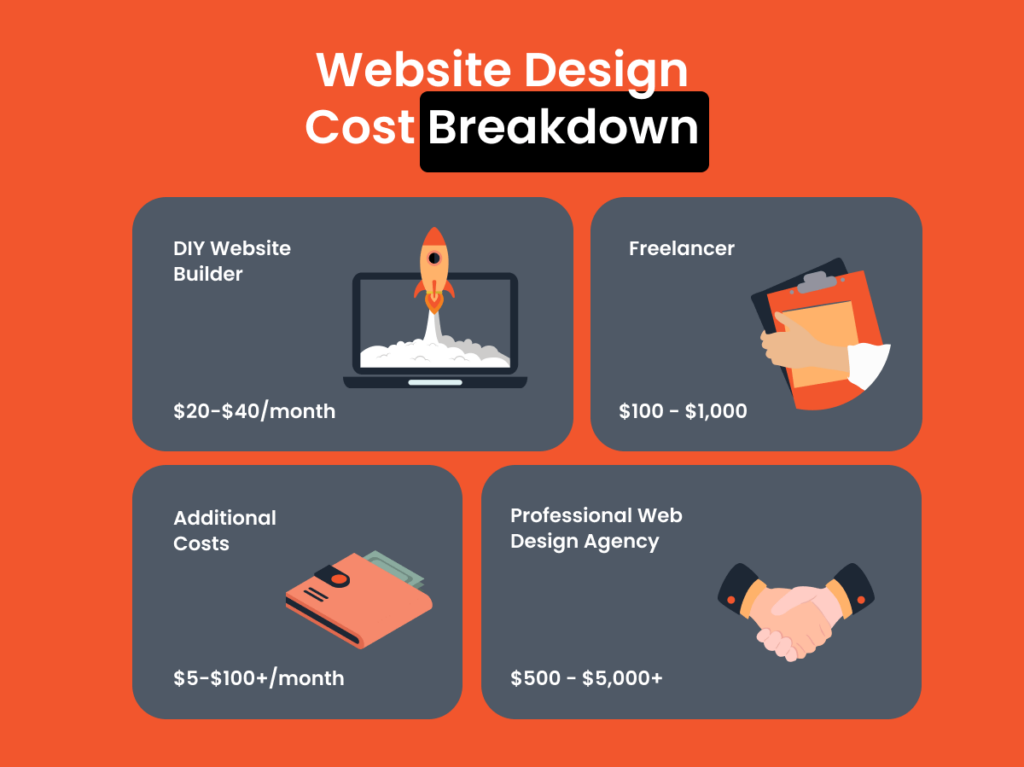
Website design costs vary significantly based on scope, customisation level, and what’s actually included in the quote — understanding the tiers helps you make a smarter decision.
Ottawa Website Pricing Ranges by Business Type
Solo Service Provider or Consultant
Typical range: $1,500 – $3,000
A solo consultant, coach, freelancer, or service provider who needs a clean, professional web presence: homepage, about, services overview, contact, and maybe an FAQ. No e-commerce, no complex integrations. Built to establish credibility and generate inquiries.
At this level, you’re typically looking at a template-based design with your branding applied, a contact form, basic SEO setup, and mobile optimisation. You may be expected to provide your own copy and photos.
Contractor or Trades Business
Typical range: $2,500 – $5,000
A plumber, electrician, roofer, HVAC company, landscaper, or renovation contractor. The website needs to work on mobile, load fast, have a prominent phone number, dedicated service pages, a quote request form, and project photos. Service area pages for Ottawa neighbourhoods add cost but add real SEO value.
At this level, expect dedicated service pages (one per core service), a gallery section, review integration or testimonial display, click-to-call functionality, and Google Business Profile alignment. The more service pages and the more copywriting involved, the higher the cost.
Law Firm or Professional Services
Typical range: $3,500 – $7,000
A law firm, accounting practice, or financial advisory business. The website needs to project credibility and convert prospective clients who are doing thorough research. Individual practice area pages, attorney bios, case result references (within any applicable professional guidelines), review display, and a consultation booking process.
At this level, trust signals and content quality matter significantly. A law firm website that looks similar to a trades site is not positioned correctly. Expect more investment in copywriting, content structure, and conversion design. Our post on web design for law firms in Ottawa covers everything this type of site needs in detail.
Local Service Business (Restaurant, Salon, Clinic)
Typical range: $2,000 – $4,500
A restaurant, salon, physiotherapy clinic, or similar appointment-driven local business. The website needs online booking or reservation integration, a menu or services list, location and hours prominently displayed, and high-quality visual presentation. Photo quality and mobile experience are particularly important.
Booking integrations (OpenTable, Mindbody, Jane App, etc.) add cost depending on complexity.
E-commerce Business
Typical range: $4,000 – $15,000+
An online store with product pages, cart, checkout, payment gateway, and inventory management is in a different category than a service website. WooCommerce or Shopify builds for small e-commerce businesses typically start at $4,000–$6,000 for a clean, functional store. Custom builds with complex product configurations, memberships, or integrations go higher.
Larger or Custom Business
Typical range: $7,000 – $20,000+
Multi-location businesses, companies with complex service offerings, or organisations that need custom functionality (portals, calculators, integrations, multilingual support) are in the higher range. These projects typically involve a longer discovery process and a more involved development phase.
What a $2,000–$3,000 Website Typically Gets You
At this price point, you’re looking at a professionally built, template-based website that presents your business credibly and functions reliably. Here’s what’s realistic:
- 5–15 pages (homepage, about, services, contact, FAQ)
- design customised to your brand (colours, logo, fonts)
- Mobile-friendly layout
- Basic contact form
- Google Maps embed
- Basic SEO setup (title tags, meta descriptions, sitemap submission)
- Stock photography sourcing or placeholders for your own images
- One round of revisions
What you shouldn’t expect at this price: custom design from scratch, multiple dedicated service pages, copywriting for all pages, complex integrations, or an ongoing support relationship.
This is a solid starting point for a solo service provider or a very small business that needs a credible online presence and isn’t yet investing heavily in SEO or lead generation.
What a $5,000–$8,000 Website Typically Gets You
At this level, the website starts to work as a genuine business tool — not just a digital brochure.
- 15–30 pages with dedicated service or practice area pages
- Custom design with more visual differentiation
- Copywriting guidance or full copywriting included
- Dedicated landing pages for key services or locations
- SEO foundations built into page structure from the start
- Quote request or booking form with basic automation
- Google Business Profile alignment and schema markup
- Review/testimonial integration
- Multiple revision rounds
- Post-launch support period
This is where most Ottawa service businesses — contractors, law firms, consultants, clinics — see the best return on investment. The site is built to generate leads, not just exist. For a clear picture of what this type of website needs to include to actually convert visitors, our guide on how to get more clients from your website covers the conversion fundamentals.
What Is Usually Included — And What Costs Extra
This is where many Ottawa business owners get surprised after accepting a quote.
Usually included in a professional website quote:
- Design and development
- Mobile responsiveness
- Basic contact form
- SSL certificate setup assistance
- Sitemap submission
- Basic SEO setup (title tags, meta descriptions, heading structure)
- One to two revision rounds
- Basic training on how to update the site
Usually NOT included unless specifically stated:
- Copywriting (the actual text on every page)
- Professional photography or photo sourcing
- Logo design or brand identity work
- Google Analytics setup and configuration
- Google Search Console setup and sitemap submission
- Ongoing hosting and maintenance
- Additional revision rounds beyond what’s specified
- Booking system or CRM integration
- Blog setup and initial posts
- Multilingual support
Before accepting any quote, ask specifically what each of these items looks like in their scope of work.
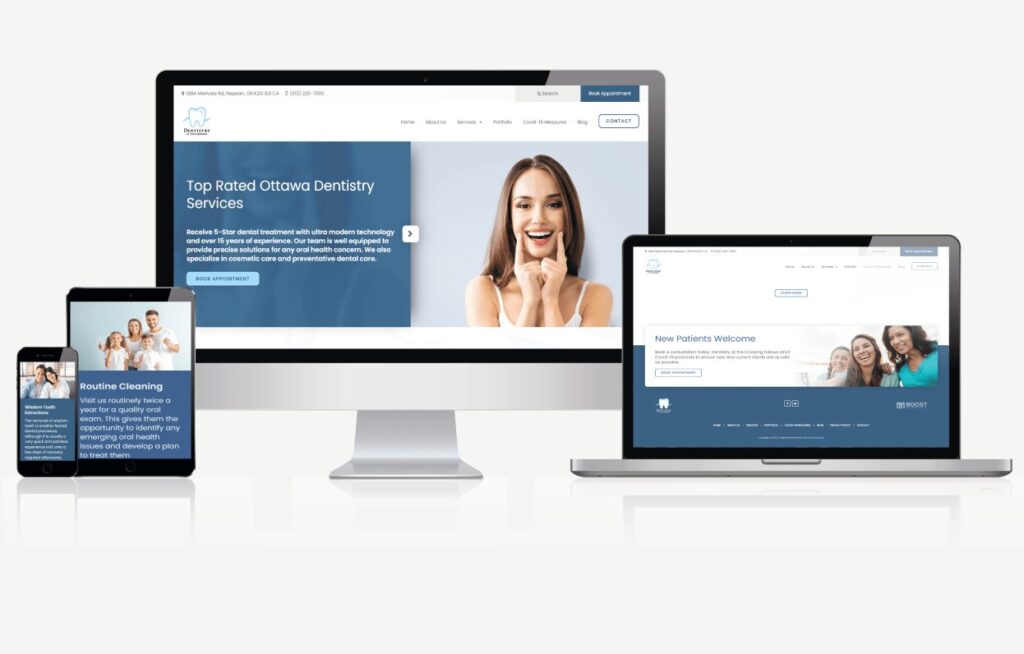
A professional Ottawa web design agency should be able to explain clearly what’s included in their quote, what’s extra, and what happens after your site launches.
Red Flags in Cheap Website Quotes

A low quote isn’t automatically a good deal — knowing what to look for before accepting any website proposal protects your business from expensive rebuilds down the road.
A $500 or $800 website quote is almost always one of the following: a template with minimal customisation and no strategic input, an offshore build with no local understanding of your market, or a price that doesn’t include hosting, domain, or any ongoing support.
These aren’t always bad — sometimes a business genuinely just needs a basic placeholder. But if you’re counting on your website to generate leads, a budget build almost never delivers. Here’s what to watch for:
No discovery process. A reputable agency will ask about your business, your clients, your goals, and your competitors before quoting. If someone quotes you a price after a five-minute phone call or a contact form submission, they’re not building something strategic.
Vague or missing scope. “A 5-page website for $X” without specifying what’s on those pages, whether copy is included, how revisions work, or what happens at launch is an invitation for disputes later.
No mention of SEO. A website that isn’t set up to be found on Google is a website that doesn’t generate traffic. SEO foundations should be standard, not an add-on.
No post-launch support. What happens when something breaks? Who updates the site when you need a new service added? A quote with no mention of post-launch support means you’re on your own the moment the site goes live.
Template sites sold as custom. Some agencies use the same template for every client and call it “custom design.” Ask to see diverse examples of their previous work. If every portfolio site looks structurally identical, that’s what yours will look like too.
What Actually Drives Website Costs Up
Understanding this helps you prioritise where to invest and where to save.
More pages = more cost. Every page requires design, content, and SEO setup. Ten dedicated service pages costs more to build than one catch-all services page. But ten dedicated service pages will rank for ten times as many searches.
Copywriting is time-intensive. Writing clear, conversion-focused, SEO-aware content for fifteen pages takes significant expertise and time. If copywriting is included in a quote, it’s a major portion of the work.
Custom functionality. Booking systems, client portals, quote calculators, product configurators — anything that requires custom development rather than an off-the-shelf plugin adds real cost.
Revision cycles. Unlimited revisions sound appealing but usually result in scope creep and project delays. A clearly defined revision process with defined rounds is healthier for both sides.
Tight timelines. Rush projects often cost more. A reasonable professional website build takes four to eight weeks. Compressing that significantly usually costs a premium.
Do You Need a Starter Site or a Strategic Website?
Choose a starter site if:
- You’re a solo service provider or very new business
- You need a credible online presence but aren’t relying on Google for leads yet
- Your leads currently come primarily from referrals and word of mouth
- You have a modest budget and need to establish a foundation first
Choose a strategic website if:
- You want your website to actually generate inquiries from Google
- You’re in a competitive local market and need to stand out
- You have multiple services and want each to rank in search
- You’re investing in local SEO and want your website to support it
- You plan to scale the business and need a platform that grows with you
For most Ottawa service businesses — contractors, law firms, consultants, clinics — a strategic website delivers far better ROI than a budget build, even though the upfront cost is higher. For a detailed look at what makes the difference in how a website performs, our web design and services page explains our approach.
How to Compare Website Quotes
When you receive multiple quotes, this checklist helps you compare them fairly:
Scope clarity:
- [ ] How many pages are included?
- [ ] Is this a custom design or a template-based build?
- [ ] Is copywriting included, partially included, or not included?
- [ ] Is SEO setup (title tags, meta descriptions, sitemaps) included?
- [ ] Is mobile optimisation specifically mentioned?
- [ ] How many revision rounds are included?
- [ ] Are any integrations (booking, forms, CRM) included or extra?
- [ ] Is hosting and domain included or separate?
- [ ] What is the timeline from kickoff to launch?
Post-launch:
- [ ] Is there a support period after launch? How long?
- [ ] Who maintains the site ongoing — and at what cost?
- [ ] What happens if something breaks in the first 30 days?
Agency credibility:
- [ ] Can they show portfolio examples across different client types?
- [ ] Do they have Google reviews from real Ottawa clients?
- [ ] Is there a clear contract or formal proposal?
- [ ] Do they ask about your business goals, or just your budget?
Why Some Agencies Charge Significantly More
An agency charging $10,000–$20,000 for a website isn’t necessarily overcharging — they may be delivering a fundamentally different product.
Higher-cost agencies typically offer:
- A deeper discovery and strategy phase before design begins
- A dedicated project manager and defined process
- Original brand strategy and visual direction, not template application
- In-house copywriting with strong commercial and SEO awareness
- Performance tracking setup from day one
- Guaranteed post-launch support windows
- Ongoing retainer relationships for SEO, content, and maintenance
Whether that level of service is worth it depends entirely on your business goals. For a trades business needing a solid five-page site, it probably isn’t. For a law firm wanting to dominate their local search market, it may well be.
Frequently Asked Questions
How much does a basic small business website cost in Ottawa?
A basic professional small business website in Ottawa — typically five to eight pages, template-based design, contact form, mobile-friendly, and basic SEO setup — generally ranges from $1,500 to $3,000. This is appropriate for a solo service provider, new business, or organisation that primarily needs a credible online presence rather than a lead-generation engine. Our pricing page outlines exactly what’s included at each tier we offer.
Should I use a DIY website builder instead of hiring a professional?
DIY platforms like Wix, Squarespace, and WordPress.com have improved significantly and can work well for businesses with very limited budgets or very simple needs. The limitations become meaningful when you need dedicated service pages optimised for local search, fast mobile performance, schema markup, and an SEO strategy that builds over time. Most Ottawa businesses that tried a DIY approach and weren’t seeing results from it end up hiring a professional for their next build. You can check your current site’s technical performance for free at Google PageSpeed Insights.
What is not included in most website quotes?
The most common exclusions are: professional copywriting (the actual page text), photography, logo design, Google Analytics and Search Console setup, ongoing hosting and maintenance, and additional revision rounds beyond those specified. Always ask specifically about each of these before accepting a quote. Our guide on what a business website should include helps you understand what the finished site needs to have in order to actually work for your business.
How long does it take to build a professional website?
A typical professional website for a small or medium Ottawa business takes four to eight weeks from kickoff to launch. The timeline depends on how quickly the client provides content and approvals, the number of pages, and the complexity of any integrations. Rushing a website build — compressing it into one or two weeks — almost always results in a worse outcome and often costs more. Build time into your planning, especially if you have a specific launch date in mind.
Is SEO included in website design pricing?
It depends entirely on the quote. Basic on-page SEO — page titles, meta descriptions, heading structure, sitemap setup — should be standard in any professional build. But ongoing SEO — content strategy, monthly optimisation, link building, GBP management — is almost always a separate service. Ask any agency you’re evaluating what specifically “SEO” means in their quote. For a full picture of what ongoing SEO involves, our post on how to improve your website’s SEOcovers the complete scope.
How do I know if I’m getting good value on a website quote?
The clearest signal of good value is a quote that asks about your business before it’s given. An agency that understands your goals, your clients, your competitors, and your Ottawa market can scope accurately and recommend appropriately. A quote produced quickly without any discovery conversation is either a standard package being applied regardless of fit, or a low-cost build that won’t be tailored to what your business needs. Good value is not the lowest price — it’s the best outcome relative to your investment. A $4,000 website that generates $2,000 in new clients every month is better value than a $1,000 website that generates nothing.
Make a Decision Based on What Your Website Needs to Do
The question isn’t really “how much does a website cost?” It’s “how much does the right website for my business and goals cost?”
A $1,500 site that establishes your credibility is excellent value if that’s all you need. A $5,000 site that generates consistent leads in a competitive Ottawa market is even better value — because it pays for itself.
The worst outcome is spending $800 on something that looks unprofessional, doesn’t show up on Google, and needs to be rebuilt in eighteen months anyway. That’s the true cost of the cheapest quote.
At Ottawa Web Genius, we build websites at different levels for different business goals — and we’re always straightforward about what each level delivers and what it costs. There’s no pressure to buy more than you need, and no vague promises about what you’ll get.
View our pricing to see exactly what’s included at each tier — or explore our web design services to understand our approach before we talk numbers. When you’re ready, getting a quote is straightforward and comes with zero obligation.