
Web Design for Electricians in Ottawa: What Your Website Needs to Win More Jobs
An Ottawa homeowner comparing electricians for an EV charger installation has different questions from a property manager dealing with an electrical fault. One wants to understand the project; the other needs to know whether you can respond. Web design for electricians in Ottawa has to make those two paths clear while showing that the business is qualified for the work.
The useful website is not the one with the most dramatic lightning animation. It explains your actual services, where you work, how customers can verify your contractor credentials, and what happens after they call or request a quote. It should help suitable customers contact you and help your team avoid enquiries outside your scope.
This guide builds on our website guide for contractors and trades businesses, with the decisions that are specific to electrical contractors.
Why Electrician Websites Are Different
Electrical work involves trust before a customer can inspect the finished result. A homeowner may not know which qualifications apply, whether a job needs an assessment first, or why two quotes differ. Your website should reduce that uncertainty without pretending it can diagnose an installation remotely.
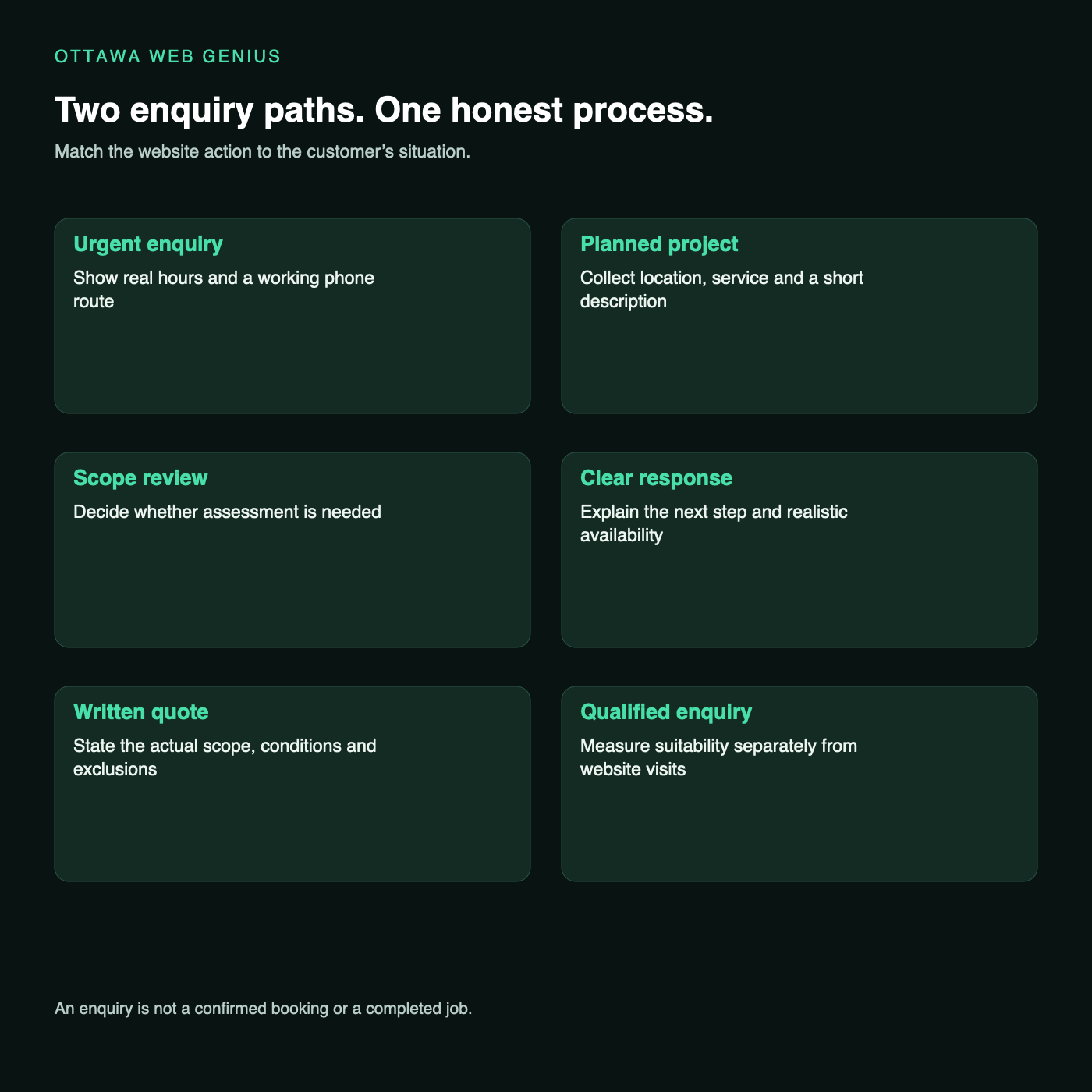
There are also different buying journeys. A planned panel upgrade, lighting project or EV charger installation may involve several visits to your site. An urgent enquiry may arrive from a phone, with the customer looking for your service area and a working call button.
Separate urgent contact information from planned-project enquiries. Describe the hours and response arrangements you actually offer. If the business does not provide round-the-clock service, avoid “24/7 emergency electrician” language merely because it sounds commercially attractive.
Make Contractor Credentials Easy to Verify
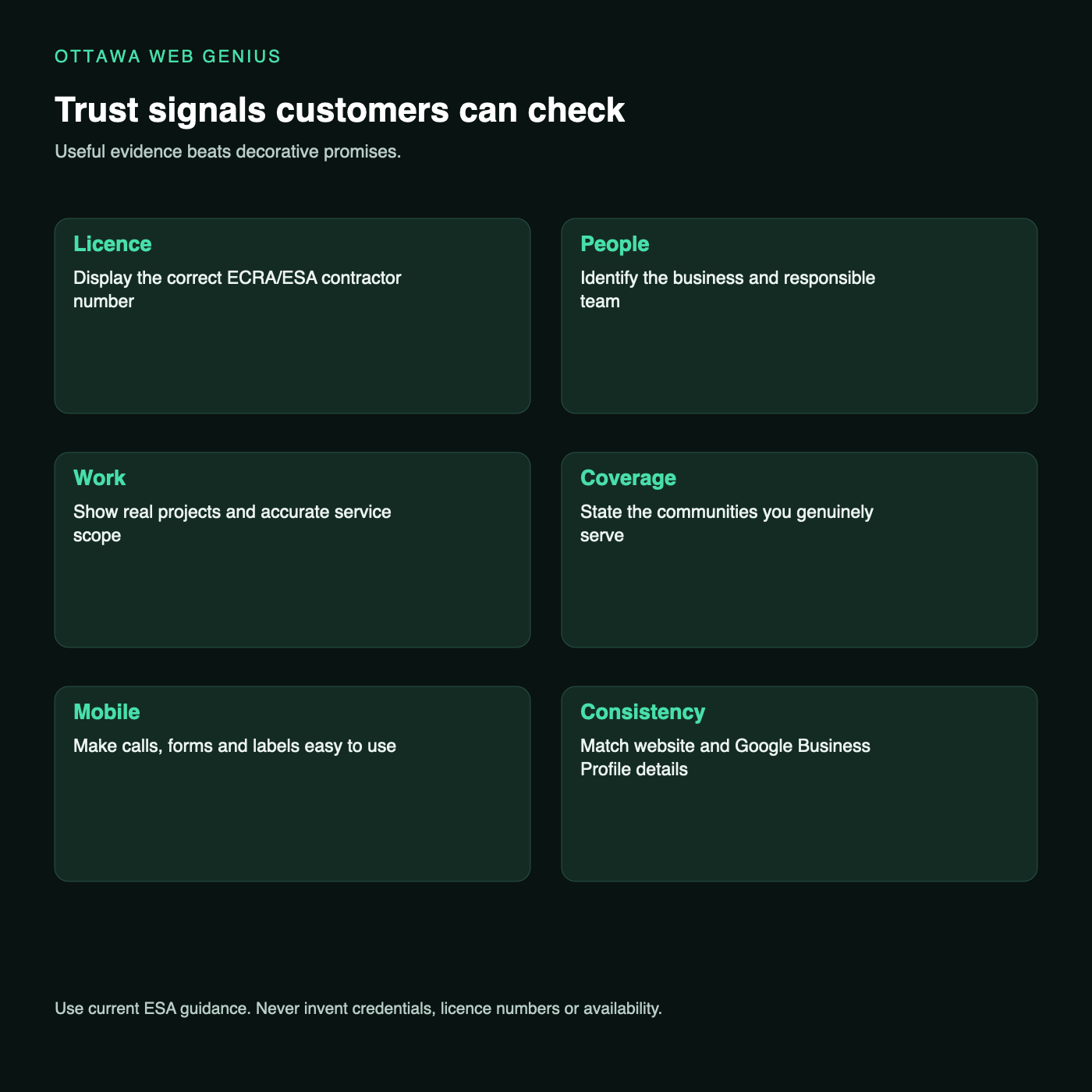
Ontario's Electrical Safety Authority says electrical contractors must prominently display their ECRA/ESA licence number in advertising and other public communications. Treat the website as part of that responsibility. Read the ESA's requirements for displaying your licence and use the business's correct, current number.
Place it somewhere customers can find without opening a tiny footer on a phone. The contact page, about page and service-page trust section are useful locations. Explain what the number identifies, and give readers a route to the regulator's verification resources.
Do not invent a number for a design mockup that could accidentally reach the live site. Do not turn an individual employee's qualification into a broader claim about the business. If you show insurance, manufacturer training, professional membership or warranties, state only what the company can substantiate.
A row of impressive-looking badges is weaker than a small amount of verifiable evidence. Real team information, permission-cleared project photographs and clear business contact details help a customer understand who will be responsible for the work.
Build the Pages Electrical Customers Actually Need
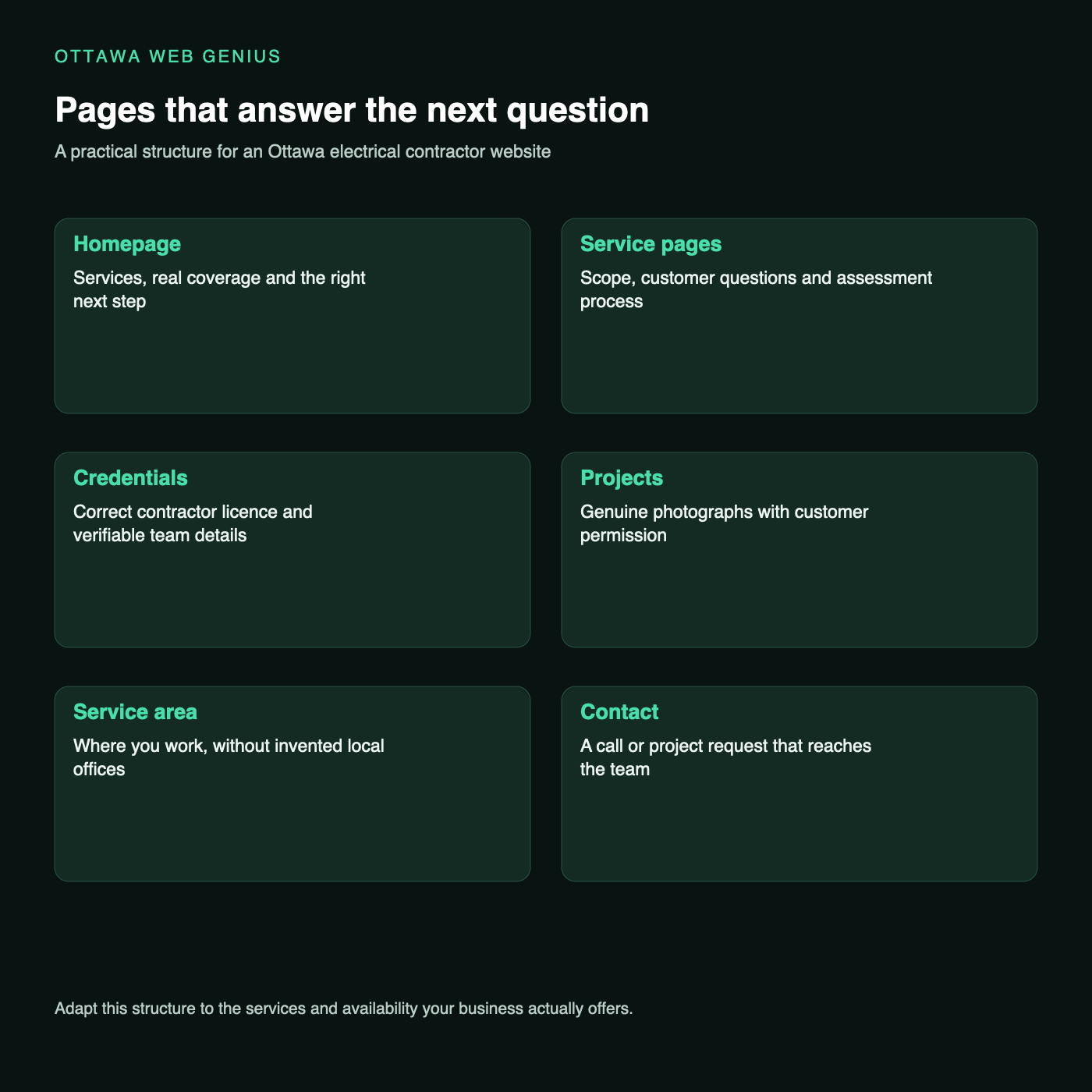
Start with the services the business currently performs. A useful page structure might include:
- A homepage that identifies the electrical contractor, main services and real service area.
- Separate pages for substantial services such as panel upgrades, EV charger installation, residential electrical work or commercial maintenance, where those services are genuinely offered.
- A service-area page explaining the communities covered and any practical travel limits.
- A credentials and team page with verifiable information.
- A project gallery showing relevant work with customer permission.
- A contact or quote page that explains the next step.
Each service page should answer the questions that determine whether an enquiry is suitable: what the service covers, who it is for, what information you need, and whether an assessment comes before pricing.
Avoid publishing a dozen near-identical pages that simply swap Kanata for Barrhaven or Orléans. Our service-area page guide explains how to add useful local information without creating repetitive location content.
Give Each Service a Clear Conversion Path
A conversion is the action that moves a suitable visitor toward becoming a customer. For an electrical contractor, that may be a call, a project enquiry or a request for an assessment. It is not necessarily an online purchase.
On a planned-project page, explain what the customer should submit. An EV charger enquiry could ask for the property location, charger details if already selected, and a short description of the project. Your qualified team should determine what additional information or site assessment is needed.
For urgent enquiries, make the phone number easy to tap and show the actual hours beside it. Explain what happens outside those hours. A voicemail route is acceptable when it is honest; an unmonitored form presented as immediate emergency assistance is not.
Keep forms proportionate. Name, contact method, location, service type and a short message are usually a better starting point than a long technical questionnaire. Make photo uploads optional and explain that a submitted photograph does not replace a professional assessment.
Explain Pricing Without Promising an Unseen Quote
Customers want enough context to decide whether to contact you. That does not mean publishing an unsupported flat price for every installation.
Explain the factors your team actually considers: project scope, existing conditions, equipment, access, assessment requirements and any work outside the initial request. Distinguish an estimate from a confirmed quote and explain when each becomes available.
If you publish a call-out charge, assessment fee or starting price, give its real conditions and keep it current. Avoid displaying an attractive “from” number that applies to almost none of the enquiries you accept.
You can also explain the process without inventing a completion promise. For example: enquiry received, scope reviewed, assessment arranged if needed, written quote supplied, work scheduled, and the applicable inspection or documentation process followed. Your own contractor should review wording about technical or regulatory obligations before publication.
Use Ottawa Context That Helps the Customer
Local relevance should change the information, not just the place name. A contractor serving central Ottawa and surrounding communities should explain where the team actually travels, whether commercial and residential work have different contact routes, and how customers should arrange access.
Use neighbourhood names when they clarify coverage. A real project example from Nepean or Stittsville can be useful when you have permission to publish it and can explain the work accurately. A stock photograph labelled as a completed Ottawa project creates the wrong impression.
For bilingual audiences, consider whether important service and contact information should be available in French as well as English. Choose languages your business can support through the enquiry and service process, rather than translating a single page and leaving customers at a dead end.
Connect Your Website and Google Business Profile
Your website and profile should describe the same business. Keep the name, phone number, hours, website destination and service coverage consistent. If customers do not visit your business address, configure the profile according to Google's service-area guidance instead of presenting a home or mailing address as a public storefront.
Our Google Maps setup guide covers creating, claiming and configuring a listing. For an existing profile, use the Google Business Profile optimization guide and local SEO guide.
Google says local results mainly reflect relevance, distance and prominence. A complete website and profile can support visibility, but neither a design agency nor a contractor can promise the top Maps position. See Google's published local-ranking guidance.
Make the Mobile Experience Work Under Pressure
Test the site on a phone with the same impatience a customer brings to it. Can someone identify your service area, find the licence information and contact you without dismissing several overlays?
Use readable text, clear headings, visible form labels and buttons that do not crowd each other. A sticky call button can help, but it should not cover the form or important safety information. Keep project photographs useful and compressed so they do not delay the first answer.
A practical test is to ask someone unfamiliar with the site to find one service and submit a test enquiry. Watch where they hesitate. Then verify that the message reaches the right person, includes the submitted details and receives the response your page promises.
Measure Suitable Enquiries, Not Just Traffic
A hundred visits do not tell you whether the website is helping. Track the actions you can define reliably: calls initiated from the site, completed forms and booked assessments where those are part of your process.
Then review enquiry quality with your team. Was the location inside your service area? Was the requested work relevant? Did the prospect understand the next step? Keep visitor counts, enquiries, qualified opportunities and completed jobs as separate measures.
Do not label every click-to-call event as a new customer. The call may not connect, the caller may already be a client, or the work may be unsuitable. Use that distinction when deciding whether to improve a page, change your coverage information or adjust your marketing.
Electrician Website Checklist
- Display the correct ECRA/ESA electrical contractor licence number prominently.
- Describe only services, credentials and availability the business can support.
- Separate urgent calls from planned-project enquiries.
- Give major services their own useful pages where the content warrants it.
- Explain real service coverage without inventing local offices.
- Use genuine project photographs with permission and descriptive alt text.
- Keep the profile, website, hours and phone number consistent.
- Test forms, call buttons and message delivery on mobile.
- Explain the quote or assessment process clearly.
- Review suitable enquiries separately from visits and clicks.
Frequently Asked Questions
Does an Ottawa electrician need a separate website for every service?
Usually the business needs one coherent website with useful service pages. A separate page can make sense for a substantial service with distinct customer questions. Creating multiple websites or thin pages for every keyword can make maintenance harder and confuse customers.
Where should the ECRA/ESA licence number appear?
Follow the ESA's current display requirements and make the correct contractor number easy to find in public-facing website information. A footer alone may be easy to miss on mobile. Have the business confirm its wording and placement against the regulator's guidance.
Should an electrician website offer online booking?
Only when the business can honour the booking workflow. A project may require scope review before an appointment is confirmed. In that case, a clear request-an-assessment form is more accurate than an instant booking tool that implies confirmed availability.
Can the website promise a fixed electrical installation price?
Only when the business has a real, supportable offer with clear conditions. Many projects depend on existing conditions and assessment. Explain the process and pricing factors instead of inventing a universal amount to attract enquiries.
Are neighbourhood pages useful for electricians?
They can be useful when they explain genuine coverage, relevant projects or practical local information. Pages that merely repeat the same text with different neighbourhood names add little value. A clear service-area page is often the better starting point.
What should we improve before buying more website traffic?
Confirm that the right services and service area are clear, credentials are verifiable, mobile contact options work and enquiries reach the team. Sending more visitors to a confusing or broken contact process makes the problem more expensive.
Build an Electrician Website Around Trust and the Next Step
A strong electrical contractor website helps the customer make a sensible decision. It explains the work, makes the business's qualifications verifiable, and offers a contact route that matches the real service process.
Ottawa Web Genius builds websites for electricians and other trades businesses in Ottawa, connecting useful content, mobile design and local visibility. Explore our web design services and pricing options, or request a conversation about your electrician website.