
Web Design for Plumbers in Ottawa: What Every Plumbing Company Website Needs
A homeowner with a leaking pipe is not browsing a plumbing website in the same way as someone planning a bathroom renovation. One needs a working phone number and honest availability. The other needs to understand services, credentials, assessment and the quote process. Web design for plumbers in Ottawa should make both journeys clear without promising work the company cannot deliver.
The most useful plumbing website answers four questions quickly: do you handle this problem, do you serve this address, why should I trust your team, and what happens when I contact you? Attractive photographs help, but they cannot compensate for an unanswered call or an unclear service area.
This guide extends our website guide for contractors and trades businesses, focusing on the decisions that matter for plumbing companies.
Why Plumbing Websites Are Different
Plumbing combines urgent enquiries, planned improvements and repeat maintenance. Those services involve different expectations. A blocked drain, a fixture replacement and a commercial maintenance agreement should not all lead to the same vague “Get started” button.
Make the business's actual service model visible. If the team answers calls during stated hours, display those hours beside the contact route. If after-hours calls go to voicemail, say what customers should expect. Only advertise emergency coverage, guaranteed arrival times or round-the-clock availability when the company can support those promises consistently.
A website also needs to reduce uncertainty before pricing. A customer may describe a symptom without knowing its cause. Explain whether the next step is a call, an assessment or a scheduled service request. Avoid a form that appears to provide a diagnosis or a confirmed booking when your team must review the situation first.
Put Verifiable Qualifications Ahead of Decorative Badges
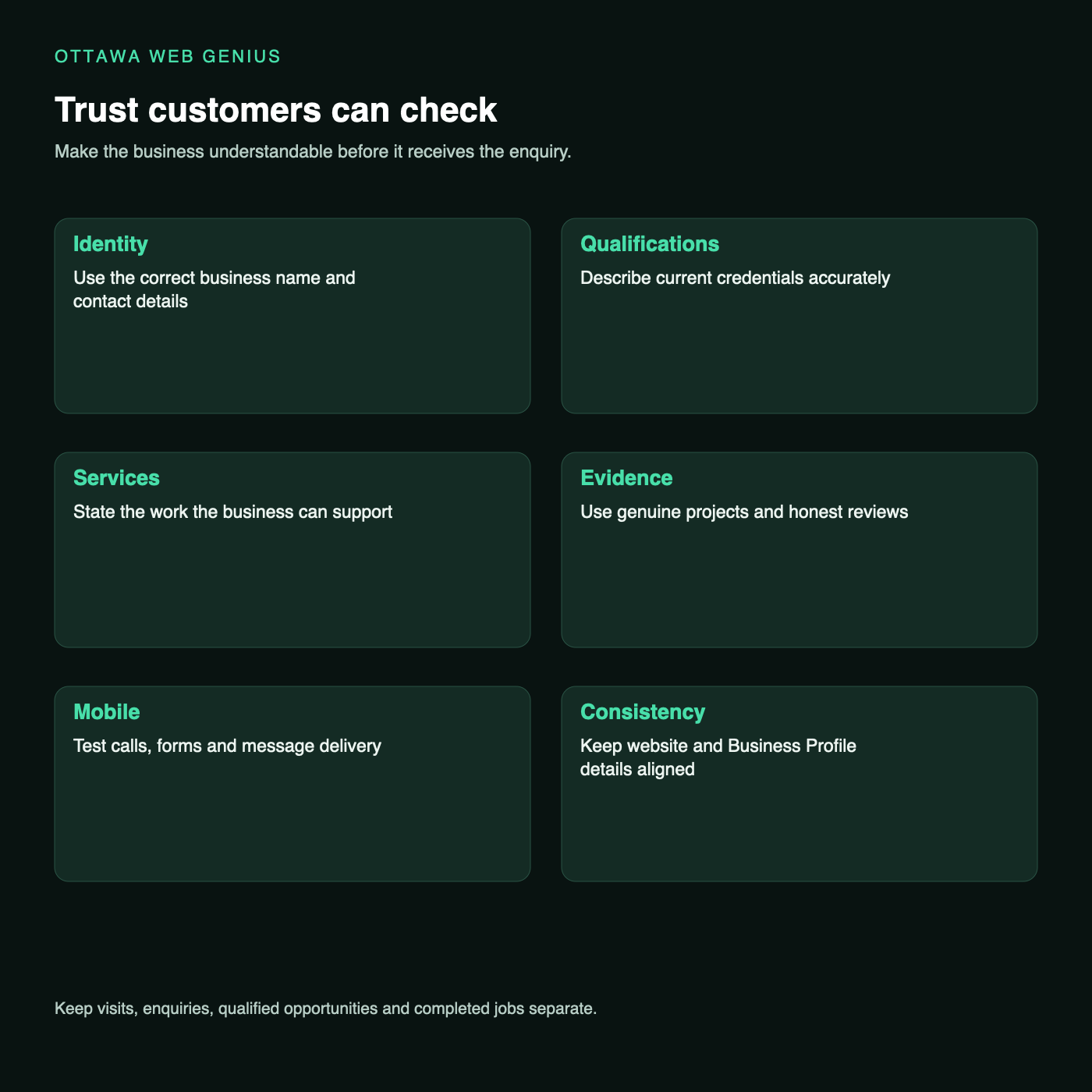
Customers should be able to understand who is responsible for the work. Publish the correct business name, contact details and relevant team information. Describe qualifications accurately rather than relying on an unexplained “fully licensed” badge.
Plumber is a compulsory trade in Ontario. Skilled Trades Ontario explains the qualifications and exemptions that apply and provides a public register. Link customers to the appropriate verification resource and have the company confirm that any statement about its workers is current and precise.
Keep individual qualifications distinct from company-wide claims. An employee's certificate does not automatically establish every service the business advertises. The same care applies to insurance, manufacturer authorization, warranties and professional memberships: explain only what the company can substantiate.
Real people and real work are useful evidence. Use team photographs with permission, identify relevant experience that can be verified, and show project images that accurately represent the work. Never label a stock photograph as a completed Ottawa installation.
Build Pages Around Actual Plumbing Services
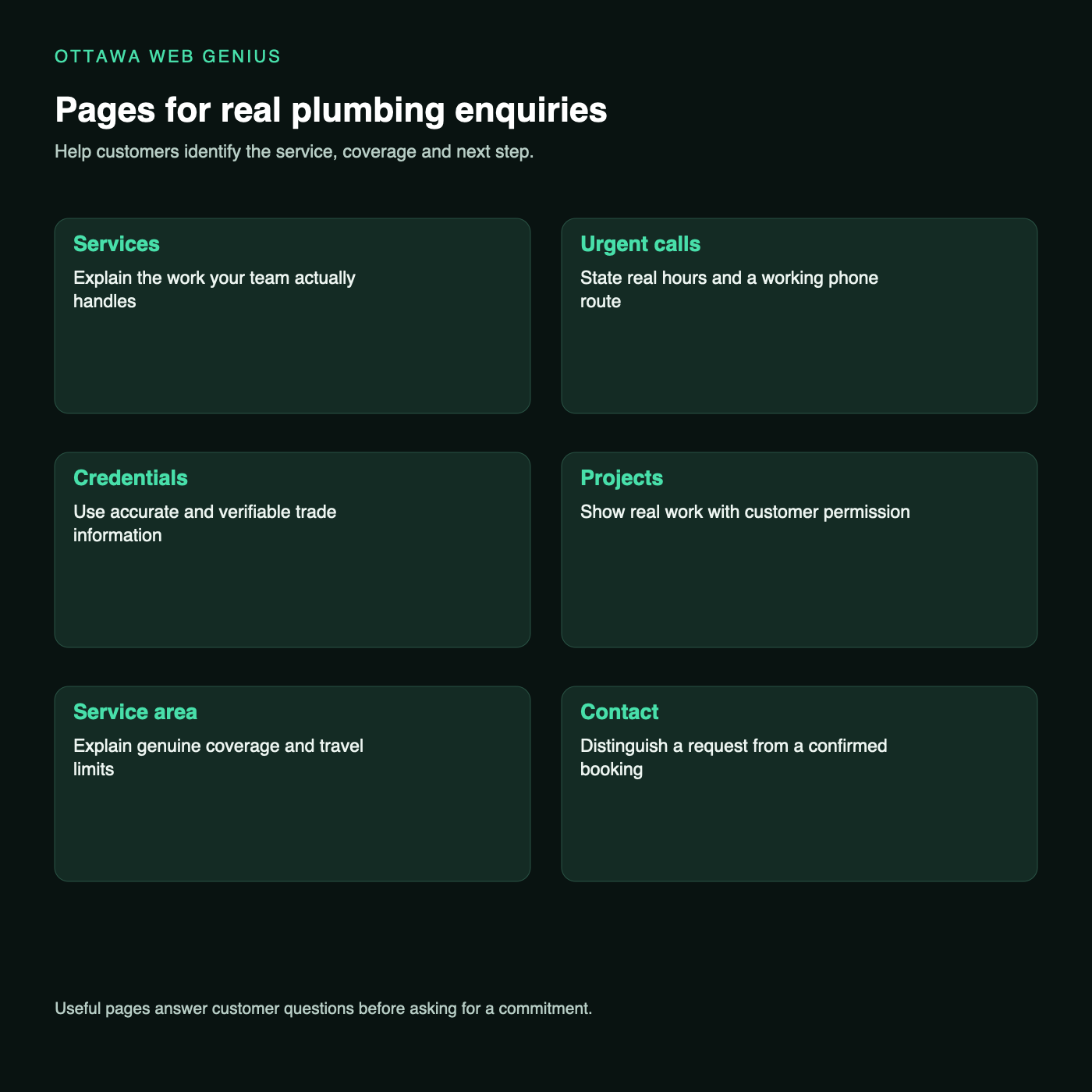
Start with the work the business genuinely wants to receive. A practical structure includes a homepage, substantial service pages, service coverage, company information and a contact route. The important difference is what those pages say.
A service page should explain the problem it addresses, the scope the team handles, what information helps an enquiry, and how the next step works. Where relevant, separate drain services, repairs, fixture installation, renovation plumbing and commercial work. Do not add a service merely because its keyword looks attractive.
Residential and commercial readers may need different information. A homeowner wants a clear process and confidence about who will attend. A property manager may need to understand maintenance arrangements, access coordination and who handles the enquiry. Write for the actual customer, rather than filling both pages with identical promotional paragraphs.
A project gallery can support these pages when it provides context. Describe the type of work, constraints and outcome accurately. Protect customer privacy and obtain permission before publishing identifiable addresses, interiors or names.
Separate Urgent Calls From Planned Projects
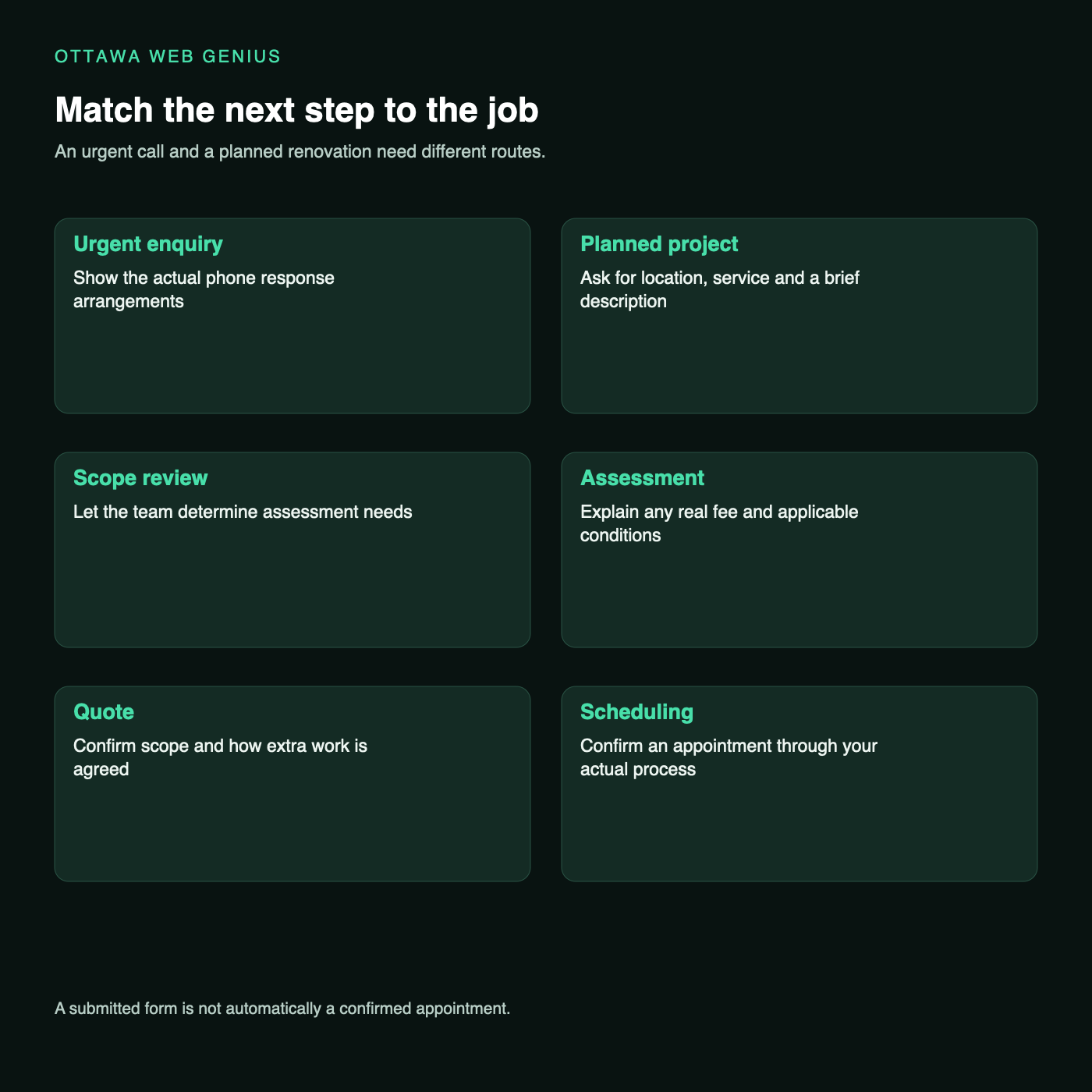
For an urgent enquiry, the first action may be a telephone call. Make the number easy to tap on a phone and show the relevant hours. Avoid placing the contact route underneath a long animation or a large gallery.
For a planned project, a short enquiry form can be more useful. Ask for contact details, location, service type and a brief description. If photographs would help initial review, make the upload optional and explain that an image does not replace an assessment.
The page should tell the customer whether they are requesting a call, an appointment or a quote. These are different commitments. A request form should not display “Your plumber is booked” if nobody has confirmed availability.
Route enquiries to the person who can respond. A beautiful form that sends to an abandoned inbox is a business problem, not a design detail. Before launch, test delivery, required fields and the confirmation message. Use test information and coordinate with the team so a test is not mistaken for a real emergency.
Explain Pricing and Assessment Honestly
Plumbing customers want enough information to decide whether to contact you. That does not require an invented universal repair price. Explain how the business actually establishes scope and what happens before a quote is confirmed.
If you publish an assessment fee, call-out charge or starting price, include the conditions that make it meaningful. Explain relevant exclusions and keep the number current. A low headline amount that applies to almost no real job is likely to create disappointed enquiries.
Separate estimates from confirmed quotes. Describe whether the team needs photographs, a conversation or an on-site assessment, and how additional work is agreed. Let the contractor review wording about permits, inspections and technical obligations; the website should not make blanket claims that every repair follows the same process.
A simple sequence is often more reassuring than a slogan: enquiry, scope review, assessment where needed, quote, agreed scheduling and completion. Use only the steps your business actually follows. Do not add a two-hour arrival promise or a next-day installation claim without operational evidence.
Make Ottawa Service Coverage Useful
A useful service-area description helps a customer decide whether an enquiry is appropriate. State the communities you genuinely cover, any practical travel limits and whether coverage differs by service. Kanata, Barrhaven, Nepean and Orléans should appear where they clarify real coverage, not as a repeated keyword list.
Ottawa customers may also have different property contexts: a central neighbourhood home, a suburban renovation or a managed commercial property. Explain what information your team needs to assess those enquiries. Avoid diagnosing a building's plumbing simply from its neighbourhood or age.
If you provide French-language service, make important service and contact information usable in French through the entire enquiry process. A translated landing page is less helpful when the next step is unavailable in the same language.
Our service-area page guide explains when local pages add value. Do not create dozens of near-identical pages that only swap place names, or invent branch offices to make coverage appear broader.
Connect the Website to Local Search
Local search helps customers discover the business near the time they need a service. It includes the website, Google Maps and your Google Business Profile. Keep the business name, phone number, hours, service coverage and website destination consistent.
Our Google Maps setup guide covers creating or claiming a profile. For an existing listing, use our Google Business Profile optimization guide and local SEO guide.
Google's local-ranking guidance describes relevance, distance and prominence. Accurate information, useful service pages, real project evidence and honest reviews can support a stronger presence. They do not justify a promise that every plumber will rank first across Ottawa.
Ask for reviews consistently and respond professionally. Do not screen requests so only happy customers receive the public review link, invent testimonials, or promise a reward for a positive rating. Customer feedback should remain a credible account of actual experience.
Design the Mobile Contact Experience First
Test the website on a real phone. Can a visitor identify the service, check coverage and contact the business without zooming or closing several overlays? Do the headings wrap naturally? Are links and form labels readable?
A persistent call button can help, but it should not cover form controls or important content. Use clear wording such as “Call during business hours” when that accurately describes the service. A generic “Emergency help now” message is misleading if nobody is monitoring that route.
Keep images useful and reasonably sized. Use descriptive alternative text for meaningful images so their purpose remains understandable to people who cannot see them. Do not turn alternative text into a string of repeated location keywords.
Check error messages too. If a customer misses a required field, explain what to fix and preserve the information they already entered. Confirm that the submitted message reaches the correct inbox and that the page accurately describes the next step.
Measure Enquiry Quality Separately From Visits
Traffic is a starting measure, not proof that the website produces work. Track actions you can define: calls initiated from the page, completed forms and appointment requests. Then review whether those enquiries match the services and area the business supports.
Keep visits, enquiries, qualified opportunities and completed jobs separate. A click-to-call event may not connect, and a submitted form may concern work outside your scope. Calling every event a new customer hides the information needed to improve the site.
Review patterns with the team. Repeated out-of-area calls may suggest unclear coverage. Confusion about fees may indicate weak pricing explanations. Unanswered project forms may be a response-process problem. Fix the cause before buying more traffic.
Plumbing Company Website Checklist
- Identify the business and relevant qualifications accurately.
- Describe only services and coverage the team genuinely provides.
- Separate urgent calls from planned projects and commercial enquiries.
- State real hours and after-hours arrangements.
- Explain assessment, quotes and appointment confirmation.
- Publish genuine project photographs with permission.
- Keep website and Google Business Profile details consistent.
- Test mobile calls, forms, errors and message delivery.
- Make pricing conditions and next steps clear.
- Measure suitable enquiries separately from visits and completed work.
Frequently Asked Questions
Does a plumbing company need an emergency page?
Only when it offers an emergency service that warrants its own clear explanation. State real coverage, hours and the contact process. If the company handles enquiries during ordinary hours, describe that honestly instead of using emergency language to attract calls.
Should every plumbing service have its own page?
Separate pages help when services have different customer questions, scope or contact requirements. Group closely related work when that produces a clearer experience. Avoid thin pages created only to repeat keywords.
Can we publish fixed plumbing prices online?
Use fixed prices only for real offers with clear scope and conditions. For work requiring assessment, explain the process and pricing factors. Do not invent a universal fee for an unknown repair.
What qualifications should a plumber website mention?
Mention current, verifiable qualifications relevant to the work, with accurate wording about the people and business. Skilled Trades Ontario's guidance and public register help customers check individual trade qualifications; exemptions and other requirements should be considered appropriately.
Is online booking better than a quote form?
It depends on whether the business can confirm a suitable appointment without reviewing the scope first. Where review is needed, use a clear appointment request or enquiry form. Do not imply that a requested time is confirmed automatically.
What should we fix before paying for more leads?
Check that services, coverage, credentials and hours are clear, the phone route works, forms deliver and the team responds as described. More traffic will not repair a confusing or unmonitored enquiry process.
Build a Plumbing Website That Supports the Real Business
A strong plumbing website helps suitable customers understand the service and take the right next step. It should support your team's actual process, with credible information and contact options that work on a phone.
Ottawa Web Genius builds websites for plumbing companies and other trades businesses in Ottawa. Explore our web design services, review our pricing options, or discuss your plumbing company's website.