What Will Small Business Websites Look Like in 2027?
Small business website trends for 2027 are often presented as a parade of colours, typefaces and effects. I do not think that is where the important change will happen. The shift I am watching is toward websites that do more useful work for the business.
The small-business websites that win will not necessarily look futuristic. They will feel unusually clear, fast, useful and trustworthy. They will explain the business well enough for a customer to act, structure information well enough for search and AI systems to understand it, and connect cleanly to the everyday work behind the screen.
From where I sit at Ottawa Web Genius, that is already the direction of travel. Owners are less interested in owning a prettier online brochure. They want a website that helps answer questions, qualify inquiries, book work, support local visibility and stay accurate after launch. By 2027, I expect the gap between a website that merely exists and one that operates as part of the business to become impossible to ignore.
The Website Will Become Business Infrastructure
For years, the standard small-business website brief was mostly a list of pages: home, about, services and contact. Those pages still matter, but the better question now is what the website should help the business accomplish.
A contractor may need quote requests routed by service type. A clinic may need clear appointment paths and accessible patient information. A restaurant may need current hours, menus, reservations and location details that remain consistent across its website and Google Business Profile. A professional firm may need to explain a complicated service before a prospective client is ready to call.
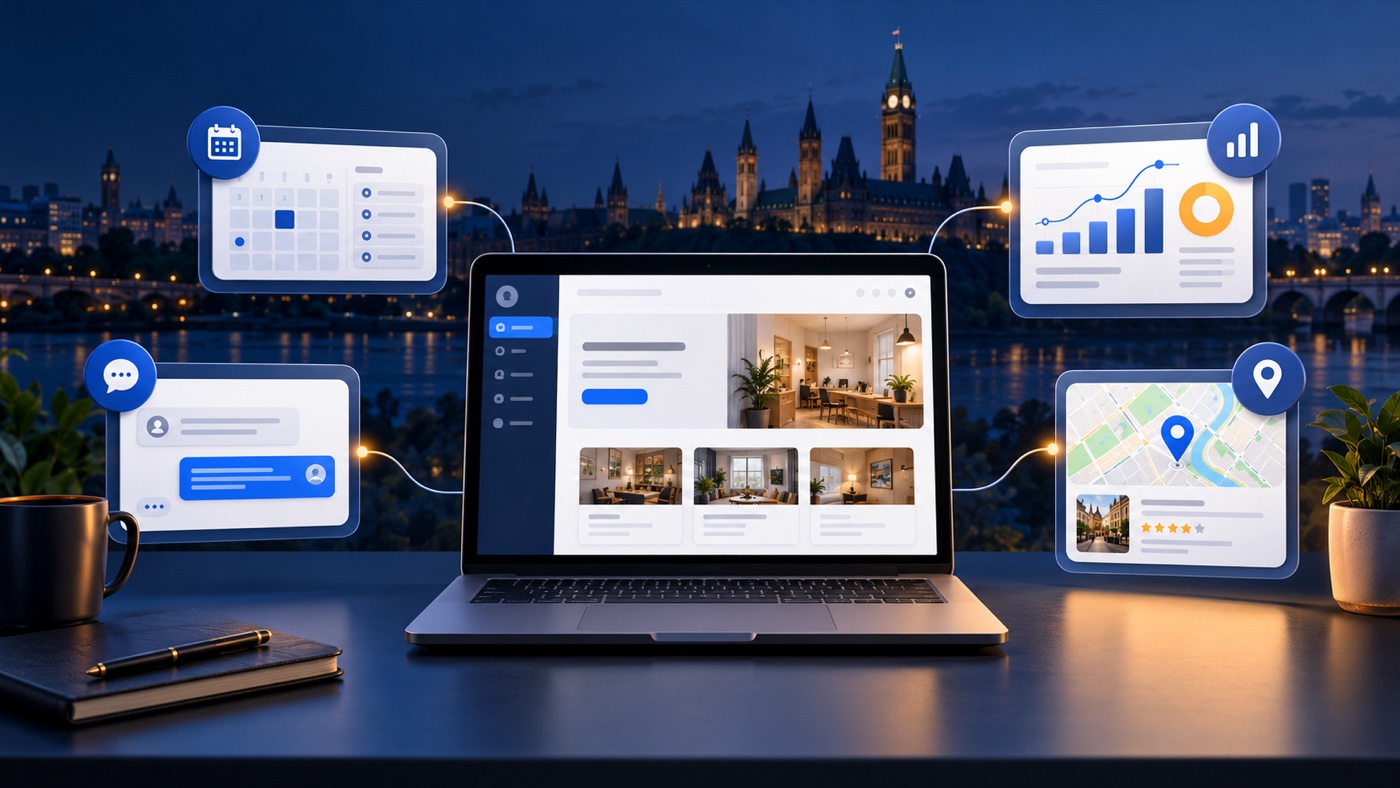
In 2027, those needs will push websites closer to the rest of the operation. Booking, payments, customer relationship systems, email follow-up and analytics will not feel like optional add-ons. They will be part of the design conversation from the beginning.
This does not mean every Ottawa business needs a complicated technology stack. In fact, most do not. It means the site should have a defined job and a reliable path from attention to action. A five-page website that consistently generates qualified calls can be more valuable than a large site full of disconnected features.
Our own web design and development process already treats structure, mobile behaviour, SEO foundations and conversion paths as parts of one system. I expect that integrated approach to become the baseline rather than the premium option.
AI Search Will Reward Clarity More Than Tricks
AI will influence how people discover businesses, but I am skeptical of anyone promising a secret new formula for “AI optimization.” Google’s current guidance is much less dramatic: the same technical and editorial foundations used for Search still apply to AI Overviews and AI Mode. Pages need to be indexable, important information should be available as text, internal links should make content easy to find, and structured data should match what visitors can actually see.
That has a practical consequence. A useful 2027 website will describe its services, locations, expertise and next steps in plain language. It will answer the questions customers actually ask. It will use accurate headings and structured data without inventing information for machines that is absent from the page.
The web may become more machine-read, but the winning response is not to write for robots. Google continues to recommend helpful, reliable, people-first content, including original analysis and clear authorship. The best way to become understandable to an AI system is often to become more specific and useful to a human being.
For a local business, that means replacing generic claims such as “quality service” with evidence. Explain the actual service area. Show real work. Name the problems you solve. Publish accurate pricing context when possible. Connect related pages. Make it obvious who wrote or reviewed the content.
This is also why I do not believe AI will erase the need for good websites. It may make generic pages easier to produce, but that only makes original experience, credible proof and precise local context more valuable.
The Foundations Will Be Deliberately Boring
The most important parts of a 2027 website may be the least glamorous: speed, stability, clean code, readable content and forms that work.
Google’s Core Web Vitals still focus on three human experiences: how quickly the main content loads, how responsive the page feels after an interaction, and whether the layout jumps around while someone is trying to use it. Google’s published “good” thresholds are a Largest Contentful Paint of 2.5 seconds or less, Interaction to Next Paint of 200 milliseconds or less, and Cumulative Layout Shift of 0.1 or less.
Those measurements matter because they describe real frustration. A slow hero image delays the answer a visitor came for. A laggy menu makes a site feel broken. A shifting button can cause someone to tap the wrong thing. No animation trend can compensate for those failures.
The same principle applies to content management. A website that depends on one person remembering how a fragile page builder works is not future-ready. Owners need a manageable system, sensible backups, clear update responsibility and an agency or internal team that can respond when something changes.
That is why our website maintenance guidance treats updates, security, performance and content accuracy as ongoing work. In 2027, “Who maintains this after launch?” will be as important as “Who designed it?”
Accessibility Will Shape Better Design
Accessibility is sometimes treated as a compliance layer applied near the end of a project. That is backwards. It is a design quality standard.
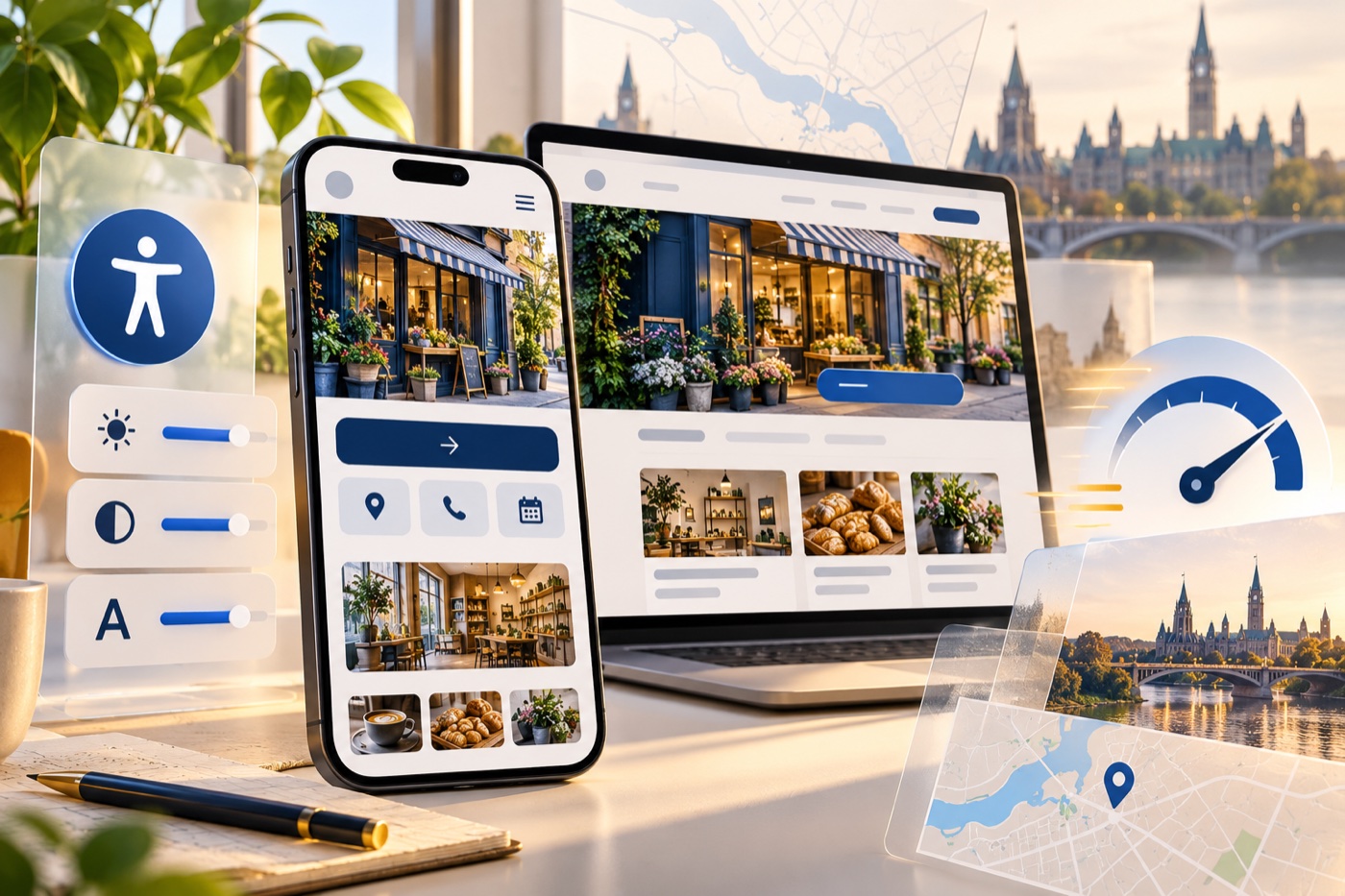
The Web Content Accessibility Guidelines organize accessibility around four principles: content should be perceivable, operable, understandable and robust. In practice, those principles lead to better decisions for almost everyone: readable contrast, meaningful image descriptions, logical headings, keyboard access, visible focus states, clear labels and touch targets that are not frustratingly small.
I expect 2027 websites to make these decisions earlier. Designers will spend less time trying to make every site look unusually clever and more time ensuring that more people can use it successfully across different devices and abilities.
This will also influence the technology underneath. Semantic HTML, native form controls and straightforward navigation are resilient. They work across more browsers, assistive technologies and automated systems than interfaces built from layers of visually impressive but ambiguous components.
The result will not be dull design. It will be confident design: fewer elements competing for attention, clearer hierarchy, stronger typography and motion used with purpose.
Authenticity Will Become a Visible Competitive Advantage
AI can already produce a plausible service page in seconds. By 2027, the web will contain even more competent but interchangeable content. That changes what earns trust.
Small businesses will need to show the texture that generic content cannot supply: local knowledge, recognizable work, honest explanations, named expertise and a point of view. A real Ottawa renovation company should show its projects and explain how local housing conditions affect the work. A consultant should clarify how engagements actually unfold. A neighbourhood business should make its location, hours and community context unmistakable.
On local service-business projects, the most persuasive material is rarely the longest paragraph. It is often a specific project image, a clear process, a useful answer from the owner or a service boundary stated without hedging. Those details help customers decide whether the business is right for them. They also give search systems information that cannot be recreated by swapping a city name into a template.
This is the part of web design that AI will not replace. AI can accelerate research, drafting and production, but the business still has to supply the truth worth communicating. The agency’s job becomes more strategic: uncovering that truth, organizing it, verifying it and presenting it without sanding off the owner’s voice.
The Best Websites Will Keep Changing After Launch
The old model treated launch day as the finish line. I think 2027 will finally make that idea feel obsolete.
A useful website is never frozen. Services change. Staff members join. Photos age. Search behaviour moves. Customers ask new questions. Plugins, browsers and devices change. A form that worked six months ago can fail silently after an update. A page that used to convert can become unclear as the business evolves.
The answer is not constant redesign. It is disciplined operation: review the site, measure what matters, update facts, improve weak paths and keep the technical foundation healthy. Google’s guidance for AI features even points site owners back to Search Console and analytics to understand visibility and behaviour rather than chasing a separate “AI ranking” dashboard.
For owners, this changes the buying decision. The cheapest launch price may be less important than the quality of the handoff, the maintainability of the platform and the support available afterward. Our Partner Growth approach is built around that reality: the website, SEO, content and maintenance work better when they are managed as one continuing system.
What This Means for Ottawa Small Businesses
If you are planning a website for 2027, you do not need to predict every interface trend. Start with a more durable question: what should this website reliably do for the business and its customers?
It should make the offer easy to understand. It should work quickly on a phone. It should be usable by more people. It should contain accurate, original information that can be understood by customers, search engines and AI systems. It should connect to the business process without creating unnecessary complexity. And someone should be responsible for keeping it healthy after launch.
My honest prediction is that the most effective websites of 2027 will not announce that they are futuristic. They will simply remove more friction. They will answer better questions, make fewer empty claims and turn a visitor’s next step into something obvious.
That is not a flashy future. It is a useful one, and small businesses can start building toward it now.
If you want to rethink how your website supports the next stage of your business, talk with Ottawa Web Genius. We will give you a practical view of what should change, what can stay and what is worth investing in.