
Web Design for Landscaping and Lawn Care Companies in Ottawa
A landscaping company can have excellent project photographs and still receive the wrong enquiries. Homeowners may not know whether you offer weekly lawn care, full landscape construction, garden maintenance or all three. They may assume you serve their neighbourhood or have space in the schedule. Web design for landscaping and lawn care companies in Ottawa should make those practical details clear before asking someone to request a quote.
A useful website separates recurring services from larger projects, shows genuine work, explains real coverage and sets an accurate next step. It helps the customer understand the business and helps your team spend less time sorting enquiries outside its scope.
This guide builds on our website guide for contractors and trades businesses, with a focus on seasonal services, project evidence and site-assessment enquiries.
Why Landscaping Websites Are Different
Landscaping includes several buying journeys. A homeowner comparing a recurring mowing service may need coverage, frequency and service conditions. Someone planning a patio or garden redesign needs evidence of relevant work, a sense of the process and an explanation of what happens before pricing.
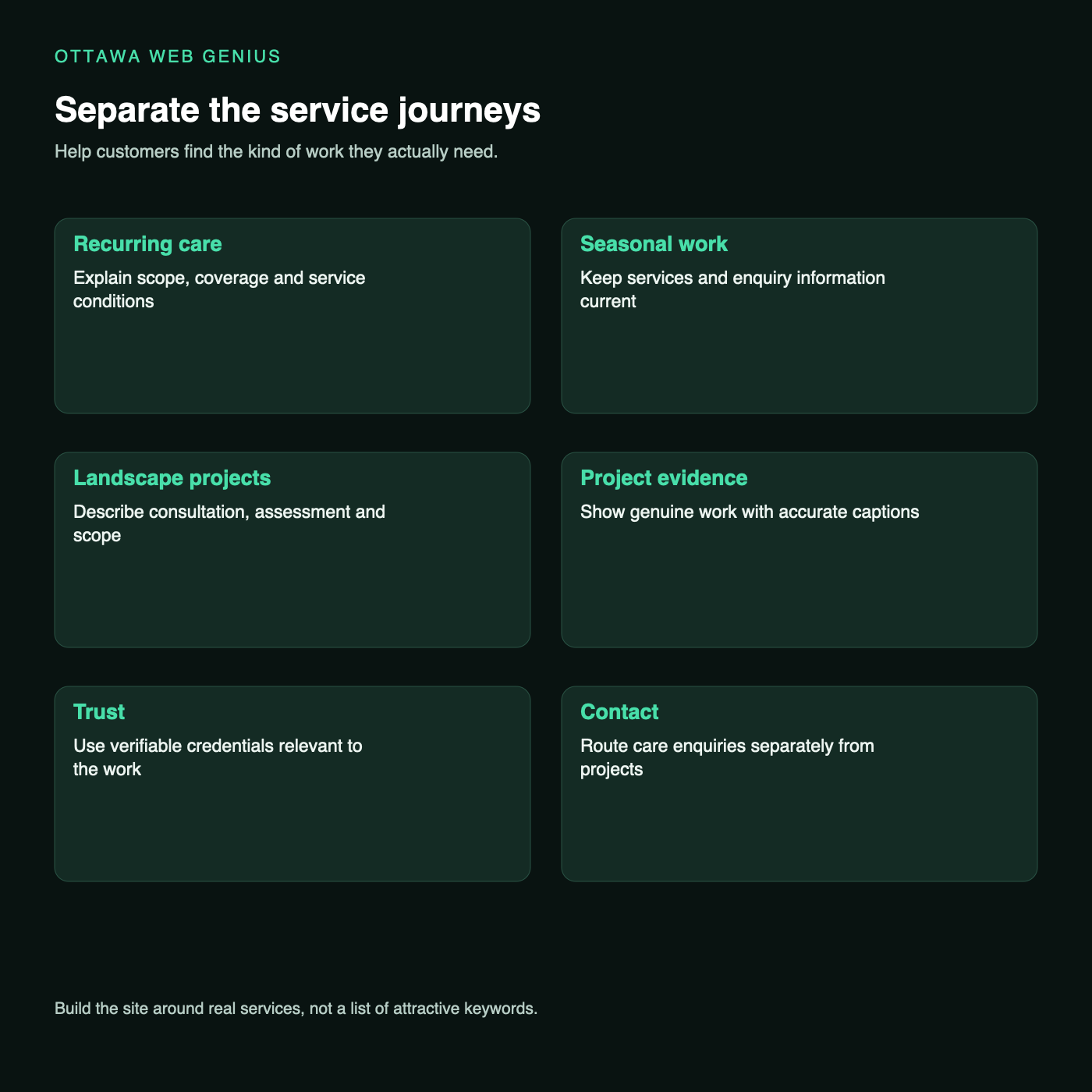
Separate those journeys. A single “Landscaping services” page can hide important differences between maintenance, design and construction. It can also attract work that the business does not perform, such as snow removal or tree services added to a template without review.
Seasonality makes accuracy especially important in Ottawa. The website should describe the services and availability you actually offer at that point in the year. Do not leave a spring promotion or an old booking promise visible indefinitely. A realistic explanation of enquiry timing is more useful than an unsupported “start next week” banner.
The site also depends heavily on visual evidence. A gallery should help a customer understand your work, rather than simply make the page colourful. Every photograph needs accurate context and appropriate permission.
Separate Lawn Care, Maintenance and Landscape Projects
Build the service structure around the business, not around a long keyword list. Explain which work is recurring, which is seasonal and which requires a site assessment or design discussion.
For recurring lawn or garden care, describe the actual service scope, coverage and arrangements. Explain what is included, what is separate and how customers should enquire. Do not imply that every property receives the same schedule or treatment unless that is the real offer.
For landscape projects, show the kinds of work the team performs and explain the stages before a quote. A customer may need to understand consultation, scope, site conditions, design decisions and scheduling. Present those as your process only when the company confirms them.
A practical page structure could include:
- A homepage identifying the business, main service groups and real coverage.
- Useful pages for substantial services the team genuinely provides.
- A project gallery or selected project stories with permission-cleared photographs.
- A service-area page explaining travel limits and coverage.
- An about page with accurate team information and relevant credentials.
- Separate enquiry routes for recurring care and larger projects.
Avoid adding a page for every neighbourhood unless it offers information that changes the customer's decision. Our service-area page guide explains when a local page is useful and when it becomes repetition.
Make the Gallery Useful Evidence
Good project photographs answer questions. What kind of work was completed? Was it a small garden, an ongoing maintenance property or a larger construction project? Which parts were delivered by your company?
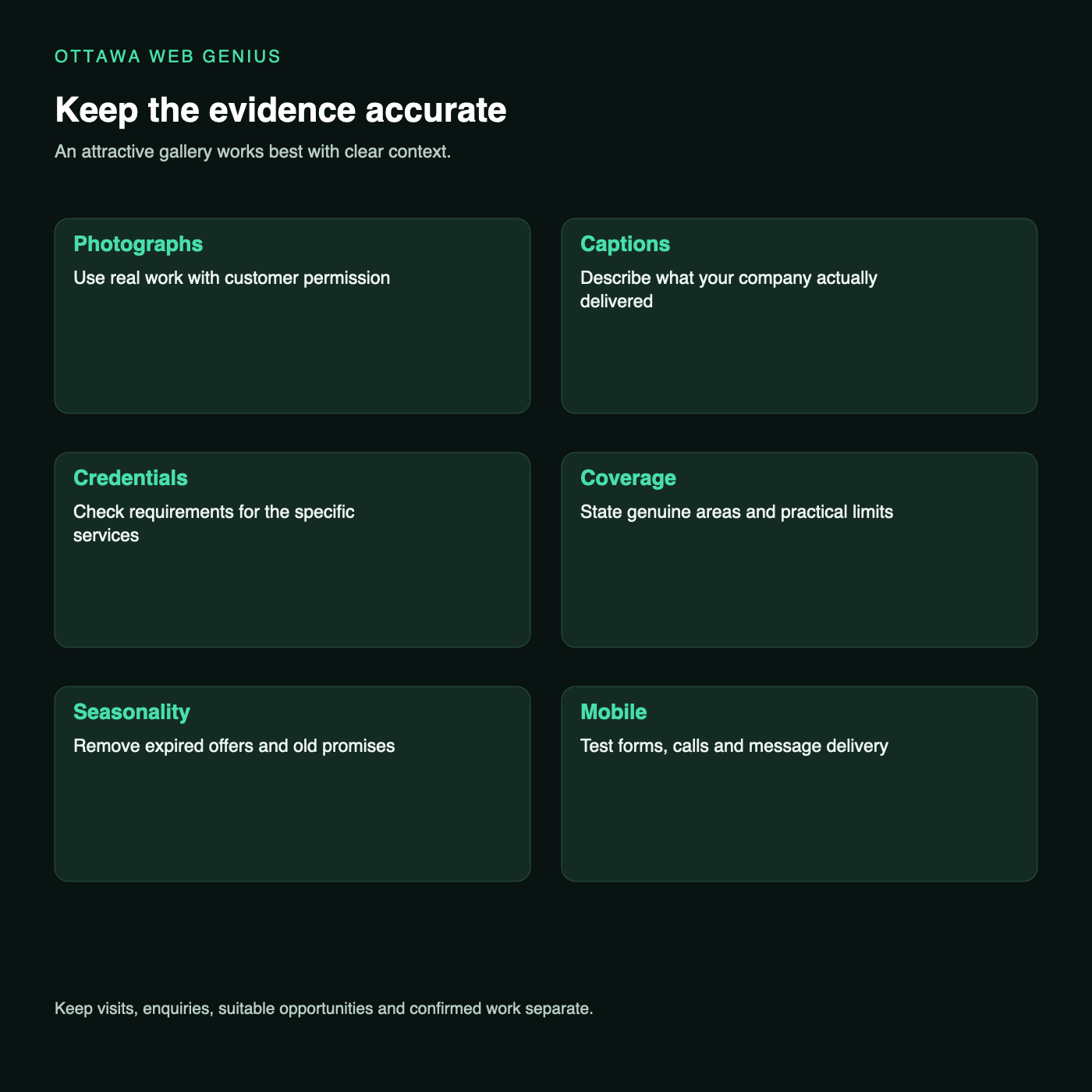
Use a short factual caption where context matters. Explain the service and the relevant outcome without claiming that every visitor will receive the same result. A beautiful image from a partner or supplier should not be presented as your completed project.
Before-and-after photographs need care. Label them accurately, preserve a fair comparison and avoid editing that exaggerates the work. Obtain customer permission before publishing identifiable property details, interiors, names or addresses. The fact that your team took a photograph does not automatically make every use appropriate.
Organize galleries by service when that helps a reader compare relevant work. A lawn-care prospect should not have to scroll through twenty patio images to find evidence of maintenance work. Add descriptive alternative text to meaningful images so their purpose remains understandable without seeing them.
Explain the Quote Process Before the Form
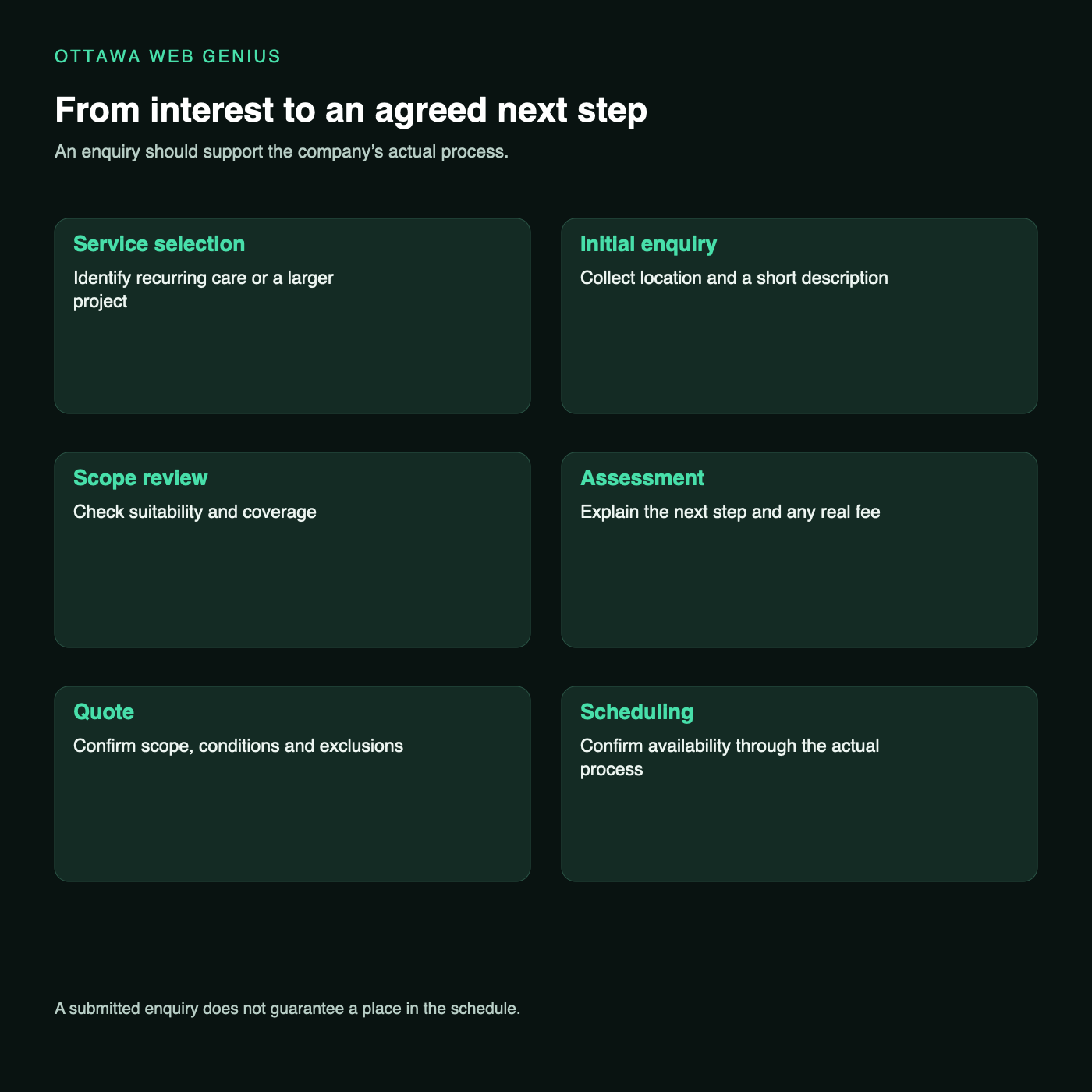
A quote form should collect enough information to route an enquiry, while leaving professional assessment to the team. Useful starting fields include contact details, property location, service type and a brief description.
For a larger project, ask about the broad goal and any timing constraints. An optional photograph may help initial review, but explain that it does not replace an assessment. Do not ask customers to upload sensitive documents or detailed personal information that the business does not need.
For recurring services, collect the information that determines whether the property fits the actual service model. If size, access or coverage affects suitability, explain that clearly. Avoid a form that suggests instant acceptance when the team must check the property first.
Make the confirmation message specific. “We received your enquiry” is different from “Your project is booked.” State only the response arrangements the business can maintain. Then test that submissions reach the right person and contain the required information.
Publish Honest Pricing Context
Customers often want a price before they understand the scope. A website can help by explaining how the company assesses work, even when it cannot provide a reliable amount without more information.
For a real standardized service, publish the actual offer and conditions. State exclusions, frequency or property requirements where they affect the price. For a project that depends on site conditions and design choices, explain the assessment and quote process rather than inventing a universal starting figure.
Distinguish an estimate, a design fee and a confirmed quote if your business uses those terms. Explain when a customer is making a commitment and how changes to scope are handled. Have the company review every price and promise before it reaches the live page.
Our pricing options explain the website side of the investment. Your landscaping website should apply the same principle of clarity to its own offers: enough context to make the next conversation useful, with conditions visible instead of hidden.
Show Trust Signals Relevant to the Work
Start with accurate business identity, contact information and real team details. Add relevant credentials, training, memberships, insurance statements or warranties only when the company can substantiate them. Explain what they mean rather than displaying an unexplained row of logos.
Different landscape services can involve different requirements. Do not describe a general membership or course as a government licence. Do not imply that a qualification covering one activity authorizes every service on the site.
For work where permits or other approvals may be relevant, make the process clear without promising that approval is automatic or unnecessary. The City of Ottawa's landscaping guide provides local planning context. Project-specific requirements should be checked for the actual scope and property, using current official guidance.
For example, the City guide says businesses installing or rebuilding specified hardscape features on private property need a City hardscaping contractor licence. If that work is part of your offer, make the applicable licence and verification route clear; do not present the requirement as applying identically to ordinary lawn mowing.
This is also a reason to avoid technical claims copied from a competitor. Have the responsible business review wording about grading, drainage, structures, pesticide services or other specialized work. A marketing page should explain the service honestly, not act as an unreviewed construction instruction manual.
Keep Ottawa Coverage and Seasonal Information Current
Name neighbourhoods where they clarify genuine coverage. If the team serves Kanata, Barrhaven, Nepean or Orléans, explain whether all services cover the same area. Recurring routes and larger project coverage may differ; describe the actual arrangement.
Show current enquiry information during seasonal changes. If a service is finished for the year, explain whether customers can enquire about the next season. Do not imply that an enquiry guarantees a place in the schedule.
Consider language across the whole customer journey. French service information can help a bilingual audience when the business can support the next conversation and service process in French. Keep both versions aligned when offers or availability change.
Assign someone responsibility for updates. A practical maintenance routine checks service descriptions, availability, offers, photographs, forms and profile details. A website that accurately reflected the business at launch can become misleading after services or coverage change.
Connect the Website and Google Business Profile
Your website and Business Profile should describe the same company. Keep the name, phone number, hours, coverage and website destination accurate. If customers do not visit the business address, configure the profile according to Google's service-area guidance.
Our Google Maps setup guide covers creating or claiming a profile. Use our Google Business Profile optimization guide for an existing listing, and our local SEO guide for the wider picture.
Google describes local results in terms of relevance, distance and prominence. Useful service pages and genuine local evidence can support visibility, but they do not make a first-place ranking across Ottawa something an agency can guarantee.
Invite honest feedback consistently. Do not invent reviews, offer rewards for positive ratings or route only satisfied customers toward a public review link. Keep project photographs and seasonal information accurate across the website and profile.
Test the Website Like a Customer on a Phone
Open the site on a phone and try both enquiry journeys. Can someone identify a recurring care service, check coverage and contact you? Can a project prospect find relevant work and understand the assessment process?
Check that headings wrap naturally, text is readable and forms have visible labels. A floating contact button should not cover the form or key information. Compress gallery images so visual proof does not turn into a long wait.
Test message delivery as well as appearance. Verify required-field errors, confirmation wording and the receiving inbox. A page that looks polished but loses enquiries does not serve the business.
Measure visits, enquiries, suitable opportunities and confirmed work separately. A form submission is not a completed project, and a photograph view is not a lead. Use recurring questions from real enquiries to decide which page needs a clearer answer.
Landscaping Website Checklist
- Separate recurring care, maintenance and larger projects.
- Describe only services the team genuinely performs.
- Explain real coverage and seasonal enquiry arrangements.
- Use authentic project photographs with permission and accurate captions.
- Keep credentials, memberships and insurance statements verifiable.
- Explain assessment, pricing conditions and confirmed scope.
- Use enquiry forms that match each service journey.
- Align website and Business Profile information.
- Test mobile readability, contact controls and message delivery.
- Review enquiry suitability separately from traffic and completed work.
Frequently Asked Questions
Should lawn care and landscaping share one website?
They can when they belong to the same business. Give readers clear service groups and distinct enquiry routes where the buying process differs. Separate websites are not automatically necessary.
How many project photographs should we publish?
Use enough genuine examples to explain relevant work clearly. A small, organized selection with accurate context is often more useful than a large undifferentiated gallery. Obtain permission and avoid identifying customer details unnecessarily.
Should we show landscaping prices online?
Publish real standardized offers with their conditions. For work that requires scope review or a site assessment, explain the process and pricing factors. Do not invent a universal amount for an unknown project.
Do we need a page for every Ottawa neighbourhood?
Only when a page provides useful information beyond a substituted place name. Explain genuine coverage first. Relevant projects or service differences may justify a local page; repeated generic text rarely helps customers.
What should the website say during the off-season?
Describe current services and whether enquiries are accepted for future work. Keep availability honest and remove expired offers. A request for information should not imply a guaranteed booking.
What is the best first improvement to an existing site?
Clarify the service groups, coverage and next step, then test the enquiry process on mobile. Add relevant project evidence and correct outdated claims before paying to bring more visitors to the page.
Build a Website Around the Work You Want
A landscaping website should help customers understand the work, trust the evidence and choose an appropriate next step. Keep the service model, coverage and seasonal information accurate so the website supports the real business.
Ottawa Web Genius builds websites for landscaping and lawn care companies in Ottawa. Explore our web design services, review our pricing options, or discuss your landscaping website.