Local SEO for Small Business: How to Get Found by Customers in Your Area
Introduction: Being Online Is Not the Same as Being Found Locally
Having a website is no longer enough. If your business serves customers in a specific city, neighbourhood, or region, you need people in that area to find you when they search — not just anyone, anywhere.
That’s exactly what local SEO does.
Local SEO for small business is the process of optimizing your online presence so that Google shows your business to people searching for your services nearby. When someone types “plumber Ottawa,” “best physiotherapist near me,” or “web designer in Barrhaven,” local SEO determines whether your business appears — or whether a competitor does instead.
This guide explains what local SEO is, how it works, and what small business owners can do to improve their local visibility in plain, practical terms.
What Is Local SEO?
Local SEO (local search engine optimization) is the practice of improving how your business appears in geographically relevant searches on Google and other search engines.
Unlike general SEO — which aims to rank a website for broad keywords regardless of location — local SEO focuses on visibility within a specific area. It’s designed to connect local businesses with local customers at the exact moment they’re searching.
When you search for a service and Google shows you a map with three businesses listed below it, that’s called the local pack or map pack. Those spots, along with the organic results below them, are what local SEO targets.
Local SEO involves your website, your Google Business Profile, your online reviews, and your overall consistency across the web. It’s not a single switch you flip — it’s a coordinated strategy that builds your visibility over time.
Why Local SEO Matters for Small Businesses
For businesses that depend on local customers, local SEO is one of the highest-return investments available.
Here’s why:
- People search before they buy. Even when a customer hears about your business through word of mouth, they almost always search online to confirm you’re legitimate before reaching out.
- “Near me” searches are growing. A large and growing share of Google searches include location intent — either explicitly (“restaurant Ottawa”) or implicitly (“emergency electrician” searched on a phone).
- Map pack results dominate the screen. On mobile devices especially, the local pack appears above most organic results and captures a significant share of clicks.
- Local SEO builds compounding visibility. Unlike paid ads that stop the moment your budget runs out, a well-optimized local presence continues to generate visibility and leads over time.
If your business serves a specific city or region and you’re not investing in local SEO, you’re likely leaving a consistent stream of potential customers to your competitors.

How Local SEO Works
Google uses a different set of signals to rank local results compared to general search results. The three core factors Google considers for local rankings are:
Relevance — Does your business match what the person is searching for? This comes from your Google Business Profile categories, your website content, and the keywords you target.
Distance — How close is your business to the person searching (or the location they specified)? This is partly outside your control, but optimizing for your actual service area helps.
Prominence — How well-known and trusted is your business? This includes reviews, backlinks, citations, and the overall authority of your website.
Strong local SEO addresses all three factors consistently — not just one.
The Core Elements of a Local SEO Strategy
Many business owners think local SEO is just about being on Google Maps. In reality, it involves several interconnected pieces that work together to build visibility and trust.
Google Business Profile
Your Google Business Profile (GBP) is the most direct way to influence your map pack visibility. It’s the listing that appears when someone searches your business name, and it powers your presence in Google Maps.
An optimized profile includes:
- Accurate business name, address, and phone number
- The correct primary and secondary categories
- Your service area or physical address
- Updated business hours, including holidays
- High-quality photos of your work, team, or location
- A link to your website
- Regular posts and updates
But a complete profile alone doesn’t guarantee strong rankings. Google also considers how your GBP compares to competitors in terms of reviews, engagement, and consistency with the rest of your online presence.
You can claim or manage your profile at Google Business Profile.
Local Keyword Targeting
Local keyword targeting means incorporating location-relevant terms into your website content in a natural, useful way.
This includes phrases like “web design Ottawa,” “family lawyer in Kanata,” or “plumber serving Barrhaven and Nepean.” These terms reflect how real customers search — combining a service with a location.
Every core service you offer should have its own page, and each of those pages should reference your service area clearly. If you serve multiple cities or neighbourhoods, location-specific pages can significantly expand your local reach.
NAP Consistency
NAP stands for Name, Address, and Phone number. Google cross-references your business information across multiple platforms to verify your legitimacy. If your NAP details are inconsistent — for example, if your address appears differently on Yelp than on your website — it creates confusion and can weaken your local rankings.
Make sure your business name, address, and phone number are identical everywhere: your website, your Google Business Profile, online directories, and social media.
Local Citations
A citation is any online mention of your business’s name, address, and phone number. These appear in business directories, review platforms, industry-specific sites, and local listings.
Key directories for Canadian businesses include:
- Google Business Profile
- Yelp
- Yellow Pages Canada
- Better Business Bureau
- Industry-specific directories relevant to your field
Citations help Google verify that your business is legitimate, active, and located where you say it is.
Reviews and Reputation
Online reviews are one of the strongest local SEO signals — and one of the most underused by small business owners.
The quantity, recency, and quality of your Google reviews directly influence your local rankings. Equally important is how you respond to them. Businesses that actively collect reviews and respond thoughtfully to each one — positive and negative — signal to both Google and potential customers that they’re engaged and trustworthy.
A practical approach: ask satisfied clients to leave a Google review as a standard part of your client communication. A direct link to your review page makes this far easier for them.
Local Website Optimization
Your website plays a central role in your local SEO performance, even though many businesses treat it as separate from their Google Business Profile. The two reinforce each other.
Key on-page local SEO elements include:
- Location in page titles and headings — Include your city or service area in the title tags and H1s of key service pages
- Service area mentioned in body content — Don’t just list cities; write content that genuinely addresses your local audience
- Dedicated service pages — Each service you offer should have its own page, not a single catch-all “Services” page
- Contact page with full address — Include your address, phone number, and a Google Maps embed if you have a physical location
- Structured data (schema markup) — This is code that tells Google your business type, location, hours, and more, in a structured way it can read easily
Mobile-friendliness and site speed also matter. Most local searches happen on phones. If your site loads slowly or breaks on mobile, visitors leave — and Google takes notice. You can test your site at Google PageSpeed Insights.
For a deeper look at what effective website SEO involves, our guide on how to improve your website’s SEO walks through the process step by step.
Common Local SEO Mistakes Small Businesses Make
Understanding what not to do is as useful as knowing what to do. These are the most common local SEO mistakes we see:
Relying on a Google Business Profile alone. A GBP is essential, but it’s only one part of the picture. Without a well-optimized website and consistent citations, your profile can only do so much.
Inconsistent NAP information. Having different phone numbers or address formats across directories quietly undermines your local authority.
Ignoring reviews. Businesses that don’t ask for reviews and never respond to them are leaving one of the most powerful local signals completely unaddressed.
No dedicated service pages. Putting all services on one page limits how many local searches you can appear for. Each service is a potential ranking opportunity.
An outdated or slow website. A Google Business Profile can bring someone to your website — but if the site loads slowly, looks unprofessional, or doesn’t explain your services clearly, that visit converts to nothing.
Targeting too broadly. Trying to rank for “lawyer” when you’re a family law firm in Ottawa is far less effective than targeting “family lawyer Ottawa” or “divorce lawyer Nepean.” Specificity wins locally.
Local SEO Checklist for Small Business Owners
- [ ] Google Business Profile claimed, verified, and fully completed
- [ ] Correct primary and secondary categories selected in GBP
- [ ] Business name, address, and phone number identical across all platforms
- [ ] Listed in key Canadian online directories (Yelp, Yellow Pages, BBB)
- [ ] Dedicated page for each core service
- [ ] City or service area mentioned naturally in page titles and content
- [ ] Contact page includes full address, phone, and map embed
- [ ] Google Search Console set up and sitemap submitted
- [ ] Site passes mobile-friendly test and loads in under 3 seconds
- [ ] Review collection process in place (asking satisfied clients consistently)
- [ ] Regular Google Business Profile posts (at least monthly)
- [ ] Responding to all Google reviews
How Long Does Local SEO Take?
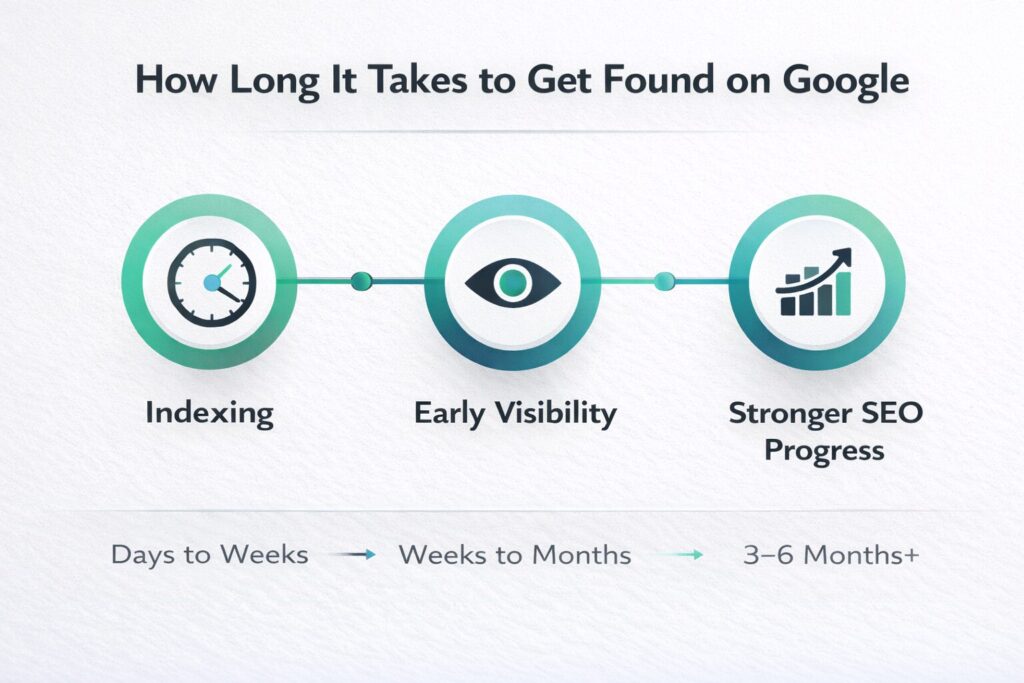
This is one of the most common questions from small business owners — and the honest answer is that it depends on your starting point, your competition, and how consistently the work is done.
For businesses starting from scratch with no SEO foundation, meaningful visibility typically begins to develop within two to four months. Stronger, more stable results usually take six to twelve months of consistent effort.
Businesses in less competitive markets or niches often see results faster. Businesses in highly competitive industries — law, healthcare, real estate, trades — typically need more sustained effort to stand out.
What’s consistent across every case: local SEO results compound. The businesses that commit to it long-term see steady growth, while those that stop after a few months often find their early gains erode.
Local SEO in Ottawa: What Makes It Different
For Ottawa-based businesses, local SEO isn’t just about the city — it’s about neighborhoods. Searches like “electrician Kanata,” “physiotherapy Orleans,” or “accountant Barrhaven” are common, and businesses that optimize for these specific areas capture highly targeted traffic.
Ottawa is a bilingual market. Depending on your customer base, optimizing for French-language searches may also be relevant — particularly for businesses serving Gatineau or bilingual communities in the city.
Our post on SEO for small businesses in Ottawa covers the local landscape in detail, including how to approach neighborhood-level visibility and what Ottawa businesses are competing against.
Frequently Asked Questions
What is the difference between local SEO and regular SEO?
Regular SEO (also called general or organic SEO) focuses on ranking a website for keywords regardless of location — for example, “how to write a business plan” or “best CRM software.” Local SEO focuses specifically on location-based searches, where someone is looking for a business or service near them. Local SEO involves the Google Business Profile, map pack visibility, and location-specific content, which are not priorities in general SEO.
Do I need a website for local SEO?
Your Google Business Profile can generate calls and direction requests without a website, but a well-optimized website significantly strengthens your local SEO. Your website allows Google to understand your services in detail, helps you rank for more specific search terms, and gives potential clients a place to learn more before contacting you. Local SEO without a strong website has a clear ceiling.
How much does local SEO cost for a small business?
Local SEO costs vary depending on your industry, competition, and the amount of work required. Our post on how much SEO costs for small businesses breaks down realistic pricing in an Ottawa context, including what factors drive costs up or down. Most small businesses in mid-competition markets should budget for ongoing monthly investment rather than a one-time setup.
Can I do local SEO myself?
Yes — especially the foundational steps. Setting up and optimizing your Google Business Profile, ensuring NAP consistency, and creating dedicated service pages are all things business owners can do without technical expertise. The challenge is that effective local SEO also involves ongoing content, technical adjustments, and review management. Many business owners start with the basics themselves and bring in professional help once they’re ready to scale.
Why isn’t my business showing up in Google Maps?
The most common reasons are an unclaimed or incomplete Google Business Profile, inconsistent NAP information across directories, few or no reviews, and a website that isn’t optimized for local search. In some cases, the site may not be properly indexed by Google. Google Search Console is a useful free tool to check indexing and technical issues. We also cover this in detail in our guide on how to get your small business website on Google.
Is Google Business Profile enough for local SEO?
No — and this is one of the most common misconceptions. A Google Business Profile is a critical starting point, but Google evaluates local rankings based on a combination of factors: your GBP, your website, your reviews, your citations, and your backlinks. Businesses that invest only in their GBP and ignore their website and citation consistency tend to plateau quickly. A complete local SEO strategy addresses all of these areas together.
Conclusion: Local SEO Is How Local Businesses Grow Online
Local SEO isn’t a complicated concept — but it does require consistent, coordinated effort across multiple channels. A strong Google Business Profile, a well-optimized website, accurate citations, and an active approach to reviews all work together to build the kind of local visibility that brings in real customers.
Many small business owners assume that simply being on Google Maps is enough. In reality, the businesses showing up consistently at the top of local results have put real work into every layer of their online presence — and they continue to do so over time.
If you’re a small business in Ottawa and you’re not showing up where your customers are searching, that’s a fixable problem. At Ottawa Web Genius, we help local businesses build the kind of online presence that generates consistent leads — not just a listing that sits there doing nothing.
Explore our local SEO and web design services or view our pricing to see how we approach local SEO for small businesses in Ottawa and beyond.
Web Design for Dental Offices in Ottawa
August 21, 2026[…] Kanata, Nepean) typically need more active SEO investment than those in less saturated areas. Our local SEO guide explains how the full local SEO picture fits […]
Web Design for Accountants Ottawa
August 28, 2026[…] and supports long-term SEO by creating content that matches real search queries. Our guide on local SEO for small business explains how content supports local search visibility over […]