The Way Google Decides Who Gets Found Locally Has Changed. Here’s What That Means for You
For years, the standard advice for Google Business Profile was simple: set it up, keep your hours accurate, collect some reviews, and check in occasionally. That was enough for most local businesses to maintain reasonable visibility.
That approach is no longer sufficient.
2026 marks a genuine shift in how Google manages, displays, and generates information about local businesses. Some of these changes are officially confirmed by Google. Others are emerging as clear practical trends that local SEO specialists and business owners are observing in real time. Both matter — and both require a response.
This post covers what’s actually changed, what appears to be shifting in practice, and what every Ottawa small business should do right now to stay visible, accurate, and competitive in local search.
What Is Confirmed vs. What Is Changing in Practice
Before diving in, it’s worth being clear about the distinction:
Confirmed Google changes are updates Google has officially announced, documented, or implemented in a way that’s observable and verifiable.
Practical local SEO shifts are changes that the SEO community and business owners are observing — patterns in how visibility, rankings, and AI-generated content behave — that haven’t been formally announced but are real and actionable.
Both categories are worth your attention. But they deserve to be labelled honestly, and that’s exactly what this post does.
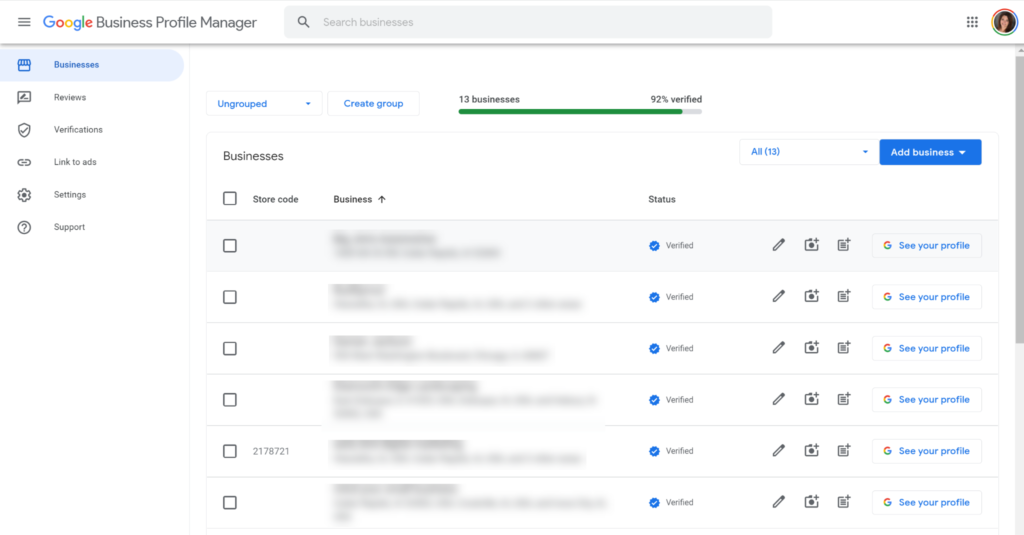
Managing a Google Business Profile in 2026 requires more active, ongoing attention than previous years — AI, stricter policies, and faster inactivity penalties have all raised the bar for what “maintained” actually means.
Part One: Confirmed Google Changes
Change 1 — The Q&A Feature Has Been Discontinued
What changed: Google officially discontinued the Google Business Profile Q&A API on November 3, 2025. The traditional Q&A section — where customers could post questions and business owners could reply — has been retired. Some older listings may still display legacy Q&A content temporarily, but the feature is being phased out entirely.
What it means: The manual back-and-forth between customers and businesses via GBP Q&A is gone. Google is replacing it with Ask Maps, a conversational AI experience powered by Gemini that generates answers about businesses from available information — your profile, your website, your reviews, and other public content.
What to do now: Your website’s FAQ page has become significantly more important. Google’s AI now draws from your website content when generating answers. If your website doesn’t clearly address common client questions, Gemini has less reliable source material and may generate vague or incomplete answers. Build or improve a dedicated FAQ page on your website and consider adding FAQ schema markup so Google can read it in a structured way.
We covered this change in detail in our post on what happened to Google Business Profile Q&A and what to do now.
Change 2 — Video Verification Is Now the Default for New Listings
What changed: Google has moved away from postcard verification as the primary method for new business listings. Video verification is now the default for most new profiles, particularly for service-area businesses. Postcard verification has been deprecated for this category. Phone and email verification remain available only for a narrow set of pre-qualified business types.
What it means: Setting up a new Google Business Profile now requires recording a continuous, unedited video clip that shows your exterior signage or service vehicle, your interior or work environment, and a live management action within the profile. The clip must be unedited and demonstrates that a real person is managing a real business.
What to do now: If you’re setting up a new profile, prepare for video verification before you start. If you have an existing verified profile, this change doesn’t affect your current status — but it reinforces why staying compliant with Google’s business representation guidelines matters. Any future re-verification or profile update that triggers a reverification may follow the new process.
Change 3 — AI-Generated Place Summaries Are Now Active
What changed: Google Maps is now generating AI-powered summaries of local businesses, pulled from reviews, posts, and publicly available web content. These summaries appear in the Maps interface and increasingly in the AI Overview features within Google Search.
What it means: The first impression prospective clients may have of your business isn’t something you wrote — it’s a summary Google’s AI generated from your reviews, your profile description, your website content, and your Google Posts. Thin, outdated, or incomplete profiles receive less favourable summaries, regardless of their review score. This is an officially observed behaviour that SEO practitioners have confirmed across multiple markets.
What to do now: Treat your Google Business Profile description, your reviews, and your website content as the source material for your AI summary. Keep your description accurate and specific. Post regular Google Updates. Ensure your website service pages clearly describe what you offer and who you serve. Check what summary Google is currently generating for your business by searching your business name in Google Maps.
Change 4 — GBP Dashboard Consolidated to business.google.com
What changed: The legacy per-profile management interface has been sunset. The older mobile-only manager app is also gone. All Google Business Profile management now happens through a single, unified interface at business.google.com. Multi-location businesses now use Location Groups, bulk edits, and user permissioning within this new interface.
What it means: If you were managing your profile through an older interface or a third-party tool that relied on the legacy API, your workflow may need updating. The new unified dashboard includes tools for managing social media links, product and service listings, local inventory, and direct messaging.
What to do now: Log into business.google.com and confirm your profile is displaying correctly. If you use a third-party management tool, check whether it has been updated to work with the new interface. Single-location businesses will find the transition minimal — the core features are the same, just consolidated.
Google Maps is now powered by Gemini AI — generating conversational answers and business summaries that draw from profiles, reviews, and website content rather than waiting for business owners to manually provide information.
Part Two: Practical Local SEO Shifts to Respond to in 2026
These are not formally announced as Google policy changes, but they represent genuine and significant shifts that local SEO practitioners are observing consistently across markets — including in Ottawa.
Shift 1 — Inactivity Is Being Penalised More Aggressively
What’s being observed: Multiple local SEO guides and practitioners are reporting meaningful visibility drops for profiles that go 30 or more days without activity — no new photos, no posts, no review responses, no profile updates. This isn’t a formally published Google rule, but the pattern is consistent enough that it’s actionable.
What it means in practice: A profile that was set up well two years ago and hasn’t been touched since is increasingly likely to be outranked by a less-polished competitor who is actively updating theirs. Activity signals engagement, and engagement appears to be weighted more heavily in local rankings than it was previously.
What to do now: Set a recurring calendar reminder to update your GBP at least every two to three weeks. Add a new photo. Respond to a recent review. Publish a Google Post with a brief update. These small actions collectively signal to Google that the profile is maintained by an active business.
Shift 2 — Algorithm Appears to Weight Interactions More Than Prominence
What’s being observed: Google’s local ranking algorithm in 2026 appears to be placing more weight on profile interactions — the number of times people view your photos, click to your website, read your reviews, or request directions — rather than on passive brand prominence signals.
What it means in practice: A smaller, newer business with a highly engaged profile may outrank a longer-established business with a stagnant one. This is a meaningful shift from the traditional “bigger brand wins” pattern in local SEO.
What to do now: Focus on the elements that drive profile interaction: fresh, high-quality photos that people click on, specific and helpful review responses that people read, accurate service descriptions that visitors explore. Think of your GBP as a living page that needs to earn engagement, not a static directory listing.
Shift 3 — Review Quality and AI Moderation Are Getting Stricter
What’s being observed: Google’s AI-powered review moderation appears significantly more aggressive in 2026. Businesses with sudden spikes in review volume, reviews from flagged accounts, or reviews that don’t match the business’s evident service area are seeing faster removals and, in some cases, profile impacts.
What it means in practice: Slow, consistent, ethical review collection is more important than ever. Incentivised reviews, review gating (directing only happy clients to leave reviews while discouraging unhappy ones), or using services that generate fake reviews carry increasingly significant risk.
What to do now: If you don’t already have a consistent review collection process built into your client workflow, build one now. Ask satisfied clients directly — in person, by text, or by email — with a direct link to your review page. Never offer incentives. Never pressure. For a practical guide to doing this well, see our post on how to get more Google reviews for your Ottawa small business.
Shift 4 — Website Clarity Is Now a GBP Ranking Input
What’s being observed: Google appears to be drawing more heavily on website content — not just GBP content — when evaluating local relevance and generating AI-driven local answers. Businesses with clear, well-structured websites that specifically describe their services, service areas, and credentials are performing better in local pack rankings than businesses with thin or vague websites, even when GBP profiles are comparable.
What it means in practice: Your GBP and your website are no longer two separate concerns. Google increasingly evaluates them together. A strong GBP paired with a weak website underperforms relative to what a strong GBP paired with a strong website can achieve.
What to do now: Review your website’s service pages. Do they clearly name each service, describe who it’s for, and mention your Ottawa service area? Do you have a genuine FAQ page? Does your About page clearly introduce the people behind the business? These aren’t just conversion improvements — they’re local SEO inputs. Our guide on how to improve your website’s SEO covers the on-page foundations that support both rankings and AI accuracy.
How These Changes Affect Ottawa Small Businesses Specifically
For Ottawa businesses competing in local search — whether in trades, legal services, professional consulting, food and hospitality, or retail — these changes raise the bar across the board.
The businesses that were previously maintaining a modest Google presence and staying competitive through market position or reputation alone are finding that more active management is required. Competitors who invest consistently in their GBP, review strategy, and website clarity are taking positions in the local pack that used to be passively held.
For businesses in competitive Ottawa markets — family law, roofing, plumbing, physiotherapy, restaurants in neighbourhoods like Westboro or the Glebe — the margin between appearing in the local pack and not appearing has narrowed. The signals that used to be enough are no longer sufficient on their own.
For a comprehensive foundation on local SEO in Ottawa’s specific market, our local SEO guide for small businesses covers the full picture of what visibility requires today.
How to Audit Your GBP and Website for 2026
Before making changes, it helps to understand where you currently stand.
Audit your Google Business Profile:
- Search your business on Google Maps. Does the profile look complete, current, and professional?
- Read your AI-generated summary (if visible). Does it accurately represent your business?
- Check your category — is it the most specific available for your primary service?
- Review your services list — is every service you offer listed with a clear name and description?
- Look at your photo gallery — are the photos real, recent, and representative of your actual work?
Test what Google says about you:
- Ask Google Maps a question a prospective client might ask: “Does [your business name] offer free consultations?” or “Is [your business name] open on Saturdays?” Note any gaps or inaccuracies.
Audit your website:
- Does each service have its own dedicated page with a clear description?
- Do you have a FAQ page that answers real client questions?
- Is your service area mentioned naturally throughout your key pages?
- Does your NAP (name, address, phone) on your website exactly match your GBP?
Use Google Search Console to see which of your pages Google is indexing and what searches are triggering your site — this shows you what Google currently understands about your business.
The 2026 GBP Update Checklist
Confirmed change responses:
- [ ] Build or improve your website FAQ page with clear answers to common client questions
- [ ] Add FAQ schema markup to your FAQ page
- [ ] Confirm your profile is fully managed via business.google.com
- [ ] Verify your profile status — check that verification is active and compliant
Practical shift responses:
- [ ] Schedule GBP activity at least every 2–3 weeks (photo, post, or review response)
- [ ] Review your category — switch to the most specific option if currently too broad
- [ ] Update your GBP business description to clearly name services and Ottawa service area
- [ ] Audit and update your services list with clear names and descriptions
- [ ] Upload fresh, real photos of your team, work, or space
- [ ] Establish a consistent, ethical review collection process
- [ ] Respond to every recent review — positive and negative
- [ ] Review your website service pages for clarity and specificity
- [ ] Check NAP consistency across your website, GBP, and all directories
- [ ] Test what Google Maps currently surfaces about your business
- [ ] Set up Google Search Console if not already active
Reviews, profile activity, and website clarity now work together as a unified system for local visibility — managing each in isolation produces weaker results than coordinating all three.
Frequently Asked Questions
Do I need to re-verify my existing Google Business Profile because of these changes?
Not automatically. If your profile is already verified and in good standing, these 2026 changes do not trigger a forced re-verification. The new video verification process applies primarily to new listings and accounts that trigger a compliance review. That said, keeping your profile accurate and compliant with Google’s business representation guidelines is always important — violations can prompt a re-verification request at any time.
What is Ask Maps and how does it work?
Ask Maps is Google’s conversational AI feature within Google Maps, powered by Gemini. Instead of the old Q&A system where a business owner had to manually answer questions, Gemini generates answers in real time from the information available about your business — your profile, website content, reviews, and posts. It’s designed to respond to natural language questions like “Is this restaurant good for a birthday dinner?” or “Does this contractor serve Kanata?” The quality of those answers depends on the clarity and completeness of your existing online information.
How do I know what AI summary Google is showing for my business?
Search your business name in Google Maps on a mobile device or desktop. In some markets and search contexts, you’ll see an AI-generated summary or highlights section drawn from your reviews and profile content. You can also search your business name in Google Search and check what appears in the knowledge panel or AI Overview if one is generated. If the summary is inaccurate or vague, improving your profile description, website service pages, and review content provides better source material for future summaries.
How often should I update my Google Business Profile in 2026?
At minimum, every two to three weeks. Post a Google Update, add a recent photo, or respond to a new review. In competitive markets, more frequent activity appears to support stronger visibility. The key principle is that your profile should look actively maintained at all times — not like a setup that was completed once and abandoned. For a complete guide to what an optimised, active profile looks like, our Google Business Profile optimization guide covers every element.
Should I be worried that Google’s AI might give wrong information about my business?
It’s worth checking, not panicking. AI-generated answers are based on available information — the better and clearer your information is, the more accurate the answers tend to be. The most practical response is to audit what Google is currently saying about your business, identify any gaps or inaccuracies, and improve your website and GBP content accordingly. You cannot control every AI output, but you can significantly improve the quality of the source material it draws from.
What is the most important single thing an Ottawa small business should do in response to these changes?
If you had to pick one: build or improve your website FAQ page and pair it with FAQ schema markup. This single action directly addresses the Q&A retirement, improves your source material for AI-generated answers, supports your organic SEO rankings, and helps prospective clients find answers before they even contact you. It benefits your GBP performance, your website performance, and your conversion rate simultaneously — making it the highest-leverage response to the changes Google has made in 2025 and 2026.
Conclusion: Google Business Profile Is No Longer a Set-It-and-Forget-It Tool
The businesses that understood this a year ago are already ahead. The businesses that understand it now still have time to catch up. The businesses that ignore it will find local visibility becoming harder to maintain without understanding why.
Managing a Google Business Profile in 2026 means keeping it active, accurate, and supported by a website that clearly communicates what your business does and who it serves. It means collecting reviews consistently, responding to them professionally, and watching what Google’s AI says about your business — not just what you entered into your profile.
None of this is beyond reach for a well-run Ottawa small business. But it does require treating your GBP as an ongoing part of how your business operates online, not a task that was completed at some point in the past.
At Ottawa Web Genius, staying current with Google changes is part of what we do for our clients — updating GBP profiles, improving website content, and making sure the information Google has about your business is clear, accurate, and working in your favour.
Explore our local SEO and web design services or reach out directly to discuss what your business’s Google presence needs right now.