Local SEO Is Not Dead — But It Is Changing
Every few years, something shifts in how Google works and the headlines declare that SEO is dead. In 2026, AI search is the shift getting that treatment.
The reality, as usual, is more nuanced — and more useful to understand clearly.
AI search experiences are genuinely changing how people discover local businesses. Google’s AI Overviews, AI Mode, and the Gemini-powered Ask Maps feature are all real developments that affect how search results are displayed and how questions about local businesses get answered. Pretending otherwise would be misleading.
But the fundamentals of local SEO — clear service pages, an active Google Business Profile, consistent reviews, proper technical setup — are not being replaced by AI. They are becoming more important, because AI systems need good source material to work from. A business with a complete, accurate, well-structured online presence is better positioned in the AI era than one that was already neglecting its local SEO.
This guide explains what has actually changed, what it means in practice for Ottawa local businesses, and what to do about it — without hype, panic, or vague “AI hacks.”
What AI Search Means in 2026
Google has been integrating AI into its search results progressively, and by 2026 several distinct AI-driven experiences are now part of how people search:
AI Overviews — Summaries generated by Google’s AI that appear at the top of certain search results, pulling information from multiple sources to answer a question directly on the page. These appear more frequently for informational queries (“how do I fix a leaky faucet”) than for transactional or local queries (“plumber Ottawa”).
AI Mode — A newer, more conversational search experience where users can ask follow-up questions and explore topics in a dialogue format. AI Mode is still emerging and most used for research-style queries rather than local service searches.
Ask Maps / Gemini in Maps — A conversational AI feature built into Google Maps, where users can ask questions about places and businesses and receive AI-generated answers drawn from profile data, website content, reviews, and posts. This is the AI feature with the most direct impact on local businesses. As covered in our post on Google Business Profile changes in 2026, the retirement of the old Q&A feature and its replacement with Gemini-driven answers represents a significant shift in how local business questions get answered.
What is confirmed vs. what is still evolving: Google has officially confirmed AI Overviews, AI Mode, and the Gemini integration in Maps. The full extent to which these features will replace traditional search results — and how consistently they affect traffic for local businesses — is still developing and varies significantly by industry and query type.
Google’s AI-driven search experiences — AI Overviews, AI Mode, and Ask Maps — are changing how search results are displayed, but they depend on the same source material that traditional local SEO has always required: clear content, accurate business data, and trust signals.
Ask Maps: The AI Feature Most Directly Affecting Local Businesses
For small businesses that rely on local Google visibility, Ask Maps is the AI feature with the most immediate practical relevance.
When a user asks Google Maps a question about a business — “Does this restaurant have outdoor seating?” or “Does this contractor offer free quotes?” — Gemini now generates an answer in real time from available sources. It does not wait for a business owner to respond. It synthesises whatever it can find: your GBP profile, your website content, your reviews, your Google Posts.
The implications are direct:
If your information is clear and well-structured, Gemini can generate accurate, helpful answers about your business — which builds trust and drives contact.
If your information is thin, vague, or outdated, Gemini may generate incomplete or imprecise answers — or acknowledge that it doesn’t have enough information to answer, which leaves a gap a competitor can fill.
This is why the combination of a complete GBP, a clear website with specific service descriptions, and an active review stream has become more important, not less. These are the sources Gemini draws from.
For the specific steps involved in keeping your GBP ready for this shift, our Google Business Profile optimization guidecovers every element — updated for the current AI-era landscape.
How AI Search Is Changing Local SEO Behaviour
Beyond the specific features, AI search is producing several broader shifts in how people search for and discover local businesses:
More conversational queries. Instead of “plumber Ottawa,” people are increasingly asking full questions: “What plumbers in Ottawa are available on weekends?” or “Which kitchen renovators in Kanata have the most reviews?” These longer, more specific queries often surface different results than short keyword searches — and businesses with specific, conversational content are better positioned to match them.
Zero-click or in-search answers for some queries. AI Overviews answer some questions directly on the search page, reducing clicks to websites for those specific queries. This is more common for general informational queries than for local service searches — someone asking “what is local SEO” may not click through, but someone searching “local SEO agency Ottawa” is still going to a website.
Greater weight on trusted, authoritative sources. Google’s AI features tend to draw from sources Google already considers authoritative — well-indexed pages, frequently cited content, businesses with strong review histories and complete profiles. This reinforces the advantage of doing local SEO properly rather than providing any new shortcut.
More AI-mediated first impressions. In some search experiences, a prospective client’s first information about your business may come from an AI summary rather than your own website or GBP. What that summary says depends entirely on the quality of your source material.
What Still Matters in Local SEO — Nothing Has Changed Here
Despite the shift, the core local ranking factors Google has consistently identified remain in place:
Relevance — Does your business clearly match what the searcher is looking for? This is still determined by your GBP categories, your service page content, and your keyword relevance.
Distance — How close is your business to the searcher? This is largely fixed, though your service area settings and local content affect how broadly Google considers you relevant.
Prominence — How well-known and trusted is your business online? Reviews, citations, backlinks, and overall online presence still determine this.
None of these three factors have been replaced by AI. AI search draws from all three to generate its outputs.
What Matters More Now
Website Content Clarity
AI systems need clear, specific, well-structured source material to generate accurate answers. A website with vague service descriptions and thin pages provides poor source material. A website with dedicated service pages, clear descriptions, specific service areas, and well-written FAQ sections provides much better source material.
This is not a new principle — it has always been how good SEO worked. What has changed is that the stakes for unclear content are higher, because the AI may be generating an answer about your business to a prospective client before they ever visit your site.
FAQ Content
FAQ sections on your website serve two functions in 2026: they improve your SEO for question-based searches, and they provide structured source material for AI-generated answers about your business.
A landscaper with a FAQ page that clearly answers “Do you serve the Barrhaven and Nepean areas?” and “Do you offer free consultations?” gives Gemini accurate, specific answers to draw from. Without that content, the AI may say it doesn’t know — or, more problematically, piece together something imprecise from unstructured review content.
Our post on what changed with Google Business Profile Q&A explains exactly why FAQ content on your website has become the primary channel for providing accurate business information to Google’s AI.
Reviews as AI Source Material
Reviews have always been a local ranking signal. In the AI era, they serve an additional function: they are source material for AI-generated summaries and answers. A business with 60 recent, specific reviews provides significantly better material for Gemini to synthesise into a useful business summary than one with 8 generic reviews from three years ago.
The content of reviews matters more than it used to. Reviews that specifically mention your services, your service area, or your team provide cleaner, more useful source material than reviews that simply say “great service, highly recommend.”
Google Business Profile Completeness and Activity
An active, complete, accurate GBP has always been important for local rankings. In the AI era, it is also the primary structured data source that Gemini draws from for local business queries.
Every field in your GBP — categories, services, description, hours, attributes — contributes to the source material Gemini can use. A sparse or outdated profile not only limits your map pack rankings; it limits the accuracy of AI-generated answers about your business.
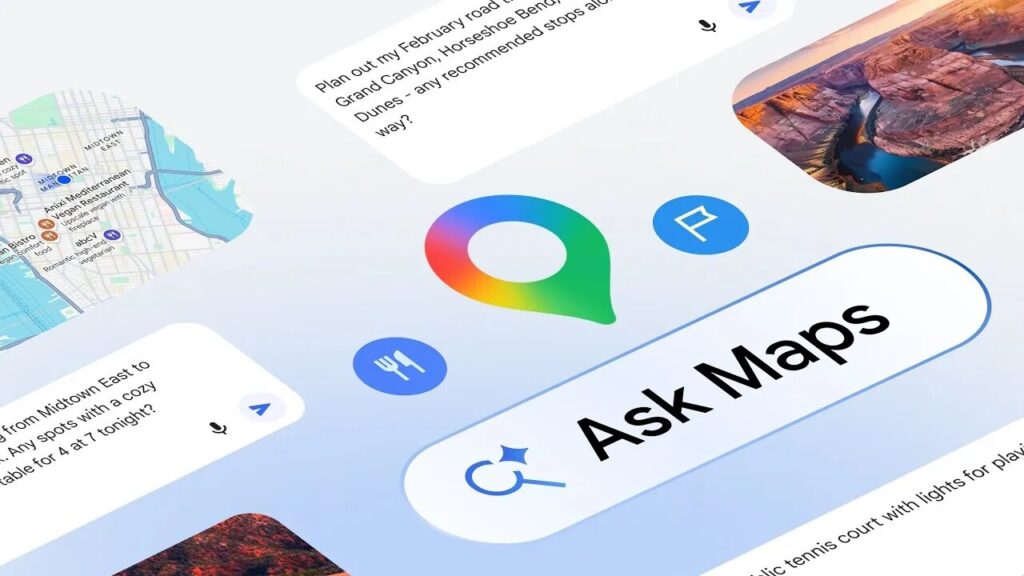
Ask Maps uses Gemini to generate conversational answers about local businesses from profile data, reviews, and website content — making the quality and clarity of your source material more important than ever.
Does AI Search Mean SEO Is Dead?
No. And Google has been clear about this in its own guidance.
Google’s documentation on AI features and SEO states explicitly that the same practices that help pages rank well in traditional search — clear, helpful, trustworthy content — also help pages perform well in AI-driven search experiences. The fundamentals have not changed. The stakes for getting them right have increased.
What the AI era is doing is filtering more aggressively. Businesses with clear, complete, well-structured online presences — strong GBP, good website, active reviews — are more visible in AI-driven experiences. Businesses with thin profiles and poor website content are less visible. The gap between these two groups is widening.
What Ottawa Small Businesses Should Do Now
The practical response to AI search is not to chase AI-specific tactics. It is to do local SEO properly — and specifically to improve the clarity and completeness of your source material.
Audit what AI is currently saying about your business. Search your business name in Google Maps and try Ask Maps questions a prospective client might ask. Look at AI Overviews for your main service searches. Identify any gaps or inaccuracies in what’s being surfaced.
Improve your GBP. Ensure your categories, services, description, and hours are fully completed and accurate. Upload recent photos. Maintain an active review flow and respond to every review.
Strengthen your website service pages. Every service page should clearly name what you do, who you help, and where you operate. Specific, substantive content provides better source material than vague, generic descriptions.
Build or improve a FAQ page. Add clear, specific answers to the questions prospective clients commonly ask. Implement FAQ schema markup so Google can read it in a structured way.
Maintain NAP consistency. Your name, address, and phone should be identical across your website, GBP, and all directories. AI systems use multiple signals to verify business information — inconsistency creates doubt.
Keep review collection active. A consistent flow of recent, specific reviews provides better AI source material and maintains your local ranking signals.
For a full roadmap, our local SEO guide for Ottawa small businesses covers the complete foundation. And our guide on how to improve your website’s SEO covers the website-side improvements that feed AI source material most directly.
The AI Search Readiness Checklist
Google Business Profile:
- All categories, services, description, and hours complete and accurate
- Recent photos uploaded (within the last month)
- Review collection process active — asking consistently
- All reviews responded to
- Google Posts published regularly
- Profile information consistent with your website
Website:
- Dedicated page for each core service with clear, specific content
- Service area referenced naturally on key pages
- FAQ page with clear, specific answers to common client questions
- FAQ schema markup implemented
- Internal links connecting service pages, FAQ, and contact page
- Title tags and headings clearly describe each page topic
- Google Search Console set up and key pages confirmed indexed
Trust and source quality:
- Review content is recent (within the last three months)
- Reviews mention specific services and locations where possible
- NAP consistent across website, GBP, and all directories
- Test what AI surfaces about your business and identify gaps
Common Mistakes Local Businesses Will Make in Response to AI Search
Abandoning local SEO entirely. The businesses that respond to AI search changes by stopping their GBP management, review collection, and content work will see their visibility decline. The AI features draw from the same local signals that traditional local SEO builds.
Chasing AI-specific tricks. “AI SEO hacks” are appearing across the internet. Most represent the same principles as good content and local SEO, renamed for clicks. Focus on the fundamentals, not the rebranding.
Over-optimising for AI and under-optimising for humans. A website stuffed with FAQ content written for AI extraction but confusing for actual visitors is not a good outcome. Write clearly for human readers first — AI systems, including Google’s, consistently favour content that is genuinely helpful and clearly written.
Panicking about AI Overviews reducing traffic. For local service businesses — “plumber Barrhaven,” “family lawyer Ottawa,” “kitchen renovation Nepean” — AI Overviews appear less frequently and with less displacement of local results than they do for general informational searches. Local intent still drives to maps and websites in most cases.
Ignoring the shift entirely. Businesses that assume nothing has changed and continue with a neglected GBP, thin website, and no review strategy will fall further behind competitors who are actively maintaining their local presence quality.
Frequently Asked Questions
Is AI search replacing traditional local SEO?
No. Google has confirmed that the content quality and relevance signals that support traditional search rankings also support AI-driven search experiences. What AI search is doing is raising the bar for content clarity and business information quality — businesses that do local SEO well are better represented in AI experiences, not displaced by them.
Do I need to rewrite my website for AI search?
Not rewrite — improve. The changes that make a website perform better for AI-driven search are the same changes that make it perform better for traditional search: clearer service descriptions, dedicated service pages, specific FAQ content, proper title tags and headings, and schema markup. If your website already has these things, you are largely prepared. If it doesn’t, improving them helps both traditional and AI-driven search simultaneously.
How does Gemini decide what to say about my business?
Gemini draws from your Google Business Profile (categories, description, services, hours, attributes), your website content (service pages, FAQ pages, about page), your reviews (what customers say about your business, services, and experience), and your Google Posts. The more complete, specific, and accurate these sources are, the more accurate and useful the AI-generated responses will be.
Will AI Overviews reduce the traffic my website gets from Google?
For general informational queries, AI Overviews do reduce click-through rates in some cases — because the answer appears on the page without requiring a click. For local service searches — someone looking for a specific type of business in a specific Ottawa neighbourhood — AI Overviews appear less frequently and local results (map pack and organic) continue to drive clicks and contacts. Monitor your Search Console click data over time to see how your specific queries are trending.
Should I be worried about my Google Business Profile being misrepresented by AI?
It is worth auditing rather than worrying. Search your business in Google Maps and try some of the questions your prospective clients might ask. If the answers are accurate and helpful, your source material is working well. If answers are vague, inaccurate, or missing, that indicates specific gaps in your GBP or website content that can be directly addressed. The action is improvement, not alarm.
What is the most important thing a small business should do to prepare for AI search?
Build better source material. That means a complete, active Google Business Profile, clear and specific service pages on your website, a FAQ page that answers real client questions with schema markup, and a consistent stream of recent reviews. These improvements help in traditional local SEO and in AI-driven local search simultaneously — making them the highest-leverage investments available.
Conclusion: Better Fundamentals, Not Different Fundamentals
The businesses that will be well-positioned as AI search continues to evolve are not the ones that find clever AI shortcuts. They are the ones that have the clearest, most accurate, most trustworthy local online presence — because that is exactly what AI systems use to generate answers about local businesses.
For Ottawa small businesses, that means: keep your GBP complete and active, improve your website’s service page clarity, build a genuine FAQ resource, maintain consistent review collection, and give Google accurate information to work with across every channel.
AI search has raised the standard for local online presence quality. It has not changed what a high-quality local online presence looks like.
At Ottawa Web Genius, we help Ottawa small businesses adapt to exactly these kinds of changes — improving the website, GBP, and local SEO foundations that serve you well regardless of which direction Google’s AI features continue to evolve.
Explore our local SEO and web design services to see how we approach it — or reach out if you’d like to understand how your business’s current online presence stacks up in the AI search era.