What Every Ottawa Restaurant Owner Needs to Know
If you run a restaurant, café, bakery, or food business in Ottawa, your website is doing more work than you might realise — or it isn’t doing nearly enough.
When someone in Westboro wants dinner tonight, they search Google. When a family in Barrhaven wants to try something new on a Friday night, they search Google. When tourists exploring ByWard Market want to decide between three restaurants on the same block, they look at websites and Google listings on their phones — often while standing on the sidewalk.
Web design for restaurants in Ottawa isn’t about having a beautiful site. It’s about having a site that answers those searchers’ questions fast, on a phone, with a clear menu, a visible reservation or ordering option, and enough trust signals to make the decision easy. This guide covers exactly what that looks like.
Why Restaurant Websites Are Different
Restaurant websites carry a different burden than most small business websites. The visitor is not doing extended research — they are making a quick, often emotion-driven decision, frequently on a phone, with limited time and plenty of alternatives.
Every element of your website is either helping them commit or giving them a reason to try somewhere else.
What makes restaurant web design fundamentally different:
Food is visual. A restaurant that doesn’t show its food is asking visitors to take a leap of faith. High-quality food photography is not a nice-to-have — it is the most persuasive element on a restaurant website. A professional photo of your signature dish does more for reservations than any amount of written description.
Menus are the first thing people look for. When a potential diner lands on a restaurant website, they want to see the menu — fast. A PDF menu that doesn’t load on mobile, a menu page that requires too many clicks to find, or a printed menu photographed sideways will lose visitors. The menu needs to be a proper web page, not an afterthought.
Mobile is the primary device. The majority of restaurant searches happen on smartphones. The person searching “restaurants near me” or “Italian restaurant Glebe Ottawa” is doing it on their phone, often minutes before they want to eat. If your site loads slowly, displays incorrectly, or makes it difficult to find essential information on a small screen, they will leave and try the next result.
Speed of decision is high. Restaurant customers are not spending 20 minutes on your website. They spend 60 to 90 seconds. In that window, your site needs to confirm what you serve, show them the food, give them a way to reserve or order, and establish enough trust to make the decision easy.
Third-party apps are expensive competition. DoorDash, Uber Eats, and SkipTheDishes capture significant restaurant revenue — and take 15–30% commissions. A restaurant website with its own online ordering system gives you a direct channel that keeps that margin in your business. Your website is one of the most effective tools available for reducing reliance on third-party platforms.
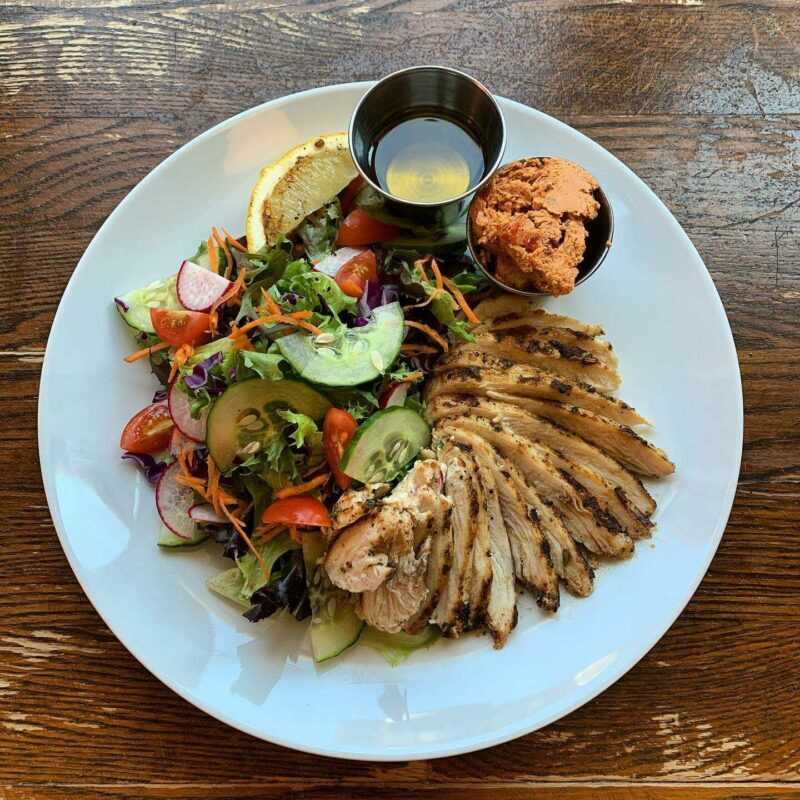
Professional food photography is the highest-impact element of a restaurant website — it does more to drive reservations and online orders than any written content.
Must-Have Pages for Every Ottawa Restaurant Website
A restaurant website needs a specific set of pages that together answer every question a potential diner has before they commit.
Home — First impression and visual showcase. Should feature a strong hero image of your food or dining room, your most important CTA (Reserve a Table, Order Online), your hours and neighbourhood location, and a brief sense of the restaurant’s atmosphere and cuisine.
Menu — The most visited page on most restaurant websites. Must be a live HTML page, not a PDF. Should be mobile-readable, clearly organised by category, and current. Include prices where possible — hiding prices creates friction and frustration. If you have seasonal or daily specials, consider a rotating specials section alongside the main menu.
About the Restaurant — Tells the story of your restaurant, your team, and your food philosophy. This is where you build the emotional connection that differentiates a neighbourhood favourite from a generic option. Include photos of your chef, your team, and your space.
Reservations — A direct integration with your reservation system (OpenTable, Resy, SevenRooms, or a direct booking form) that allows visitors to book without leaving your website. Make this page prominent in navigation and link to it from the homepage.
Order Online — If you offer delivery or takeout, this should be a clearly labelled page with a direct link to your ordering system. If you have your own ordering system, prioritise it here — the margin difference between direct orders and third-party commissions is significant for most Ottawa restaurants.
Private Events and Catering — For restaurants that offer private dining or catering, this page captures a high-value inquiry type. Include minimum guest numbers, available spaces, example menus, and a direct inquiry form.
Gallery — Food photos, dining room photos, event photos, seasonal patio photos. This page gives Google additional indexed images and gives potential diners a fuller picture of the experience.
Contact — Address with Google Maps embed, phone number, hours, and a brief contact form. For Ottawa restaurants near major transit routes or in neighbourhood districts like ByWard Market or Westboro, include parking notes.
Gift Cards — If you offer gift cards online, this page pays for itself many times over, particularly around holidays and Ottawa festival seasons.
FAQ — Answers to the questions you answer repeatedly: Do you take walk-ins? Is there parking? Do you accommodate allergies? Is the patio open year-round? Do you have a private dining room? These questions, answered clearly on a FAQ page, reduce friction and filter serious diners.
Restaurant-Specific Trust Signals
Ottawa diners have no shortage of options. Trust signals on your website are what move someone from “considering” to “booking.”
Google reviews and rating. Display your Google rating and review count prominently on your homepage — not buried on a reviews page. For Ottawa restaurants, a rating above 4.3 with consistent recent reviews is a significant credibility signal.
Professional food photography. Stock images of food signal immediately that the restaurant is not confident in its actual product. Real photography from your kitchen — even a strong set shot with a smartphone under good lighting — dramatically outperforms generic imagery.
Chef and team profiles. Ottawa diners often have a personal connection to the people behind independent restaurants. A chef profile with a genuine biography and philosophy builds a human connection that influences the choice between your restaurant and a franchise alternative.
Media mentions and awards. If your restaurant has been featured in Ottawa Life, Ottawa Magazine, the Ottawa Citizen, or CBC Ottawa, display those logos or excerpts. External validation from recognisable Ottawa publications carries strong social proof.
Accolades and recognitions. OpenTable Diners’ Choice, TripAdvisor Travellers’ Choice, or local dining awards should be displayed in the header or footer — not hidden deep in the About page.
Local sourcing. Ottawa diners increasingly care about where their food comes from. If you source from Ottawa Valley farms, local producers, or specific regional suppliers, naming them builds trust and differentiates your menu from chain alternatives.
Transparency around dietary accommodation. Clear information about allergen awareness, gluten-free options, vegan and vegetarian availability reduces uncertainty and increases bookings from diners with dietary needs.
Conversion Optimization for Ottawa Restaurants
Every page of your restaurant website should have a clear next action. Visitors who leave without doing anything are lost — either to indecision or to a competitor whose website made the next step more obvious.
The primary conversions for most Ottawa restaurants:
- Reserve a table — Most important for full-service restaurants. The reservation button should appear in the navigation, the homepage hero, and at the bottom of the menu page. Every barrier between a diner and a completed reservation costs you covers.
- Order online — Most important for casual dining, takeout-focused concepts, and restaurants competing with third-party apps. Direct ordering reduces commission costs and gives you customer data.
- Call for information — Your phone number should be click-to-call on mobile. Many diners, particularly older demographics and those with specific requests, prefer to call.
- Get directions — A Google Maps link or embed on your contact page. Ottawa diners navigating from Kanata to a restaurant in Centretown are going to use their phone for directions.
- Gift card purchase — A secondary conversion with strong seasonal spikes around Christmas, Valentine’s Day, and Mother’s Day in Ottawa.
- Private event inquiry — A high-value conversion. A single private event can represent significant revenue. Make the inquiry form easy to find and fast to complete.
Reducing friction:
Every unnecessary click, every field in a reservation form that isn’t required, and every page that requires loading before the menu appears is friction. Friction costs reservations. The fastest path from “landing on your website” to “booking confirmed” is the right design goal.
Local SEO for Ottawa Restaurants
Your Google Business Profile is your most important marketing asset for local restaurant discovery — and it is free.
Google Business Profile for restaurants:
- Category: Choose “Restaurant” as your primary category, then add the most specific secondary categories available — “Italian Restaurant,” “Brunch Restaurant,” “Pizza Takeaway,” etc.
- Menu: Upload your menu directly to your GBP. Google displays menu items in search results and in Google Maps previews, which increases click-through rates.
- Photos: Add high-quality food photos regularly. Profiles with photos significantly outperform those without in terms of direction requests and website clicks.
- Hours: Update for every holiday, special closure, and patio season change. Wrong hours on Google are one of the fastest ways to lose a diner permanently.
- Posts: Use Google Posts to promote weekly specials, seasonal menus, events, and patio openings. These appear directly in your Google listing.
- Reviews: Consistently ask satisfied diners to leave a Google review. A restaurant with 200 recent reviews will consistently outrank one with 15 — even if the rating is similar.
For the complete GBP optimization process, our Google Business Profile guide covers every element in detail.
Restaurant Schema Markup: Adding structured data to your website tells Google directly that you are a restaurant — including your cuisine type, price range, hours, and menu URL. This supports rich results in Google Search and better representation in AI-generated local answers.
Local citations: Ensure your restaurant is listed consistently across Yelp, TripAdvisor, Zomato, OpenTable, and Foursquare — with identical name, address, and phone number across all platforms. NAP inconsistency suppresses local rankings quietly and persistently.
For a full understanding of how local SEO works for Ottawa businesses, our local SEO guide covers the strategy that extends beyond the website.
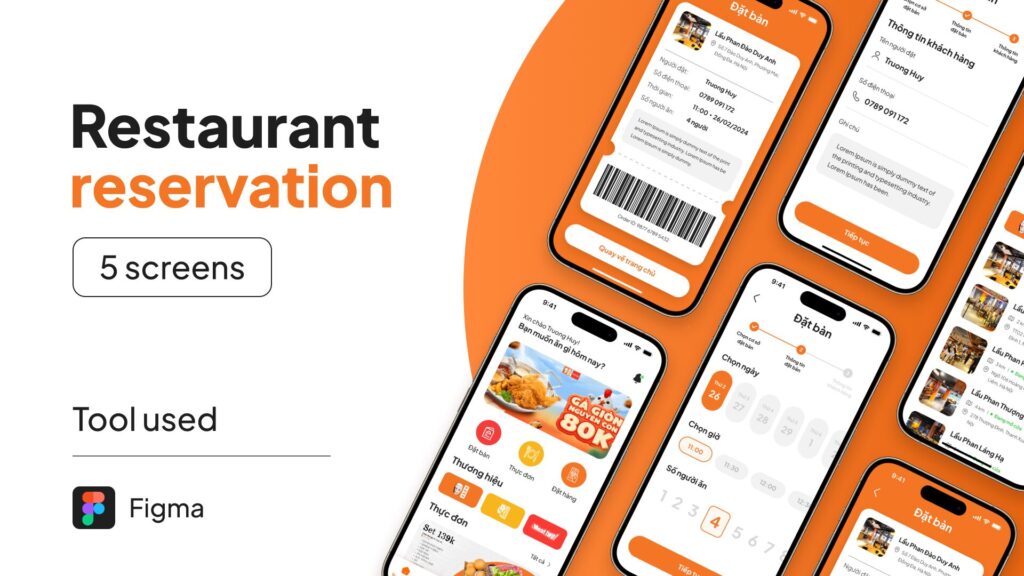
A restaurant website designed around conversion — with prominent reservation and ordering options — removes friction and turns mobile visitors into confirmed bookings.
Website Performance and Why It Matters
A restaurant website that loads slowly is losing diners in the moments they’re most ready to book.
Core Web Vitals for restaurants: Google evaluates your website’s loading performance, visual stability, and responsiveness as ranking factors. A restaurant website with large, unoptimised food photos — which is extremely common — often scores poorly on mobile page speed. Test your current site at Google PageSpeed Insights and address any score below 70 on mobile.
Image optimisation: Food photography is the heart of a restaurant website — and unoptimised images are the most common cause of slow load times. Images should be converted to WebP format, sized appropriately for display dimensions, and compressed without visible quality loss. A hero image that is 8MB on a mobile connection will drive visitors away before they see your menu.
Menu loading: If your menu is a PDF, it requires a separate download — which is slow on mobile, unreadable at small sizes, and not indexed by Google. A properly coded HTML menu page loads instantly, is readable at any screen size, and allows Google to index your individual dishes — which can appear directly in search results.
HTTPS: Every restaurant website should be served over HTTPS. Beyond the small security benefit, Google specifically favours HTTPS sites and many browsers display warnings to visitors on non-secure sites — which undermines trust immediately.
Ottawa Neighbourhood Competition
Understanding where the competitive pressure is strongest helps Ottawa restaurant owners prioritise their local SEO and website investment.
ByWard Market: One of Ottawa’s densest restaurant districts and a major tourist destination. High competition from dozens of restaurants competing for the same “restaurants in ByWard Market” searches. Strong food photography, a fast mobile site, and active GBP management are essential to stand out.
Westboro: A premium local market with a loyal residential dining base. Ottawa diners in Westboro are looking for authenticity and local character. Restaurant websites here benefit from strong chef storytelling and community connection content.
Glebe: Dense with independent restaurants and a strong neighbourhood identity. Review volume and consistent GBP activity are particularly impactful for ranking in this highly competitive local market.
Centretown: Business lunch crowd and evening dining. Proximity to Parliament Hill and major hotel districts means tourism traffic alongside local regulars. Bilingual website content is worth considering for this area.
Kanata and Barrhaven: Growing suburban markets with strong family dining demand. Less competitive than central Ottawa for most cuisine categories — neighbourhood-specific SEO can produce first-page results faster here than in the Glebe or Westboro.
Orleans: A bilingual community with significant French-language search behaviour. Restaurants serving Orleans benefit substantially from bilingual GBP listings and French-language website content.
The Restaurant Website Checklist
Use this to audit your current website or evaluate a new build:
Core pages and content:
Homepage with strong food photography visible before scrolling
Menu as a live HTML page (not a PDF) — current and mobile-readable
Reservations page with direct booking integration
Online ordering page if you offer takeout or delivery
About page with chef/team profiles and restaurant story
Contact page with Google Maps embed, click-to-call phone, and accurate hours
Gallery with current food and dining room photos
Conversion elements:
Reserve / Order Online button visible in navigation on every page
Phone number is tappable on mobile
Hours visible on homepage without scrolling
Gift card purchase option if applicable
Private event or catering inquiry form
Trust and credibility:
Google rating and review count displayed on homepage
Professional food photography throughout (no stock images)
Chef or owner profile with a genuine biography
Media mentions or awards displayed
Local sourcing or community involvement mentioned where authentic
Local SEO:
Google Business Profile claimed, complete, and active
Menu uploaded to GBP
NAP consistent across website, GBP, Yelp, TripAdvisor, and OpenTable
Restaurant schema markup implemented
Google reviews being collected consistently
Technical performance:
Mobile PageSpeed score above 70
All images optimised (WebP, compressed, appropriately sized)
HTTPS active
No Google Search Console mobile usability errors
Menu page loads in under 2 seconds on mobile
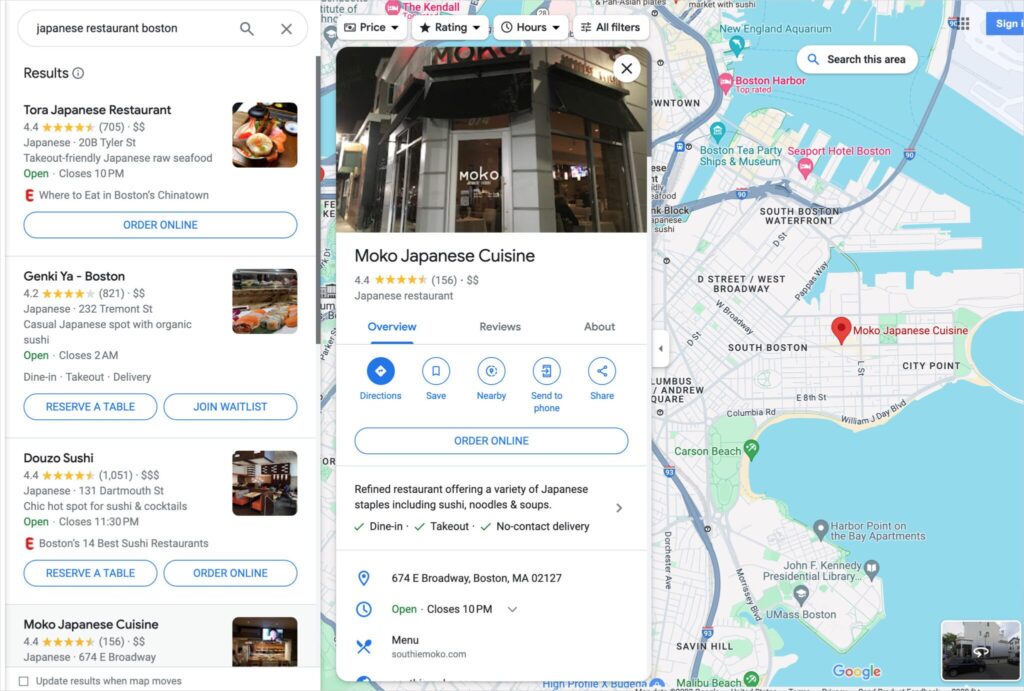
An optimized Google Business Profile with current photos, uploaded menu, and consistent recent reviews is the most powerful free marketing tool available to Ottawa restaurant owners.
Frequently Asked Questions
How much does a restaurant website cost in Ottawa?
A professionally designed restaurant website in Ottawa typically ranges from $2,500 to $6,000 depending on the number of pages, whether online ordering or reservation integration is included, the level of custom design, and whether copywriting is part of the scope. Restaurants with complex requirements — multiple locations, catering sections, event booking systems, and bilingual content — sit at the higher end of that range or above. For a full breakdown by business type and scope, our website cost guide covers realistic Ottawa pricing in detail.
Do restaurants need online ordering on their website?
It depends on your model. If you offer takeout or delivery and currently rely entirely on DoorDash, Uber Eats, or SkipTheDishes, adding direct online ordering to your website is worth serious consideration. Third-party platforms charge 15–30% commissions on every order. A direct ordering system typically costs a flat monthly fee or a small per-transaction fee — which, at any meaningful order volume, pays for itself quickly. Customers who order directly through your website also become your customers, not the platform’s — you own their contact information and order history.
What is the best platform for a restaurant website in Ottawa?
WordPress with a restaurant-focused theme or custom build is the most commonly recommended platform for restaurants that want full SEO capability, easy menu updates, and the ability to add features over time. Squarespace is a reasonable alternative for simpler restaurants that prioritise ease of self-management over SEO flexibility. Platform-specific restaurant builders like Toast or Lightspeed work well if you are already using those systems for point-of-sale. Avoid building your restaurant’s only web presence inside a third-party ordering app’s profile page — that is not a website, and it gives you no Google Search visibility.
How often should a restaurant menu be updated online?
Your online menu should match your in-restaurant menu at all times. This is more than a convenience issue — diners who visit based on something they saw on your website and discover it’s not available lose trust in your business. For seasonal menus, update the website at the same time you change the in-house menu. For daily specials, consider a separate specials section on your menu page or use Google Posts to promote them through your GBP rather than updating the core menu page daily.
Can a restaurant website help me rank higher on Google Maps?
Yes, directly. Google uses your website as supporting evidence when evaluating how to rank your Google Business Profile in local map results. A website that clearly names your cuisine, your Ottawa neighbourhood, your hours, and your menu gives Google stronger relevance signals than a GBP profile alone. Restaurant schema markup on your website tells Google specifically that you are a restaurant with confirmed attributes. Our guide on how to rank higher on Google Maps in Ottawa covers the full set of factors that influence local map pack rankings.
Should Ottawa restaurants still use third-party ordering apps?
Third-party apps have genuine advantages — they have built their own audiences, and many Ottawa diners discover new restaurants through them. The strategic mistake is being on third-party apps exclusively and having no direct ordering option of your own. A well-designed restaurant website with its own ordering integration gives you a direct channel to your most loyal customers — the ones who already know you and would rather order directly than pay platform delivery fees. Use third-party apps for discovery, build your own channel for retention.
Conclusion: Your Restaurant Website Should Fill Seats, Not Just Look Good
Web design for restaurants in Ottawa is not about aesthetics — it is about removing every obstacle between a hungry diner and a confirmed reservation, order, or walk-in visit. The right restaurant website shows your food beautifully, answers questions fast, loads in seconds on a phone, and makes booking or ordering feel effortless.
Ottawa’s restaurant market is competitive across every neighbourhood — from ByWard Market to Barrhaven, from Westboro to Orleans. The restaurants that consistently win new diners are not necessarily serving better food than the one next door. In many cases, they are simply easier to find on Google, easier to browse on a phone, and easier to book from.
Your website is where that gap is won or lost.
At Ottawa Web Genius, we design websites for Ottawa food businesses that are built around what actually generates reservations, direct orders, and phone calls — not just what looks impressive in a portfolio screenshot.
Explore our web design services or view our pricing to see what a properly designed Ottawa restaurant website includes — then reach out and let’s talk about what your food business needs from its online presence.