
This Decision Is More Nuanced Than Most Agencies Will Tell You
Imagine two Ottawa business owners sitting at the same coffee shop in Westboro. One just launched a side hustle — testing whether there’s enough demand for her meal prep service before she quits her day job. The other runs a seven-year-old renovation company in Barrhaven that’s losing leads to a competitor with a stronger Google presence.
Both of them are wondering whether to build their own website or hire someone.
For the first person, a professional web design investment would almost certainly be premature. For the second, a DIY website is almost certainly costing her real money in missed leads every month.
Ottawa web design vs. DIY is not a question with one right answer. The right answer depends entirely on where your business is, what the website needs to do, how competitive your market is, and how much your time is actually worth. This guide walks through both sides honestly — and gives you a practical framework to make the decision with confidence.
The Short Answer
DIY is probably fine if: You’re testing a business idea, launching something non-competitive, have a very limited budget, or just need a simple online presence while you validate whether the business is worth investing in.
Hiring a professional probably makes more sense if: You’re in a competitive Ottawa market, you need leads from Google, your services are complex or numerous, your brand needs to stand apart, or you’ve already tried DIY and the results were disappointing.
The honest truth is that DIY website builders are better than they’ve ever been. Some of them are genuinely impressive. But they still have real limitations — particularly around SEO, custom functionality, and the strategic thinking that separates a website that looks good from one that generates calls.
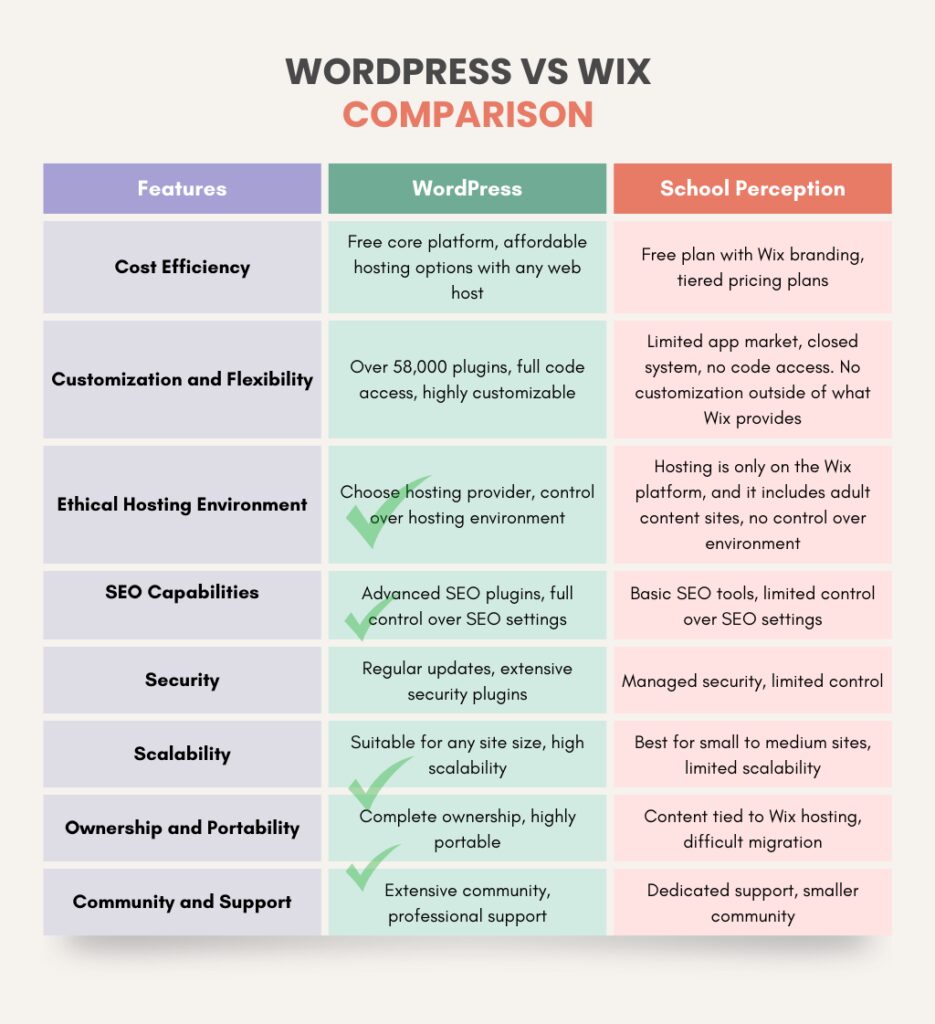
DIY website builders have improved dramatically — but they still have meaningful limitations for businesses that depend on Google search visibility and lead generation.
DIY Website Builders Have Changed
Five years ago, recommending a DIY website builder to a serious business felt like recommending a flip phone. That has genuinely changed.
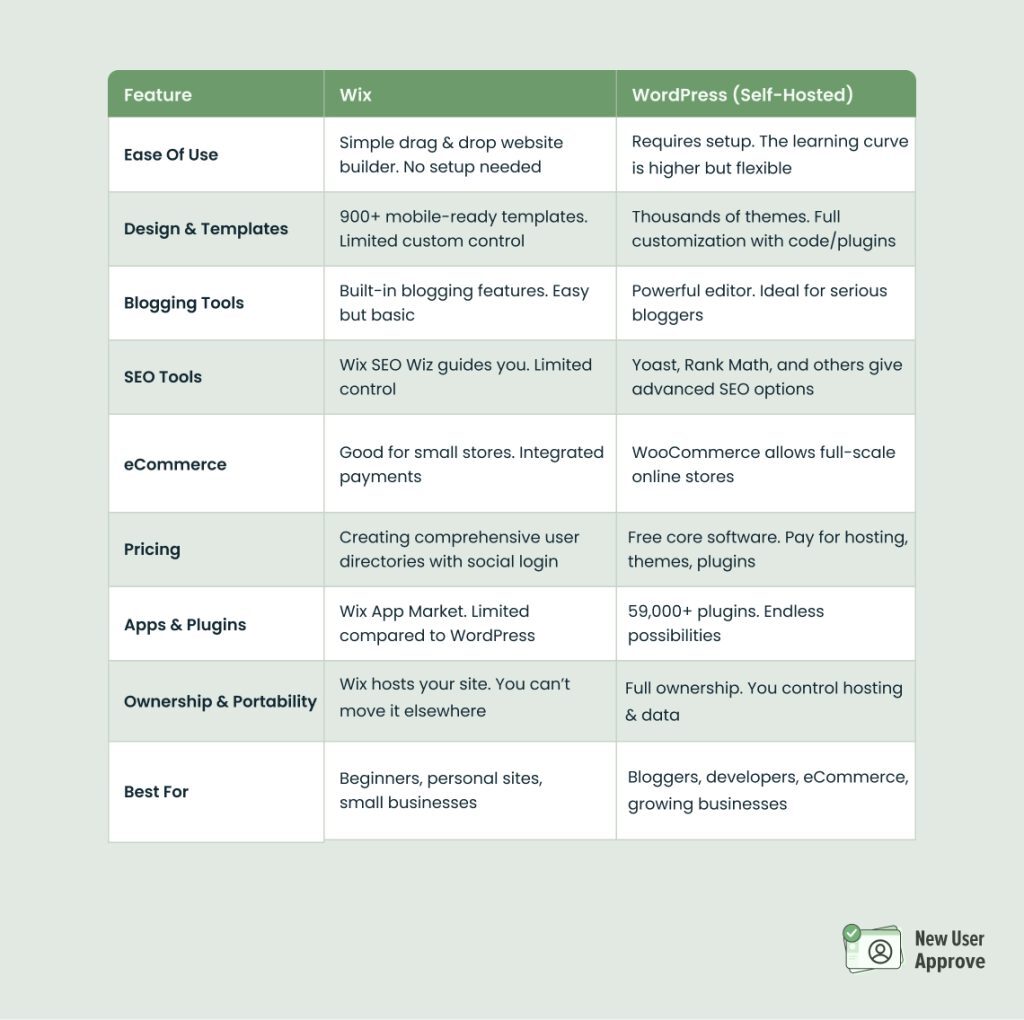
Wix now offers hundreds of professionally designed templates, a functional AI website generator, built-in SEO tools, and an app market that covers most basic business needs. For a simple service business that needs a few pages, a contact form, and some basic information, a well-built Wix site is a credible option.
Squarespace remains the strongest DIY choice for design quality. Templates are polished, the interface is clean, and the results look professional without much effort. For photographers, creatives, and businesses where visual presentation matters most, Squarespace is a legitimate choice.
Shopify is well-suited for product-based businesses and e-commerce. If you’re selling physical products online, Shopify’s infrastructure, payment processing, and inventory tools make it significantly easier than building an e-commerce site from scratch.
WordPress.com (not to be confused with self-hosted WordPress.org) offers more flexibility than Wix or Squarespace but with a steeper learning curve. The free plan is very limited; the paid plans that enable proper functionality can add up quickly.
AI website builders are emerging from several providers, including tools that generate a complete website from a text description. These are still early-stage for most business use cases but are developing rapidly.
Where DIY builders still fall short:
- SEO capability is limited. The SEO tools built into Wix and Squarespace cover the basics — title tags, meta descriptions, sitemaps — but they don’t support schema markup, advanced technical SEO, or the page architecture that competitive local Ottawa searches require. According to Google Search Central’s guidance on technical SEO, factors like site structure, internal linking architecture, and page speed all influence search performance — and these are significantly harder to control on closed platforms.
- Platform limitations compound over time. Many Ottawa businesses that started on a website builder hit a ceiling — when they need a feature the platform doesn’t support, or when they want to switch, they discover their content is partially locked in. Squarespace and Wix both make export limited or difficult.
- Performance on mobile is harder to control. Google PageSpeed Insights scores for DIY-built sites are often lower than properly optimised custom-built sites — particularly on mobile — because the platform generates heavier code than a lean, custom build.
When DIY Is the Right Choice
Let’s be direct about when building your own site is the sensible decision:
You’re testing a business idea. If you’re not yet sure whether your service has enough demand to justify a serious investment, a $25/month Squarespace or Wix subscription is the right move. Build something basic, validate the concept, and invest in professional design when the business is generating revenue.
Your budget is genuinely limited. If you are choosing between paying rent and building a website, a DIY site is obviously the right call. A modest presence is better than no presence, and a well-chosen template with decent photos and clear messaging will serve a new business adequately while you grow.
Your market isn’t competitive online. Some niches in Ottawa have very little online competition. If you’re the only provider of a specific service in a specific area, you can often rank with a minimal website simply because there’s no one else competing. DIY works fine in this context.
You just need a landing page. For email campaigns, local advertising, or social media traffic where you’re driving people directly to a page rather than earning organic search traffic, a landing page builder or simple DIY site is entirely adequate.
You’re a creative who enjoys the work. Some business owners genuinely enjoy building and maintaining their website. If that’s you and you have the time and patience to learn the tools, DIY can be a reasonable long-term choice — with the understanding that the limitations above still apply.
When Hiring a Professional Makes More Sense
Here is where the honest answer changes significantly:
You’re in a competitive Ottawa market. If you’re a contractor, lawyer, dentist, HVAC company, or any other business where multiple Ottawa providers are actively competing for the same searches, a DIY website is unlikely to rank competitively. The businesses appearing in the top three Google results in competitive Ottawa markets have typically invested in professional design and ongoing SEO.
You depend on leads from Google. If organic search is a meaningful customer acquisition channel for your business — or if you want it to be — the technical and strategic requirements go well beyond what most business owners can implement on a DIY platform. Dedicated service pages, proper schema markup, location-specific content, fast mobile performance, and internal linking architecture are all easier to build correctly from the start than to retrofit later.
Your services are complex or numerous. A renovation contractor with eight different service types needs eight dedicated service pages to rank for eight different searches. Building those pages properly, optimising each one for a specific keyword intent, and connecting them with a logical internal link structure is a strategic exercise — not just a design task.
Brand perception matters in your industry. Law firms, financial advisors, healthcare providers, and high-end hospitality businesses are in industries where the quality of the website is a direct proxy for the quality of the service. A Wix site using a generic template in these industries creates an impression — often an inaccurate one — that the business may not be operating at a premium level.
You’ve already tried DIY and it isn’t working. If you have an existing website that gets reasonable traffic but isn’t generating calls or inquiries, the issue is almost certainly strategic — not just visual. Our guide on how to get more clients from your website identifies the specific conversion problems that most DIY sites share.
DIY vs. Professional: A Side-by-Side Comparison
| Factor | DIY Website Builder | Professional Web Design |
|---|---|---|
| Upfront cost | $0–$500 | $1,500–$8,000+ |
| Monthly cost | $20–$80/month (platform fees) | $0–$100+ (hosting/maintenance) |
| Time investment | High (learning + building + maintaining) | Low (you review, we build) |
| SEO capability | Basic | Full technical + local SEO |
| Customization | Limited to platform constraints | Full custom or semi-custom |
| Mobile performance | Variable, often below optimal | Optimized from build |
| Scalability | Limited by platform | Grows with your business |
| Post-launch support | Self-managed or platform support | Agency support available |
| Brand differentiation | Low (templates are widely shared) | High (unique to your business) |
| Long-term value | Lower (often requires rebuild) | Higher (built to last) |
| Best for | Testing, new businesses, low competition | Established businesses, competitive markets, lead generation |
 Each DIY platform has strengths — but the right comparison is between what a DIY site can realistically achieve and what a professionally built site needs to accomplish for your specific business goals.
Ottawa Pricing: What to Realistically Expect
DIY website costs in Ottawa:
- Platform subscription: $20–$80/month (Wix, Squarespace, Shopify)
- Custom domain: ~$15–$20/year
- Premium templates: $50–$200 (one-time)
- Premium plugins or apps: $0–$100+/month depending on what you need
- Your time: often 40–100+ hours to build and launch something you’re happy with
Professional web design costs in Ottawa:
- Simple brochure website (5–8 pages): $1,500–$2,500
- Small service business website (8–15 pages): $2,500–$4,500
- Professional services / trades with SEO foundations: $3,500–$6,000
- Custom or complex websites (e-commerce, bookings, multiple integrations): $6,000–$15,000+
- Ongoing SEO or maintenance: $600–$2,500+/month
For a full breakdown of what these prices include and what drives costs up or down, our Ottawa website cost guide covers every tier in detail.
Project timelines:
- DIY: anywhere from a weekend to several months, depending on how much time you can dedicate and how steep the learning curve feels
- Professional: typically four to eight weeks from kickoff to launch for a standard small business website
Hidden Costs Most Ottawa Business Owners Don’t Consider
The advertised cost of a DIY website is the subscription fee. The real cost is broader:
Your time has value. If you spend 60 hours building a website and your hourly rate (or the value of a billable client hour) is $75, that DIY build just cost you $4,500 in opportunity cost — before you’ve paid a single monthly fee.
SEO mistakes are expensive to fix. If a DIY site is built without proper SEO foundations — wrong URL structure, no schema markup, thin service pages, no local relevance signals — and spends twelve months failing to rank, the cost isn’t just the rebuild. It’s twelve months of leads that went to competitors who had better SEO.
Brand perception is difficult to quantify. A potential client who visits your website and forms a negative impression doesn’t tell you. They just call someone else. The revenue lost to a website that undersells the quality of your business is real — and invisible.
Platform lock-in costs more later. Switching from Wix or Squarespace to a self-hosted WordPress site later typically involves rebuilding most of the content. The migration cost often exceeds what a proper initial build would have cost.
Real Ottawa Business Scenarios
A solo cleaning company in Nepean: Just launched, testing whether there’s enough demand in her neighbourhood, not yet generating consistent revenue. DIY on Wix or Squarespace is the right call. Keep the monthly cost under $30, get something clean and functional live quickly, and upgrade when the business is established.
A renovation contractor in Barrhaven with eight years of experience: Losing quote requests to a competitor whose Google Maps listing is stronger and whose website shows up first for “renovation contractor Barrhaven.” This business needs dedicated service pages, local SEO, and a strong project gallery. A professional build with SEO foundations is the right investment — and the lost leads from another year on a weak website represent more than the build cost.
A family law firm in Centretown: Competing in one of Ottawa’s most contested professional services markets. The website needs to reflect the firm’s credibility, answer complex client questions across multiple practice areas, and convert anxious prospective clients into consultation bookings. DIY is simply not appropriate here — the stakes are too high and the competition too sophisticated.
A new café in Westboro: Planning to open in three months. Needs a presence before opening, a menu page, an Instagram link, and a way for people to find the location. A clean Squarespace site built in a weekend is entirely appropriate. The café’s Google visibility will come more from its Google Business Profile and local foot traffic than from organic web search, initially.
Common DIY Mistakes Ottawa Businesses Make
Choosing the wrong platform. Starting on Shopify for a service business (it’s built for e-commerce) or choosing Wix when Squarespace’s design capability would better serve the brand.
Ignoring SEO entirely. Publishing a website without setting title tags, meta descriptions, or submitting a sitemap to Google Search Console. These basics take thirty minutes and make a significant difference.
Using the default template unchanged. Template sites look like template sites when the images are stock photos and the layout is identical to dozens of other businesses. Even basic customisation significantly improves the result.
Weak or missing calls to action. “Contact Us” buried in the navigation rather than a visible button on every page. The phone number hidden in the footer. No quote request form on the services page.
Treating the website as finished at launch. A website that isn’t updated, monitored, or maintained drifts — platform software goes out of date, contact information changes without the website reflecting it, and competitors improve while the site stagnates.
How to Decide: A Practical Framework
Answer these five questions honestly:
1. Is this a tested business or an untested idea? If untested: DIY. If established with existing revenue: professional.
2. Do you need leads from Google? If yes: professional is almost certainly the right investment. If no (you rely on referrals, social media, or direct advertising): DIY may be adequate.
3. How competitive is your Ottawa market? Search your primary service + Ottawa right now. If the first page is full of businesses with polished, detailed websites, you need to compete at that level.
4. What is your time worth? If you could use those 60 DIY hours earning revenue at your actual service rate, what does that cost comparison look like?
5. What does success look like for the website? If success is “having an online presence,” DIY is fine. If success is “generating 10 new client inquiries per month from organic search,” that requires professional strategy and execution.
For the specific questions to ask any professional web designer before committing, our post on what to ask before hiring a web designer covers every important question — including the ones most business owners forget to ask.
The Decision Checklist
Start with DIY if you can answer yes to most of these:
- [ ] You’re testing a new business idea and haven’t yet validated demand
- [ ] Your budget is under $500 for a website this year
- [ ] You have time to learn a platform and maintain the site yourself
- [ ] Your market has very little online competition
- [ ] You only need a simple online presence — not Google lead generation
- [ ] You’re comfortable with the limitations of a template-based approach
Hire a professional if you can answer yes to most of these:
- [ ] Your business is established and generating revenue
- [ ] You need the website to generate leads or calls from Google search
- [ ] You’re in a competitive Ottawa market (trades, law, healthcare, professional services)
- [ ] Your services are complex enough to require multiple dedicated pages
- [ ] You’ve tried DIY and aren’t happy with the results or the traffic
- [ ] You want SEO foundations built in from the start, not retrofitted later
- [ ] Your brand reputation matters and a generic template would undermine it
Frequently Asked Questions
Can a DIY website actually rank on Google in Ottawa?
Yes, in some markets. If you’re in a low-competition niche or targeting very specific neighbourhood-level searches with little existing competition, a well-structured DIY site can rank. The challenge is that most Ottawa service businesses are competing against established websites with years of domain authority, professional SEO, and dedicated service pages. In those markets, a DIY site on Wix or Squarespace typically cannot match the technical and strategic SEO capability of a professionally built WordPress site. For a detailed look at what local Ottawa ranking actually requires, our post on how to rank higher on Google Maps in Ottawa covers the full picture.
Is Wix or Squarespace good enough for an Ottawa small business?
It depends on what “good enough” means. For establishing an online presence, showing your services, and giving people a way to contact you: yes, both are good enough. For competing in a high-traffic local search market, generating consistent leads from organic Google search, and scaling with your business over time: they have real limitations. Squarespace’s design quality is genuinely strong — if you’re in a visual industry and SEO isn’t your primary growth channel, it’s a legitimate choice.
How much does professional web design cost in Ottawa?
A professionally built small business website in Ottawa typically ranges from $1,500 to $6,000, depending on the number of pages, whether copywriting is included, the level of customisation, and whether SEO foundations are built in. Our website cost guide provides a full breakdown by business type and scope — with honest explanations of what drives costs up or down.
What if I build the site myself and hire someone later to improve it?
This is a very common path and it works — with a caveat. If the DIY site was built on a platform like Wix or Squarespace, “improving it” often means rebuilding it on a different platform rather than fixing the existing site, because the SEO and technical limitations are platform-level rather than design-level. If the DIY site was built on self-hosted WordPress, a professional can often take over the existing framework and improve it more cost-effectively. It’s worth discussing the platform choice with a professional before you build DIY, even if you’re not ready to hire them yet.
Should I do DIY first and switch to professional later?
For many businesses, yes — this is the right sequence. Build something functional when you’re testing the business, then invest in a professional build when you’re ready to scale. The main cost of this approach is that the rebuild takes time and money you would have saved by building professionally from the start. If you’re reasonably confident the business is viable and you’re in a competitive market, starting with a professional build avoids the rebuild cost. If you’re genuinely uncertain whether the business is going to work, start with DIY.
What should I look for when hiring a professional web designer in Ottawa?
The most important questions are whether SEO is included in the build (specifically: title tags, meta descriptions, sitemap setup, schema markup, Google Search Console setup), who owns the domain and hosting after launch, what the revision process looks like, and what post-launch support is available. Our guide on what to ask before hiring a web designercovers all fifteen questions worth asking before committing to any web design provider.
The best website decision starts with honest clarity about where your business is today — its stage, its goals, its competition, and its budget — rather than what sounds most impressive.
Match the Investment to the Stage of the Business
The best website isn’t the most expensive one — it’s the one that’s appropriate for where your business is today.
A $30/month Squarespace site is the right choice for an Ottawa entrepreneur testing a concept. A professionally built, SEO-optimised WordPress site is the right choice for a Kanata renovation contractor who needs to compete on Google. Neither is universally better. The decision should match the reality of the business.
If you’re still unsure which direction makes sense for your specific situation, we’re happy to have an honest conversation. Sometimes we’ll tell you a professional build is exactly what you need. Other times we’ll tell you that a DIY solution is perfectly adequate for where you are right now.
Get in touch with Ottawa Web Genius for a straightforward conversation — no pressure, no sales pitch, just an honest assessment of what your business’s website actually needs. Or explore our web design services and pricing to understand what a professional build includes before we talk.